The 3 Most Common Reasons for Emergency Plumbing Calls in Centennial
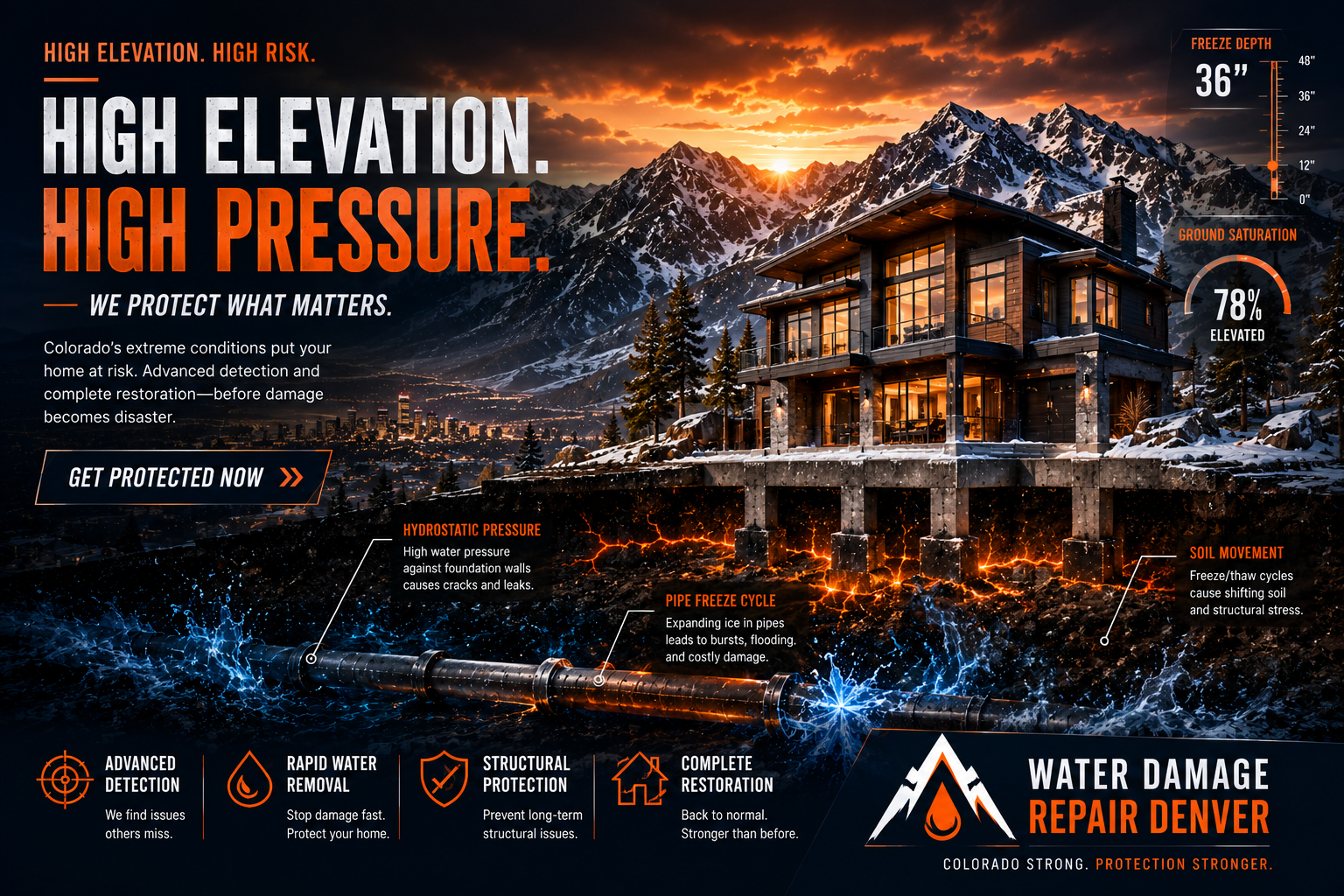
Most emergency plumbing calls in Centennial begin long before homeowners notice active flooding. Pressure builds inside frozen pipe systems, drainage failures develop beneath finished lower levels, and hidden leaks spread through wall cavities while structural moisture continues expanding beneath the surface.
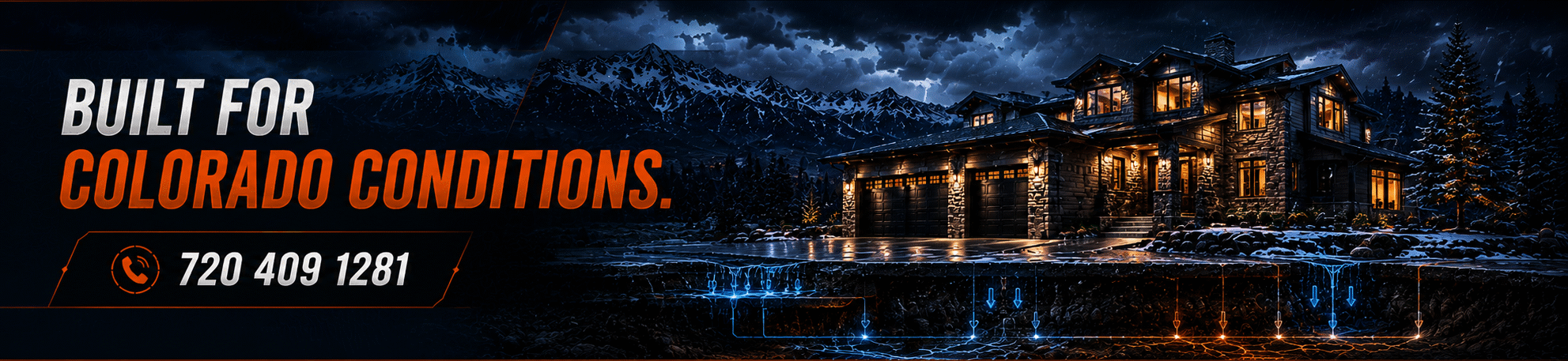
Front Range freeze-thaw cycling, rapid overnight temperature drops, aging plumbing infrastructure, and seasonal snowmelt runoff create constant stress across residential plumbing systems throughout the South Metro area.
Finished basements throughout Centennial become especially vulnerable once water begins migrating beneath flooring systems and inside insulation cavities.
Some emergencies appear suddenly. Others build quietly for days.
The three plumbing problems below account for a large percentage of severe residential water damage events across Centennial neighborhoods.
1. Frozen and Burst Pipes During Colorado Freeze Cycles
A frozen pipe remains one of the most destructive plumbing emergencies affecting Centennial homes during winter.
Rapid temperature swings place expansion pressure inside plumbing lines hidden behind exterior-facing walls, attic spaces, crawlspaces, garages, and basement ceilings. Once ice blocks water movement, internal pressure increases until weakened pipe sections crack or rupture.
Many homeowners first notice the problem after:
- Water pressure suddenly drops
- Ceiling stains appear
- Hardwood flooring begins warping
- Drywall softens
- Water starts leaking beneath cabinets
- Finished basements develop moisture intrusion
Highlands Ranch and South Metro freeze exposure regularly affects homes with detached garages, long plumbing runs, and older copper piping systems vulnerable to repeated expansion stress.
Thermal imaging and moisture mapping help identify hidden saturation after emergency shutoffs occur.

2. Basement Flooding from Snowmelt and Drainage Pressure
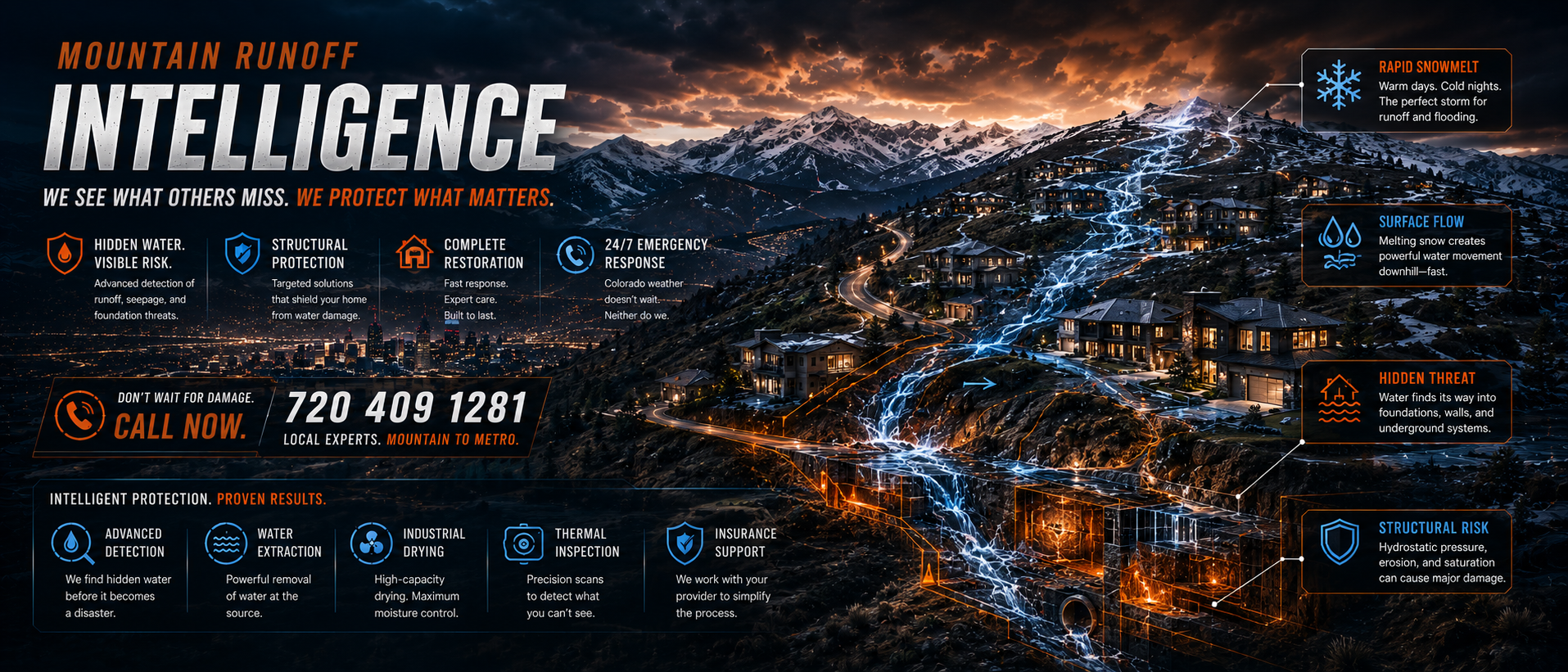
Spring snowmelt creates serious hydrostatic pressure around Centennial foundations every year.
Older homes and finished lower levels often experience water intrusion after saturated ground conditions force moisture through slab edges, window wells, drainage failures, and foundation cracks.
Unlike sudden plumbing bursts, basement flooding frequently develops gradually beneath finished surfaces.
Hidden moisture commonly spreads into:
- Carpet padding
- Laminate flooring
- Subfloor systems
- Drywall assemblies
- Baseboards
- Insulation cavities
- Storage areas
- Utility rooms
Structural moisture may continue migrating long after standing water disappears.
Moisture monitoring and controlled dehumidification help stabilize lower-level environments before deterioration worsens beneath finished basement systems.
3. Water Heater and Supply Line Failures
Aging supply lines and failing water heaters create major interior flooding throughout Centennial homes.
Small connection failures often release water inside utility rooms, laundry areas, garages, and finished mechanical spaces for extended periods before visible signs appear elsewhere in the structure.
Supply line ruptures frequently affect:
- Hardwood flooring
- Cabinet systems
- Ceiling cavities below
- Laundry room walls
- Finished basement ceilings
- Adjacent storage areas
Older plumbing hardware becomes increasingly vulnerable after years of pressure fluctuations tied to Colorado freeze-thaw cycling and mineral buildup common throughout the Denver metro area.
Emergency extraction and structural drying help reduce long-term moisture exposure after active leaks are isolated.
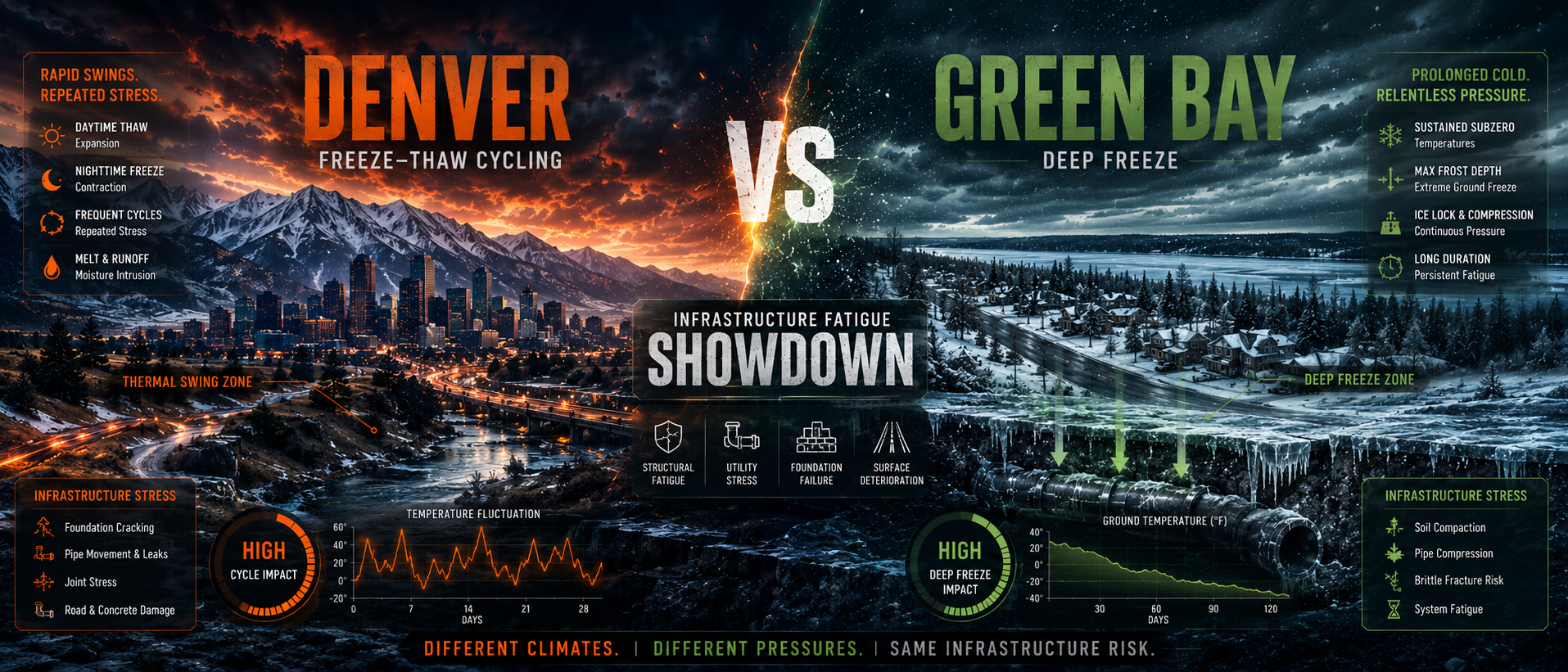
Hidden Structural Moisture After Plumbing Emergencies
Visible flooding rarely reflects the true extent of water intrusion.
Concealed saturation often migrates:
- Beneath flooring systems
- Inside wall cavities
- Around framing assemblies
- Through insulation layers
- Under tile flooring
- Along ceiling joists
- Behind cabinetry
Thermal imaging inspections and structural moisture mapping help locate trapped water before hidden deterioration accelerates.
Subfloor drying and cavity drying become critical once moisture reaches concealed structural layers.
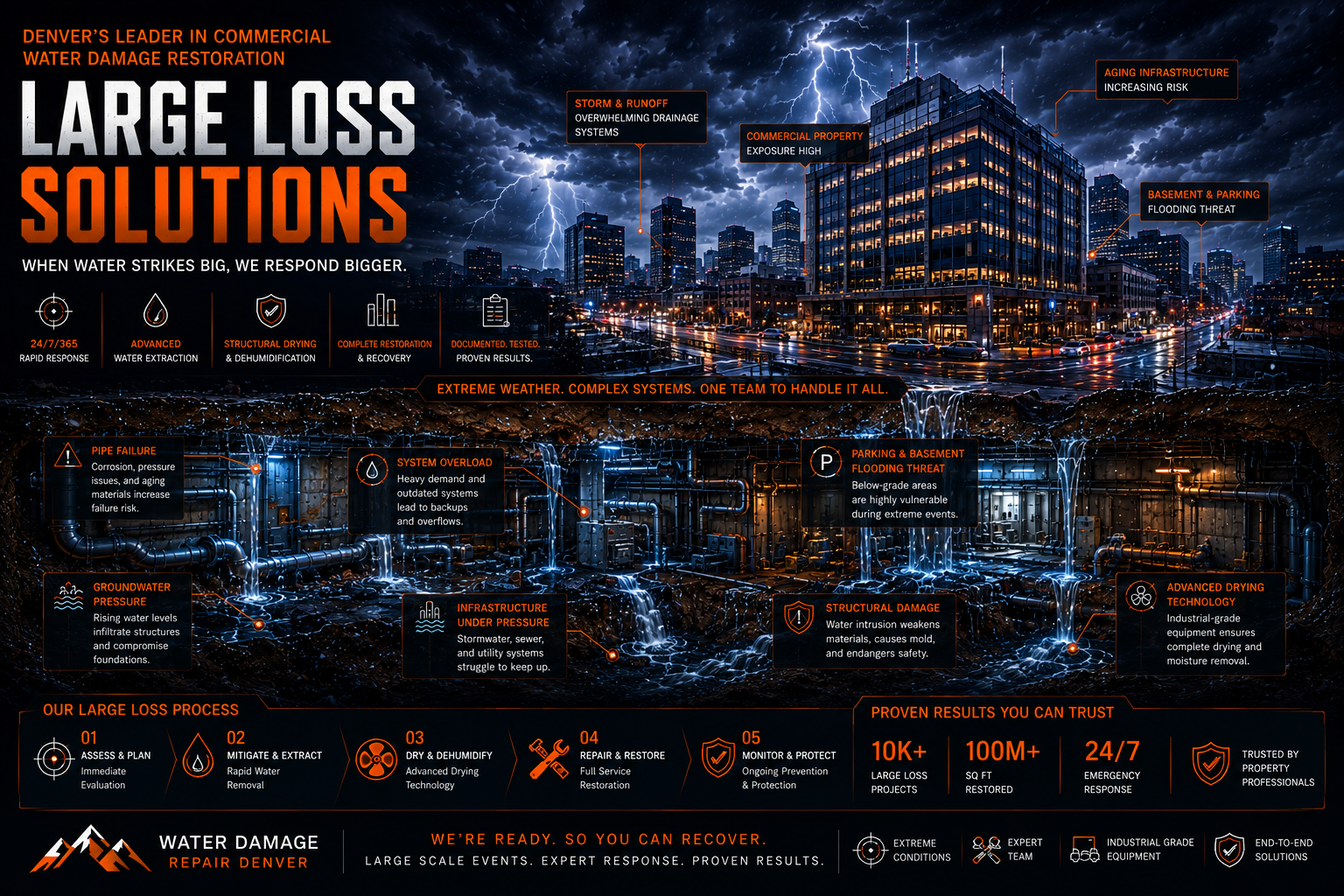
Emergency Structural Drying Centennial
Stopping active water intrusion represents only the first phase of recovery.
Structural stabilization often requires:
- Emergency extraction
- Commercial dehumidification
- Moisture mapping
- Thermal imaging inspections
- Ceiling cavity drying
- Wall cavity drying
- Subfloor drying
- Containment systems
- Moisture monitoring
Controlled drying helps reduce secondary damage while protecting salvageable materials whenever possible.
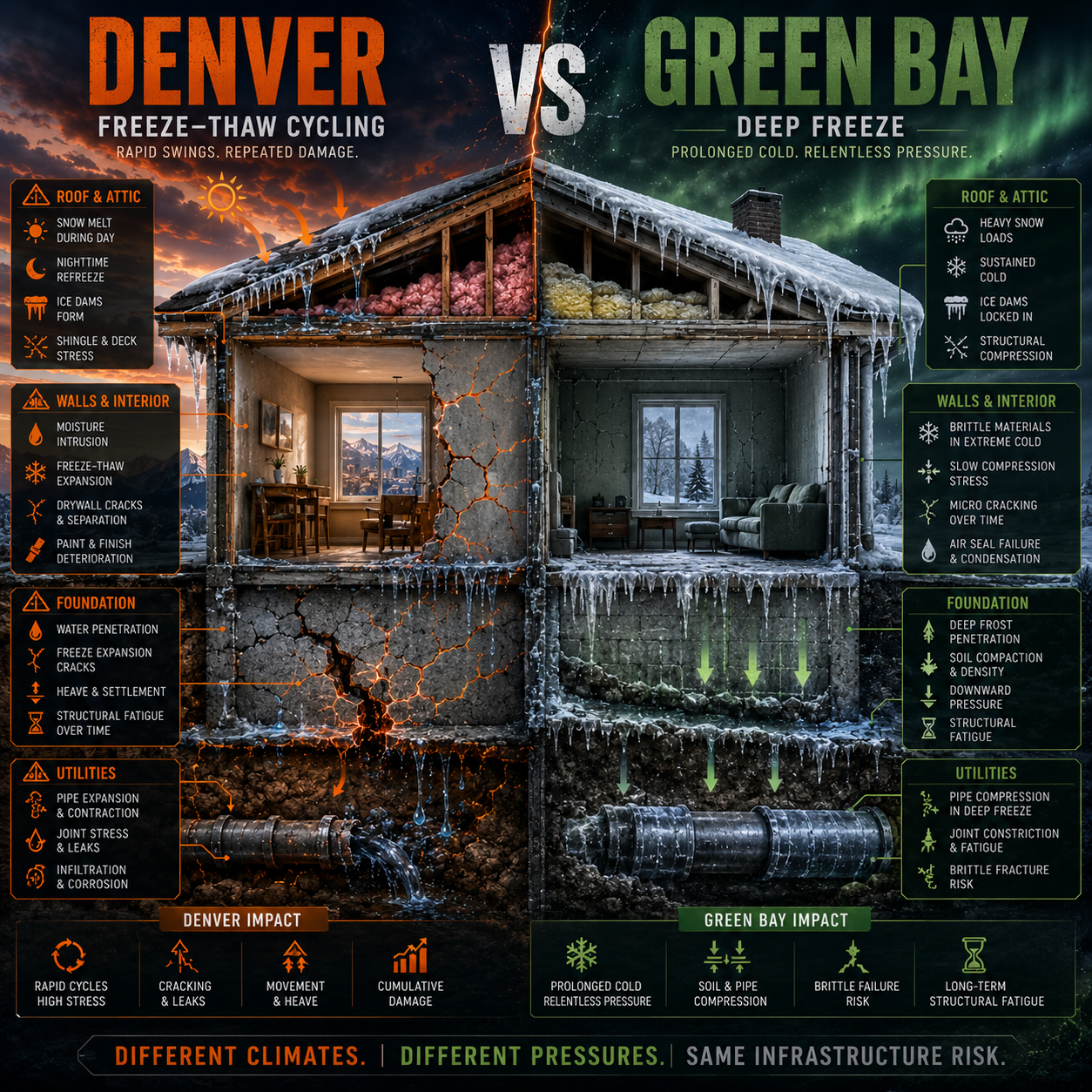
Emergency Plumbing and Water Damage Restoration Centennial
Centennial homes face elevated plumbing risks from freeze-thaw pressure, snowmelt runoff, slab movement, and hidden moisture migration throughout finished structural environments.
Emergency services include:
- Burst pipe repair
- Frozen pipe thawing
- Basement flood cleanup
- Moisture mapping
- Structural drying
- Dehumidification
- Leak detection
- Subfloor drying
- Ceiling cavity drying
- Containment systems
- Moisture monitoring
- Hidden moisture detection
Advanced drying systems and detailed structural stabilization help Centennial homeowners recover faster after severe plumbing and water damage emergencies.