After-Hours Commercial Emergency Water Damage Cleanup Denver
Commercial water damage rarely happens during normal business hours. Overnight pipe failures, sprinkler discharges, roof leaks, HVAC overflows, and freeze-related plumbing ruptures often spread unnoticed through Denver office buildings long after employees leave for the day.
By morning, moisture may already be moving beneath flooring systems, through shared wall assemblies, inside ceiling plenums, and throughout structural cavities across multiple suites.
DTC office structures, downtown high-rises, medical offices, retail buildings, and industrial properties throughout Denver face elevated risks from freeze-thaw pressure, aging plumbing infrastructure, rooftop mechanical systems, and rapid Front Range temperature swings.
After-hours mitigation focuses on stabilizing structural conditions immediately before hidden saturation escalates into larger operational and reconstruction problems.
Overnight Commercial Water Damage Response Denver
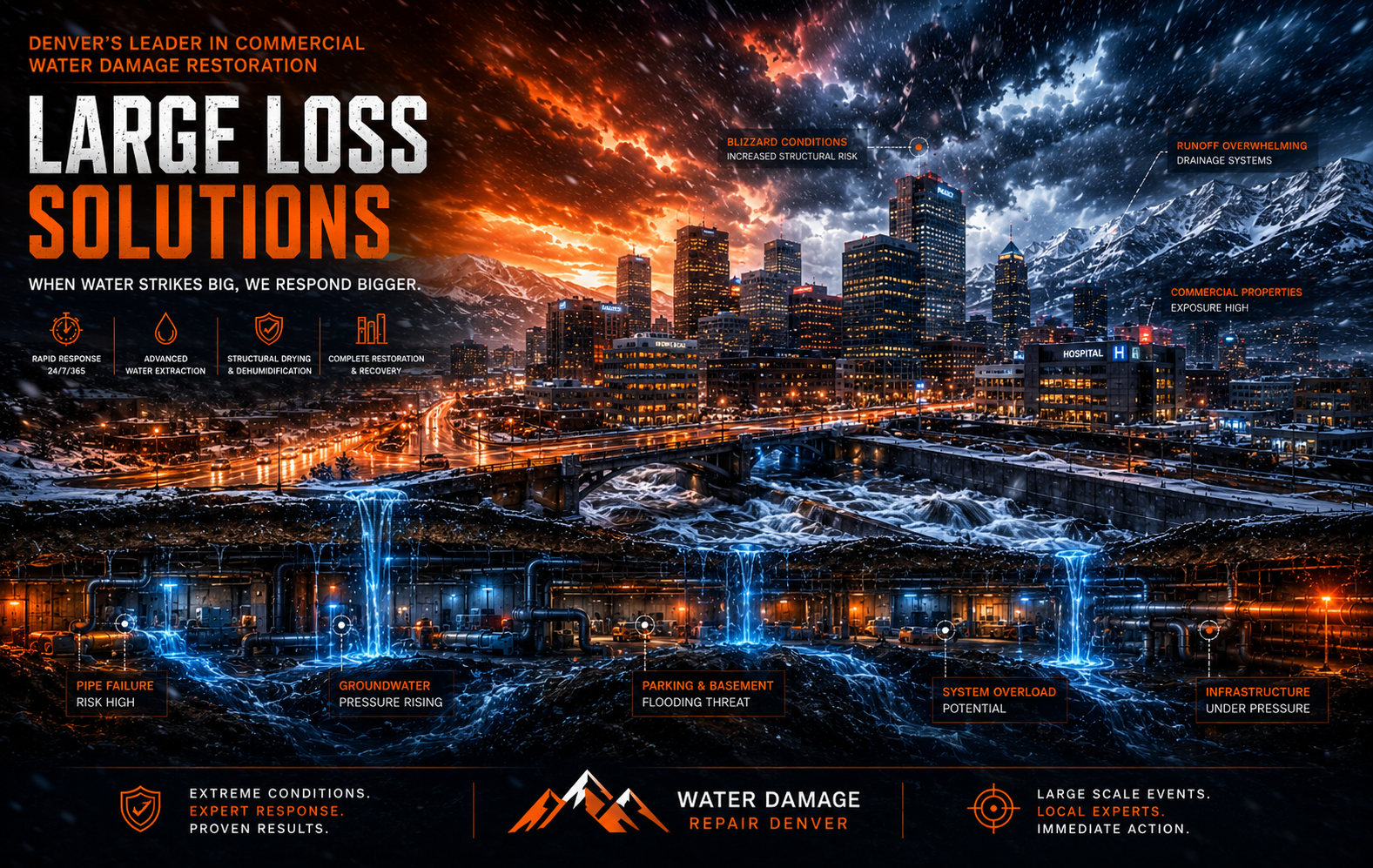
Water intrusion inside commercial environments spreads aggressively once structural materials absorb saturation.
Ceiling systems weaken under trapped moisture. Carpet and subfloor assemblies retain water beneath the surface. Shared wall cavities allow hidden migration between suites. Electrical systems and server environments become vulnerable when moisture reaches concealed infrastructure.
Emergency overnight response helps reduce:
- Business interruption
- Structural deterioration
- Ceiling collapse risks
- Tenant disruption
- Flooring damage
- Electrical hazards
- Mold growth conditions
- Inventory exposure
- Equipment damage
- Long-term reconstruction costs
Emergency extraction and containment systems help isolate affected commercial zones before moisture expands further into occupied areas.
Commercial Freeze-Thaw Pipe Failures
Denver freeze cycles place enormous stress on commercial plumbing systems hidden inside office ceilings, mechanical corridors, parking structures, exterior-facing walls, and rooftop utility spaces.
Overnight temperature drops frequently trigger pipe ruptures after buildings sit inactive for hours.
Burst commercial plumbing lines commonly flood:
- Executive offices
- Conference rooms
- Shared corridors
- Retail suites
- Medical offices
- Data rooms
- Tenant improvement spaces
- Finished lower levels
Thermal imaging and moisture mapping identify hidden saturation migrating through structural assemblies long after visible standing water is removed.
Subfloor drying and cavity drying become critical once moisture reaches concealed commercial infrastructure.
DTC Office Water Damage Cleanup
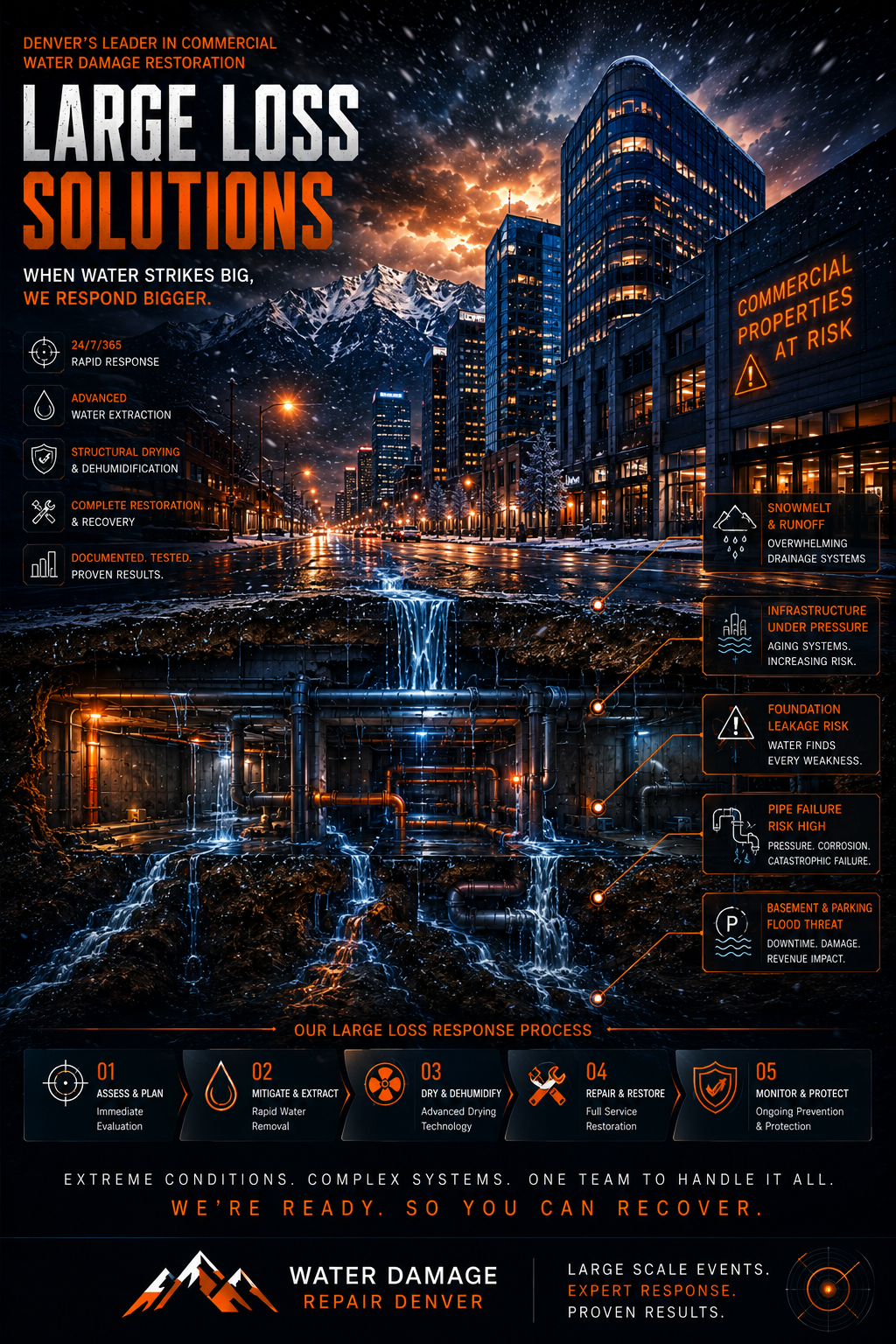
Denver Tech Center buildings often contain layered ceiling systems, complex HVAC infrastructure, raised flooring assemblies, and interconnected tenant layouts that allow water intrusion to spread rapidly.
After-hours water losses inside DTC properties commonly involve:
- Sprinkler discharges
- Rooftop HVAC leaks
- Ceiling flooding
- Mechanical room failures
- Drain backups
- Multi-suite moisture migration
- Elevator lobby saturation
- Burst pipe flooding
Containment barriers and negative air systems help isolate affected areas while structural drying stabilizes surrounding office environments.
Reducing operational downtime becomes essential for active commercial properties preparing for the next business day.
Moisture Mapping and Hidden Commercial Saturation
Commercial water damage rarely remains visible from the surface.
Moisture frequently migrates behind drywall systems, beneath carpet tiles, through insulation layers, inside ceiling plenums, and along steel framing assemblies throughout the building.
Structural moisture detection often includes:
- Thermal imaging
- Infrared moisture scanning
- Humidity monitoring
- Structural moisture mapping
- Ceiling cavity inspections
- Subfloor moisture detection
Detailed monitoring allows targeted drying plans designed around the complexity of commercial building assemblies.
Emergency Structural Drying and Dehumidification
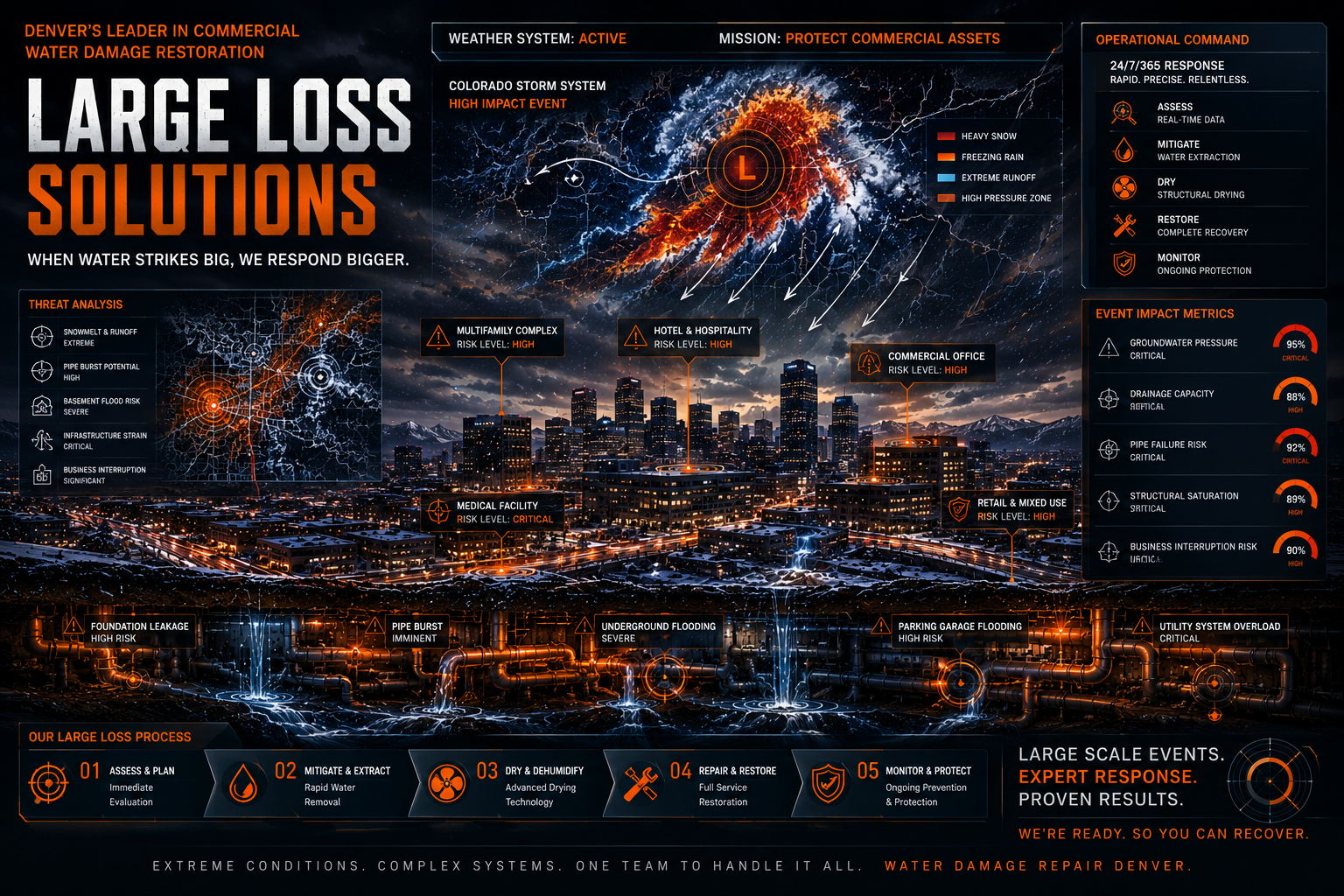
Large commercial structures require controlled drying strategies capable of stabilizing multiple environments simultaneously.
Denver elevation changes, low humidity fluctuations, and freeze-thaw cycling create uneven evaporation patterns throughout commercial buildings after water intrusion events.
Structural drying systems commonly involve:
- Emergency extraction
- Commercial dehumidification
- Air movement systems
- Ceiling cavity drying
- Subfloor drying
- Wall cavity drying
- Negative air containment
- Moisture monitoring
- Structural stabilization
Controlled environmental drying helps reduce secondary damage while protecting surrounding tenant spaces and operational infrastructure.
Commercial Mold Prevention After Water Damage
Hidden saturation inside office environments can quickly create conditions for microbial growth when moisture remains trapped behind finished surfaces.
Commercial properties may later experience:
- Air quality complaints
- Odor conditions
- Ceiling deterioration
- Drywall breakdown
- Flooring instability
- Tenant disruption
- Expanded remediation costs
Fast overnight mitigation and continuous moisture monitoring help reduce long-term contamination risks following commercial water intrusion events.
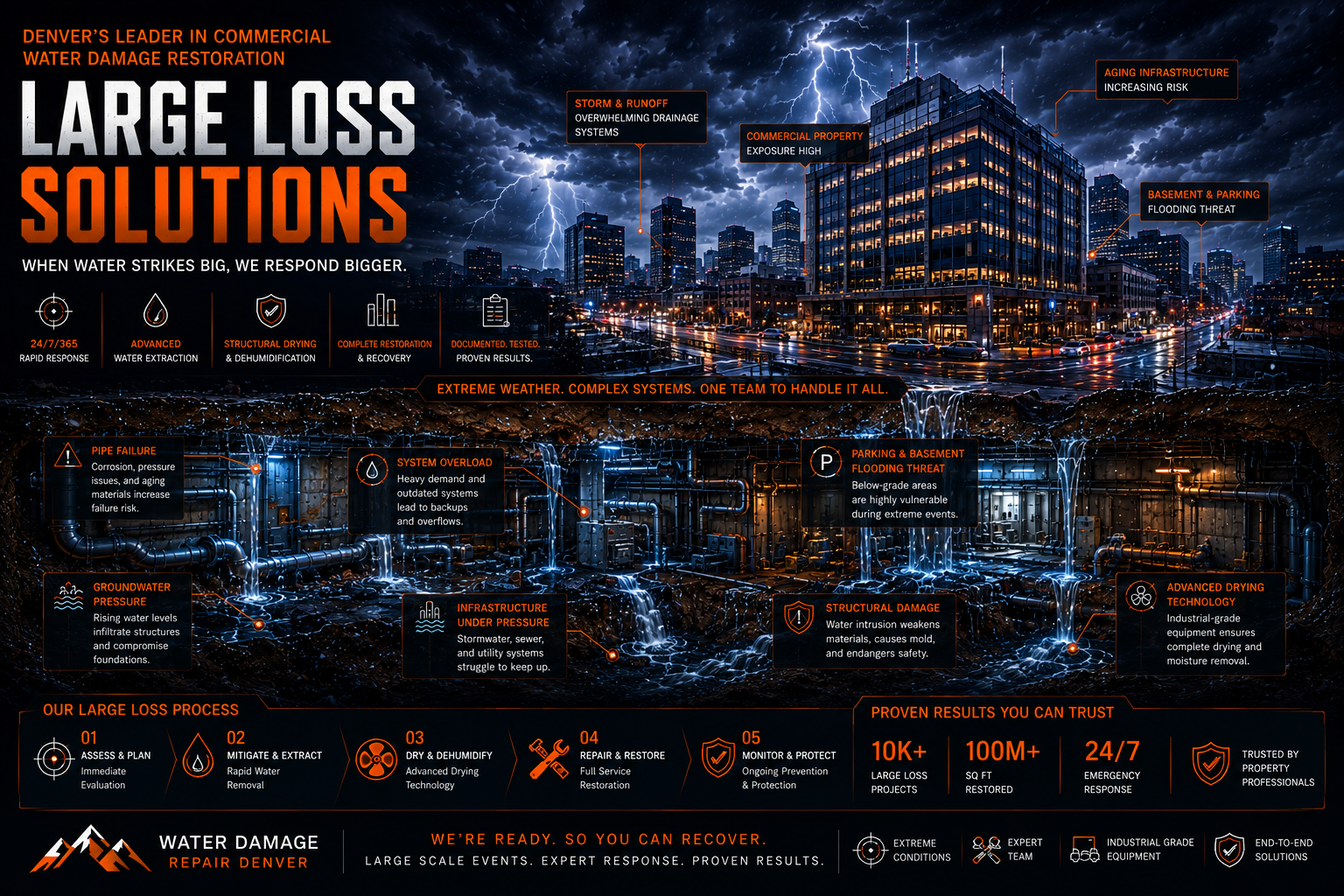
Commercial Documentation and Loss Tracking
Large-loss commercial events require accurate documentation throughout the drying and stabilization process.
Commercial reporting often includes:
- Moisture readings
- Thermal imaging documentation
- Structural drying logs
- Equipment monitoring
- Containment tracking
- Damage progression reporting
- Daily moisture condition updates
Detailed records help property managers, facility teams, and building ownership understand the full extent of structural moisture conditions during recovery.
Commercial Emergency Water Cleanup Denver
Denver commercial buildings face constant environmental pressure from freeze-thaw expansion, snowmelt runoff, rooftop mechanical failures, and overnight plumbing emergencies.
After-hours commercial restoration services include:
- Emergency extraction
- Moisture mapping
- Thermal imaging inspections
- Structural drying
- Dehumidification
- Ceiling cavity drying
- Subfloor drying
- Containment systems
- Commercial flood cleanup
- Burst pipe restoration
- Moisture monitoring
- Multi-suite stabilization
Advanced drying systems, overnight mitigation strategies, and detailed structural moisture control help Denver commercial properties recover faster after severe water damage emergencies.
