Water Damage Repair Centennial: We Stop the Flood and Restore Your Home
Water damage inside Centennial homes escalates fast once saturation reaches structural materials. Freeze-thaw pressure, Front Range snowmelt, slab movement, aging plumbing systems, and hidden drainage problems regularly create moisture intrusion throughout finished living spaces across the area.
Finished basements throughout Centennial often develop concealed saturation beneath flooring systems after spring runoff and repeated freeze cycling push moisture against lower foundation walls. Newer residential developments near Highlands Ranch and surrounding South Metro communities frequently experience plumbing failures tied to rapid temperature swings and expanding pipe pressure inside insulated wall systems.
Structural moisture rarely stays visible for long.
Hidden migration spreads beneath hardwood flooring, behind drywall, through insulation cavities, and inside ceiling assemblies while damage continues developing beneath the surface.
Emergency extraction, moisture mapping, thermal imaging, containment, and structural drying help stabilize affected areas before long-term deterioration accelerates.
Emergency Flood Cleanup Centennial
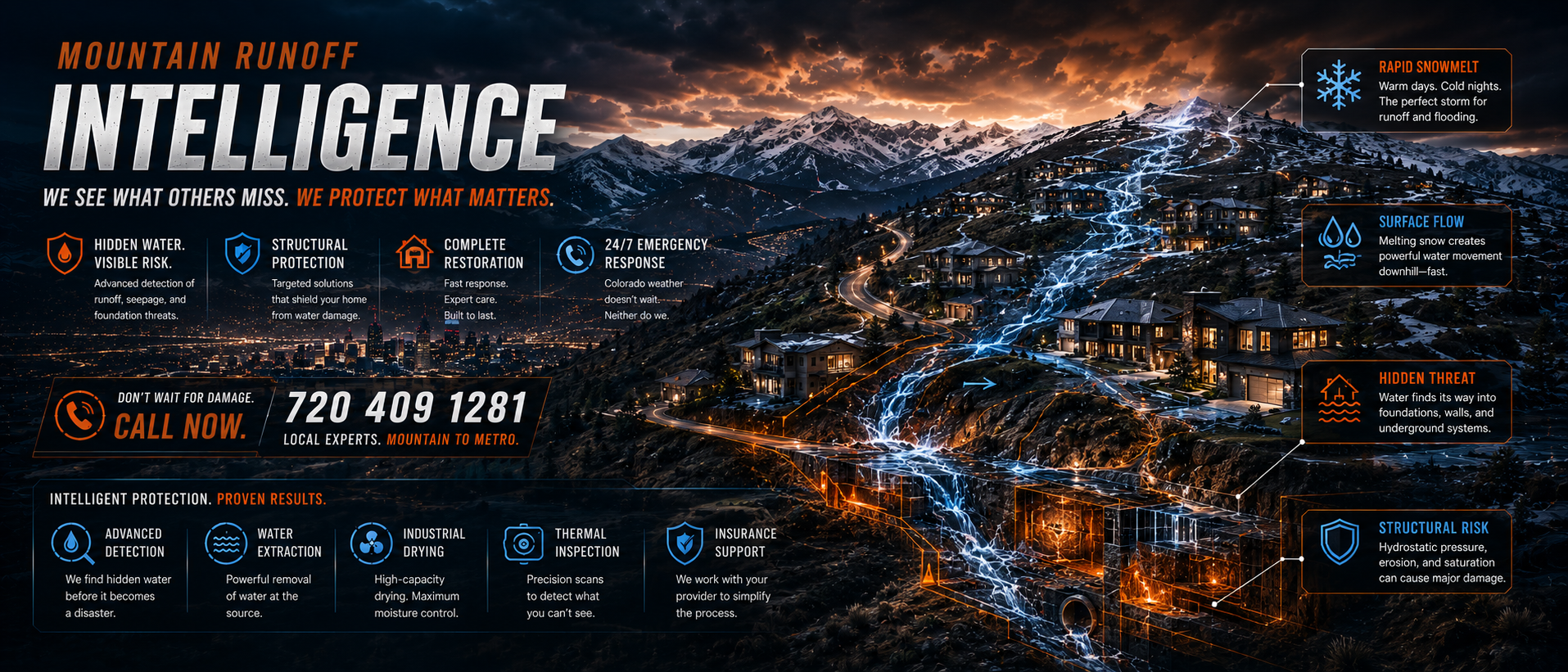
Standing water immediately begins affecting flooring systems, drywall assemblies, cabinetry, and structural framing.
Subfloor saturation often develops long before visible warping appears. Ceiling cavities retain trapped moisture after upper-floor leaks. Insulation absorbs water deep inside wall systems where drying becomes increasingly difficult without professional stabilization.
Flood-related structural exposure commonly includes:
- Hardwood flooring damage
- Ceiling deterioration
- Cabinet swelling
- Drywall breakdown
- Electrical risks
- Baseboard saturation
- Framing moisture intrusion
- Insulation contamination
Emergency extraction removes standing water quickly while containment systems isolate affected structural areas from surrounding portions of the home.
Commercial-grade dehumidification then begins reducing trapped humidity throughout the structure.
Frozen Pipe Water Damage Centennial
Colorado winter conditions place enormous stress on plumbing systems hidden inside garages, crawlspaces, attics, exterior-facing walls, and basement ceilings.
Highlands Ranch freeze cycles and South Metro temperature fluctuations regularly contribute to burst pipe flooding throughout Centennial neighborhoods.
Pipe failures commonly affect:
- Finished lower levels
- Kitchen wall systems
- Laundry rooms
- Ceiling assemblies
- Utility corridors
- Hardwood flooring
- Bathroom plumbing walls
- Storage spaces
Thermal imaging and structural moisture mapping help identify hidden migration patterns after emergency plumbing stabilization occurs.
Subfloor drying and cavity drying become critical once moisture spreads beneath finished materials.
Basement Water Damage and Snowmelt Runoff
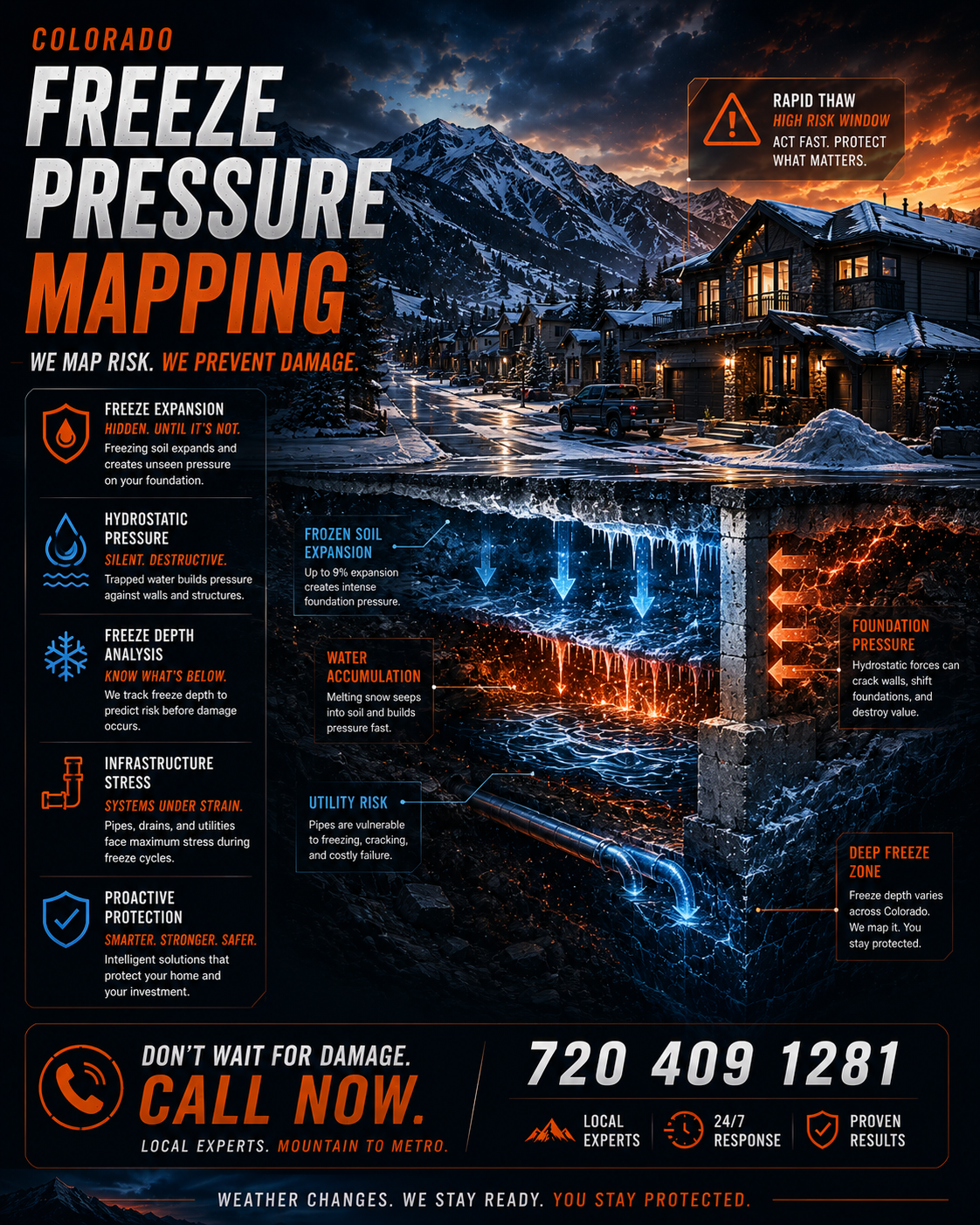
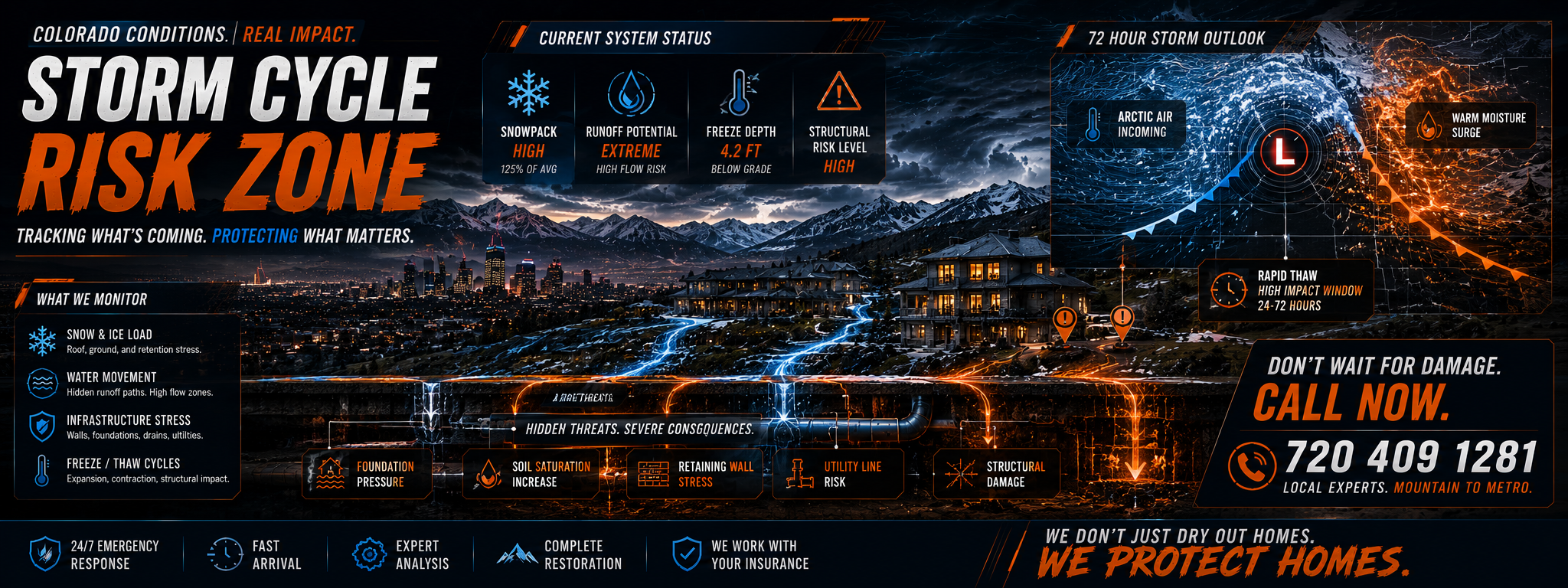
Centennial homes with finished basements frequently experience moisture pressure after heavy Front Range snowpack begins melting during spring warming cycles.
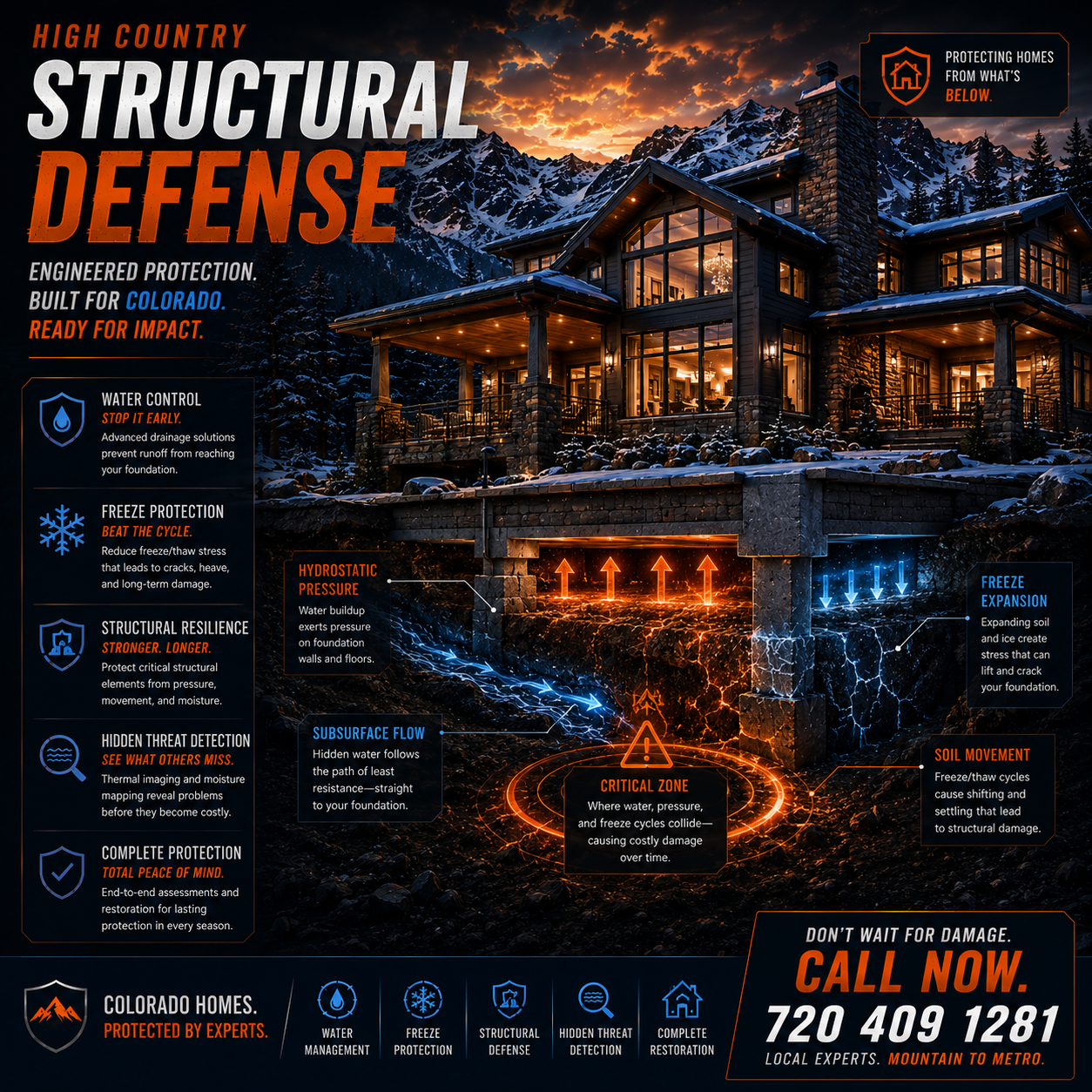
Hydrostatic pressure forces water through:
- Foundation cracks
- Slab edges
- Window wells
- Drainage failures
- Expansion joints
- Sump system weaknesses
Lower-level moisture often spreads beneath laminate flooring, carpet systems, insulation layers, and finished drywall before visible warning signs fully develop.
Moisture monitoring and structural stabilization help reduce long-term deterioration beneath finished basement environments.
Moisture Mapping and Hidden Structural Saturation
Visible water rarely reflects the true extent of structural exposure.
Concealed saturation frequently migrates:
- Beneath hardwood flooring
- Through subfloor systems
- Inside wall cavities
- Around framing assemblies
- Behind cabinetry
- Through insulation layers
- Along ceiling joists
- Under tile flooring
Thermal imaging and infrared moisture detection help track hidden water movement throughout affected structural materials.
Detailed moisture mapping allows targeted drying strategies based on actual saturation conditions rather than surface appearance alone.
Structural Drying and Dehumidification Centennial
Drying structural materials properly requires controlled environmental stabilization throughout the property.
Colorado elevation changes and low ambient humidity fluctuations create uneven evaporation behavior after flooding events. Materials may appear dry externally while trapped moisture remains hidden inside framing systems and subfloors.
Structural drying systems commonly include:
- Emergency extraction
- Commercial dehumidification
- Air movement systems
- Wall cavity drying
- Ceiling cavity drying
- Subfloor drying
- Hardwood floor drying
- Containment barriers
- Moisture monitoring
Controlled drying helps reduce secondary damage while protecting salvageable structural materials whenever possible.
Ceiling Leaks and Upstairs Water Damage
Second-floor plumbing failures often create layered structural exposure throughout multiple areas of the home.
Water intrusion from upstairs bathrooms, laundry rooms, and plumbing lines commonly spreads into:
- Ceiling drywall
- Lighting systems
- Insulation cavities
- Framing assemblies
- Adjacent wall systems
- Hardwood flooring below
- Bathroom ventilation areas
Infrared moisture detection helps identify concealed migration before structural deterioration expands further into surrounding materials.
Mold Prevention After Water Damage
Extended moisture exposure inside drywall, insulation, and flooring systems creates ideal conditions for microbial growth.
Hidden saturation may eventually cause:
- Odor conditions
- Air quality concerns
- Ceiling instability
- Material deterioration
- Flooring damage
- Expanded remediation costs
Emergency dehumidification and continuous moisture monitoring help reduce long-term contamination risks after flooding and plumbing failures.
Water Damage Repair Centennial
Centennial homes face constant environmental pressure from freeze-thaw expansion, snowmelt runoff, slab movement, hidden plumbing failures, and basement saturation.
Restoration services include:
- Emergency extraction
- Flood cleanup
- Moisture mapping
- Thermal imaging inspections
- Structural drying
- Dehumidification
- Ceiling cavity drying
- Subfloor drying
- Containment systems
- Burst pipe restoration
- Moisture monitoring
- Hidden moisture detection
Advanced drying systems and detailed structural stabilization help Centennial homeowners recover faster after severe water damage and flooding events.