Mountain Property Intelligence
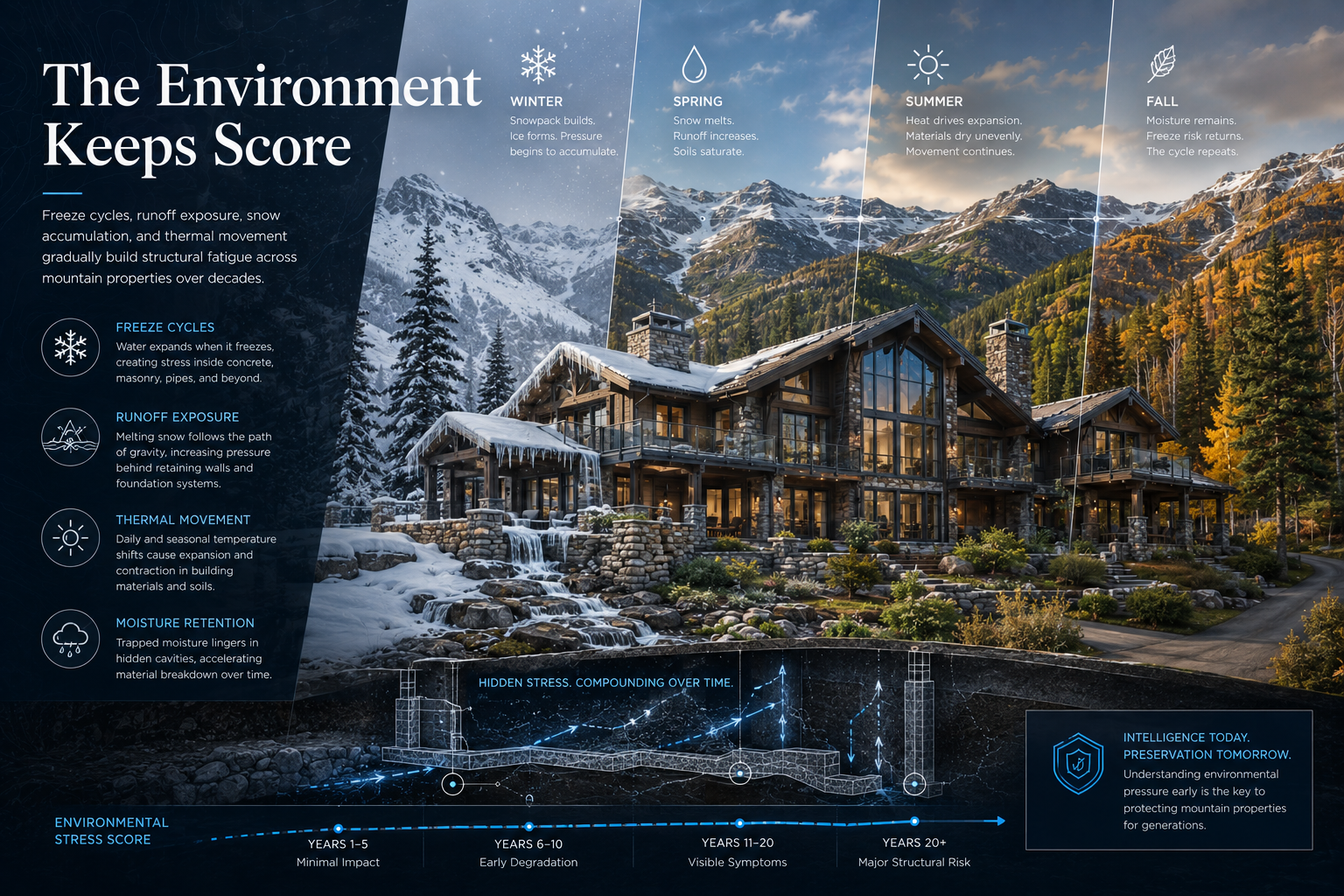
Mountain properties experience completely different environmental stress patterns than low-elevation homes. Snowpack accumulation, elevation runoff, freeze-thaw cycling, hillside drainage pressure, rapid temperature swings, and seasonal vacancy exposure create unique forms of structural moisture behavior that many homeowners do not fully recognize until significant damage has already developed.
Unlike flat urban environments, mountain regions place structures under constant environmental movement. Snowmelt slowly saturates soil systems and retaining walls. Freeze-thaw cycling repeatedly expands and contracts structural materials. Runoff concentrates downhill through slopes and drainage corridors. Moisture migrates through framing systems, crawlspaces, foundations, and hidden structural cavities long after snow and ice disappear.
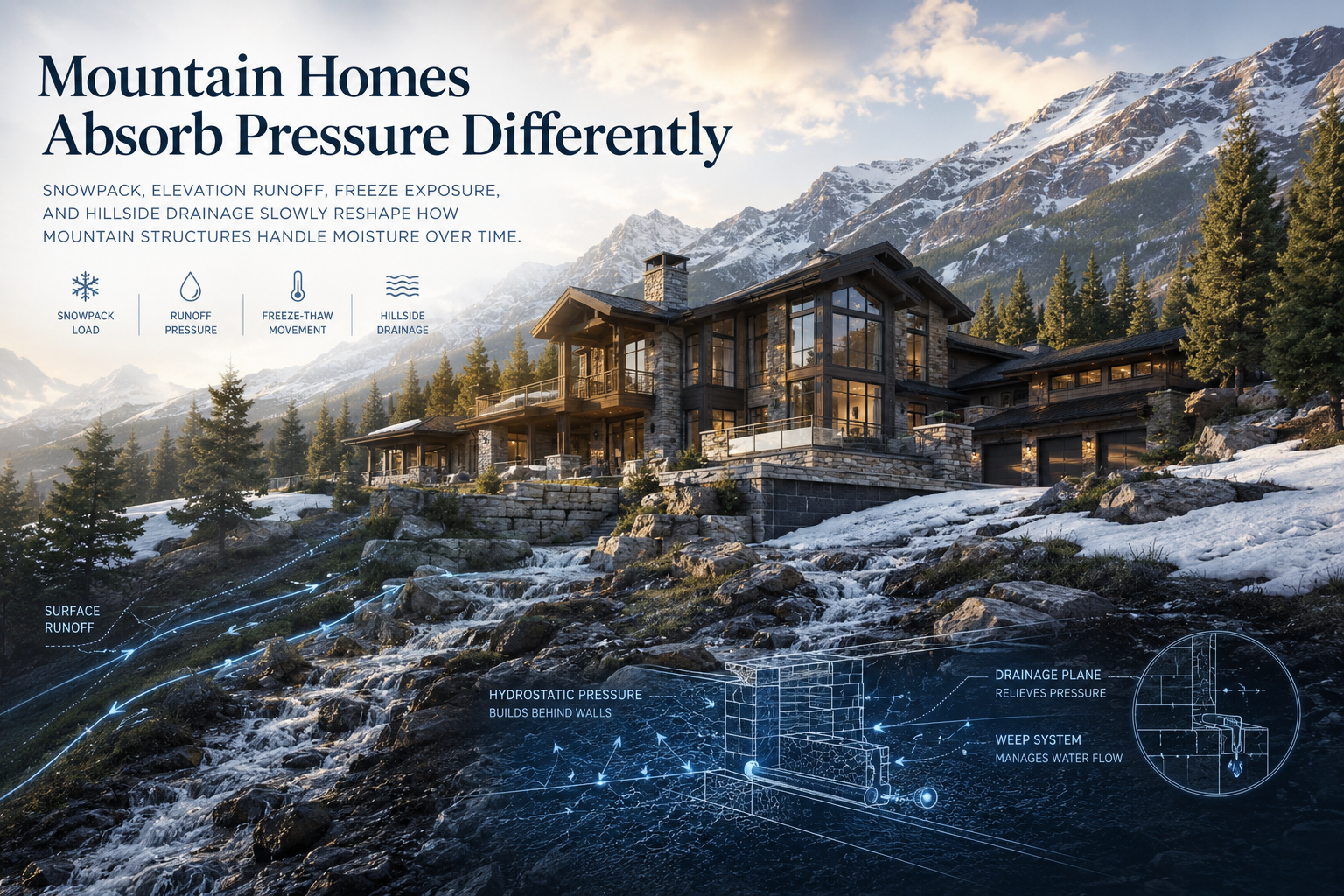
Across Colorado and other mountain regions throughout the United States, water damage is often connected to:
- snowpack runoff
- hillside saturation
- freeze-thaw expansion
- drainage concentration
- retaining wall pressure
- structural movement
- hidden crawlspace moisture
- winter vacancy exposure
- delayed leak discovery
- high-elevation weather shifts
This section explores how mountain environments create long-term structural moisture pressure across cabins, luxury homes, vacation properties, hillside communities, snowpack regions, and high-elevation infrastructure systems throughout the country.
Mountain Home Freeze Risk
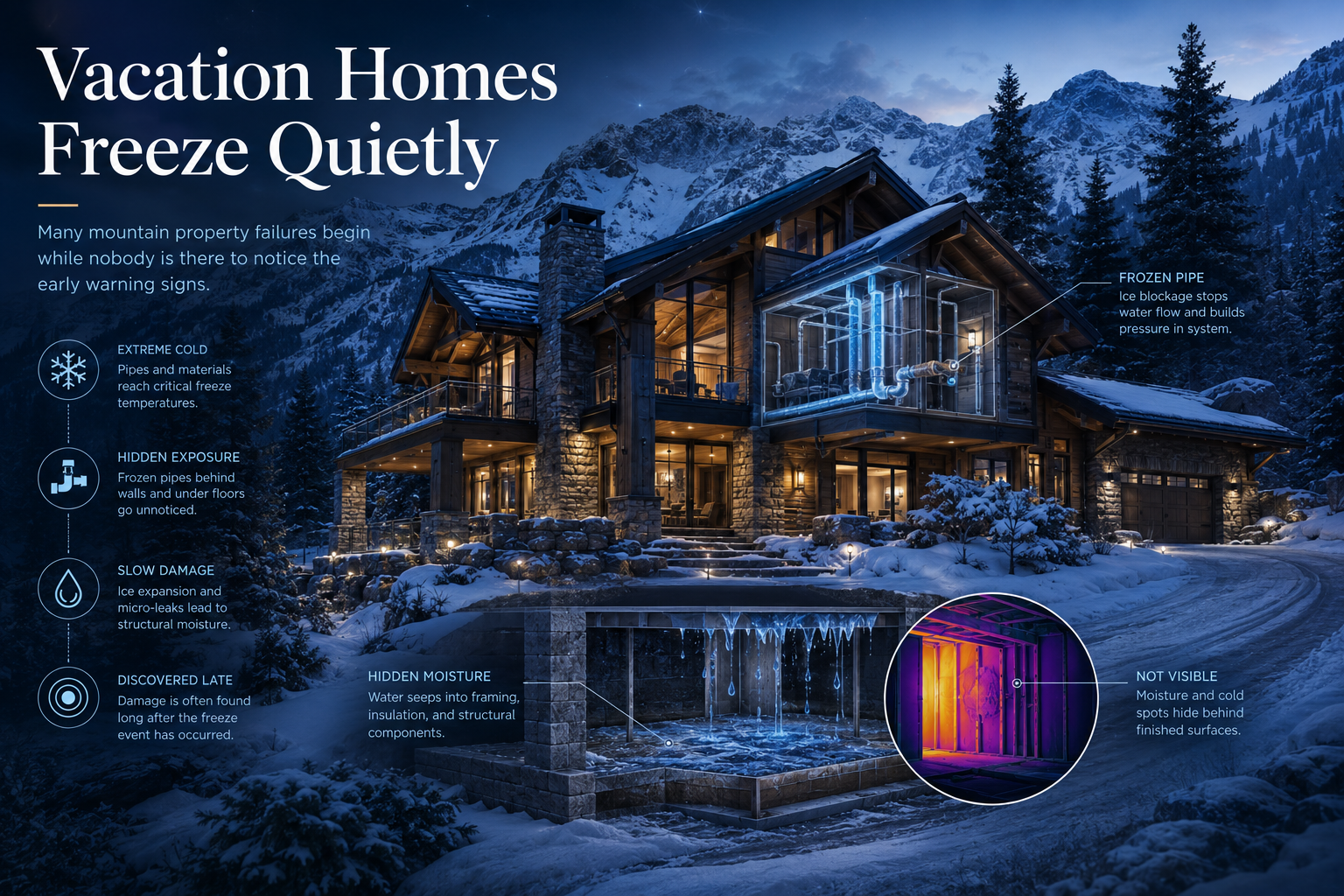
Mountain homes frequently experience different forms of freeze exposure than urban or suburban properties. Higher elevation, rapid overnight temperature swings, wind-driven cold exposure, and seasonal vacancy all increase the likelihood of hidden pipe freezes and structural moisture progression.
This section explores:
- high-elevation freeze pressure
- mountain pipe exposure
- overnight hard-freeze cycles
- hidden freeze zones
- seasonal occupancy risks
- power outage vulnerability
- winter vacancy exposure
- delayed leak discovery
Featured topics include:
- Why Mountain Homes Freeze Differently
- Hidden Pipe Freeze Zones in High-Elevation Properties
- Winter Vacancy Risks in Mountain Homes
- How Rapid Temperature Swings Stress Plumbing Systems
Snowpack & Hillside Water Pressure
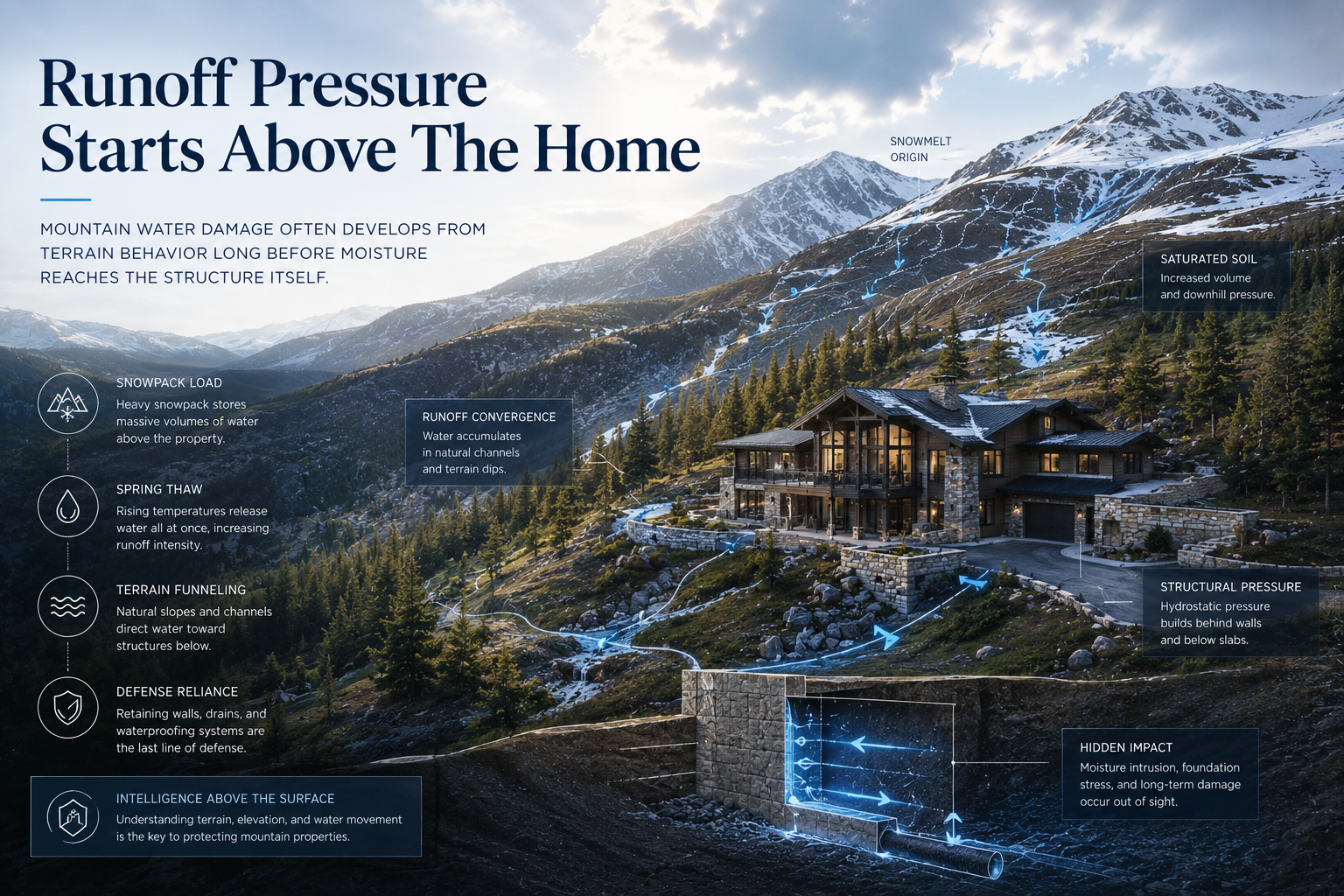
Snow accumulation creates long-term saturation pressure as runoff gradually moves downhill through soil systems, retaining walls, foundations, drainage pathways, and structural assemblies.
Unlike sudden flooding, mountain runoff pressure often develops slowly and repeatedly over time.
This section examines:
- hillside runoff concentration
- snowpack saturation
- retaining wall moisture pressure
- foundation perimeter seepage
- erosion movement
- drainage fatigue
- slope runoff systems
- delayed thaw saturation
Featured topics include:
- How Snowpack Saturates Hillside Structures
- Retaining Wall Moisture Pressure in Mountain Regions
- Why Runoff Creates Hidden Structural Saturation
- Hillside Drainage & Foundation Moisture Behavior
Luxury Mountain Home Moisture Risks
Luxury mountain homes often contain complex structural systems that respond differently to environmental stress. Oversized glazing systems, radiant heat, multi-level rooflines, large retaining structures, and high-end materials create unique forms of moisture vulnerability during freeze-thaw and snowmelt events.
This section focuses on:
- radiant heating systems
- luxury finish vulnerability
- hidden cavity saturation
- oversized window systems
- roofline runoff concentration
- thermal expansion stress
- specialty material exposure
- preservation-focused drying complexity
Featured topics include:
- Why Luxury Mountain Homes Recover Differently
- Hidden Moisture Behind High-End Finishes
- Freeze-Thaw Stress in Custom Mountain Construction
- Snowpack Pressure & Complex Roofline Drainage
Vacation Cabin Water Damage Systems
Vacation cabins and intermittently occupied mountain homes often experience hidden water damage for extended periods before discovery. Small plumbing failures, heating interruptions, or roof leaks may continue saturating structural materials for days or weeks during winter vacancy periods.
This section explores:
- remote property exposure
- delayed moisture discovery
- winter access limitations
- power outage freeze events
- hidden structural saturation
- roof leak progression
- unattended pipe failures
- snow-isolated properties
Featured topics include:
- Why Vacation Cabins Experience Different Water Damage Patterns
- Hidden Saturation in Seasonal Mountain Properties
- Winter Water Damage in Remote Homes
- Delayed Leak Discovery During Snow Conditions
High Elevation Structural Stress
Elevation changes create unique environmental pressure systems not commonly found in lower regions. Strong UV exposure, rapid freeze-thaw cycling, snowpack accumulation, drainage shifts, and fluctuating weather patterns all contribute to long-term structural movement and moisture progression.
This section examines:
- environmental movement systems
- freeze expansion cycles
- high-altitude weather stress
- drainage concentration
- structural contraction
- recurring environmental fatigue
- thermal cycling
- slope movement
Featured topics include:
- Why High Elevation Structures Experience Different Stress Patterns
- Freeze-Thaw Expansion in Mountain Regions
- Environmental Fatigue in High-Altitude Homes
- Structural Movement & Moisture Progression
Retaining Wall Saturation & Runoff
Retaining walls absorb significant environmental pressure in mountain and hillside environments. Snowmelt runoff, saturated soil, drainage buildup, and repeated freeze-thaw cycling gradually increase stress against retaining systems and adjacent foundations.
This section explores:
- retaining wall hydrostatic pressure
- hillside drainage concentration
- soil saturation
- runoff accumulation
- freeze-related movement
- structural shifting
- drainage fatigue
- hidden seepage
Featured topics include:
- Why Retaining Walls Fail in Mountain Regions
- Hillside Saturation & Structural Pressure
- Freeze-Thaw Stress Behind Retaining Systems
- Hidden Moisture Near Mountain Foundations
Remote Property Moisture Risks
Mountain homes located in remote or difficult-to-access regions often experience unique recovery challenges after water damage develops. Delayed inspections, weather access limitations, freeze conditions, and prolonged moisture exposure frequently increase structural drying complexity.
This section focuses on:
- delayed response timelines
- snow-access limitations
- remote freeze events
- hidden structural moisture
- prolonged saturation exposure
- recovery logistics
- seasonal access delays
- hidden deterioration progression
Featured topics include:
- Why Remote Mountain Properties Face Higher Moisture Risk
- Structural Drying Challenges in Snow Regions
- Delayed Water Damage Discovery in High-Elevation Homes
- Hidden Saturation in Isolated Mountain Structures
Mountain Cabin Structural Recovery
Recovering mountain properties after water damage often involves preservation-focused structural drying, hidden moisture verification, freeze-thaw reconstruction considerations, and specialized recovery sequencing.
This section examines:
- hidden cavity drying
- snow-region recovery timelines
- structural moisture verification
- freeze-related reconstruction
- specialty material coordination
- mountain access limitations
- preservation-focused recovery
- hidden environmental saturation
Featured topics include:
- Structural Recovery in Mountain Freeze Climates
- Why Mountain Water Damage Recovery Takes Longer
- Hidden Moisture in High-Elevation Structures
- Preservation-Focused Drying for Mountain Homes
Mountain Freeze & Snowpack Regions
The mountain property systems discussed throughout this section are commonly found throughout Colorado, Utah, Wyoming, Montana, Idaho, Nevada mountain regions, California mountain regions, Oregon, Washington, North Carolina mountain regions, Tennessee mountain regions, West Virginia, and other high-elevation states exposed to snowpack accumulation, freeze-thaw cycling, hillside runoff pressure, and recurring environmental movement.
These environmental conditions frequently affect:
- mountain homes
- vacation cabins
- hillside communities
- high-elevation neighborhoods
- retaining wall systems
- remote properties
- snowpack runoff corridors
- luxury mountain developments
Long-term mountain structural moisture pressure is especially common in regions exposed to:
- prolonged snow accumulation
- slope runoff concentration
- freeze-thaw expansion
- retaining wall saturation
- seasonal occupancy
- rapid temperature swings
- high-elevation drainage shifts
- recurring winter environmental stress
Many of the hidden moisture, runoff saturation, structural movement, and environmental fatigue conditions discussed throughout this section develop gradually across mountain regions where structures absorb repeated pressure year after year through snowmelt, hillside runoff, seasonal contraction, and recurring freeze-thaw movement.
