Denver Water Damage Restoration
Emergency Water Damage Cleanup, Water Extraction & Structural Drying Throughout Denver
Water damage can begin with a burst pipe, failed appliance, overflowing fixture, roof leak, frozen pipe, ice dam, storm event, or drainage problem. What starts as a small leak can quickly spread into drywall, flooring, insulation, framing, and structural components if not addressed properly.
Water Damage Repair Denver
Water Damage Repair Denver helps homeowners, property managers, investors, and commercial property owners understand, mitigate, and recover from water damage throughout the Denver area.
Primary Services
- Water Damage Restoration Denver
- Emergency Water Damage Restoration Denver
- Water Damage Repair Denver
- Water Extraction Services Denver
- Flood Damage Restoration
- Basement Flood Cleanup
- Commercial Water Damage Restoration
- Mold Remediation
- Sewage Backup Cleanup
- Frozen & Burst Pipe Water Damage Repair
When water enters a building, removing visible water is only the beginning. Proper drying, moisture monitoring, and building system evaluation are often necessary to prevent long-term structural issues.
Denver’s Unique Water Damage Challenges
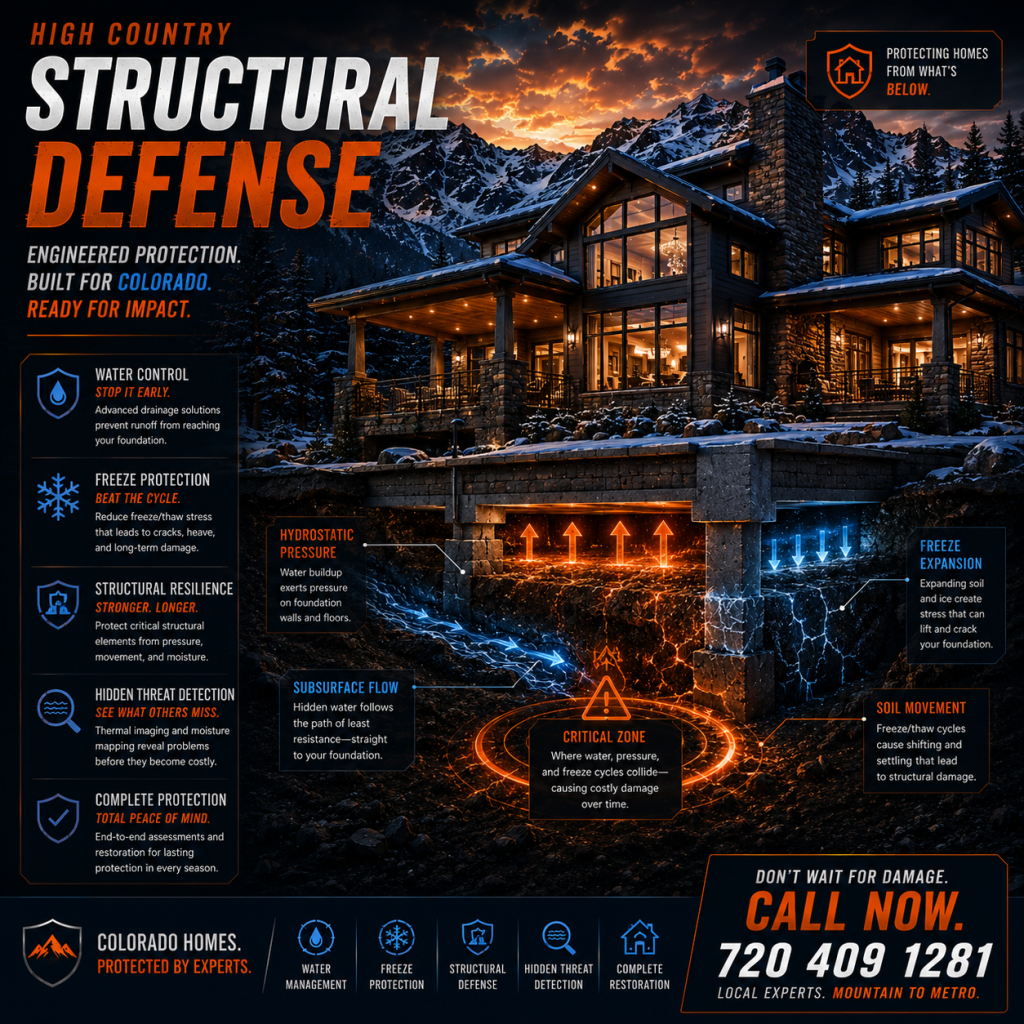
Denver experiences environmental conditions that create unique water damage risks compared to many other parts of the country.
Water Damage Services Throughout Denver
- Water Damage Restoration Denver
- Aurora Water Damage Restoration
- Greenwood Village Water Restoration
- Highlands Ranch Water Damage
- Lone Tree Water Damage Restoration
- Centennial Water Damage Restoration
- Cherry Hills Village Water Damage Restoration
These environmental pressures affect homes, multifamily properties, commercial buildings, office facilities, retail properties, and investment real estate throughout the Front Range.
Understanding how these conditions impact buildings is one of the reasons Water Damage Repair Denver was created.
Understanding Why Buildings Fail
Most restoration companies focus on cleanup after damage occurs.
We also focus on understanding why water damage occurs in the first place.
Through our Home Failure Intelligence framework, we analyze the environmental, structural, and infrastructure conditions that contribute to building failures across Denver and throughout the United States.
- Basement Flooding Repair
- Ceiling Water Damage Repair
- Drywall Water Damage Repair
- Water Damage Wall Repair
- Appliance Leak Cleanup
- Crawl Space Water Damage
- Water Damage Insurance Claims
By understanding the causes of water damage, property owners can make better decisions before minor issues become major losses.
Water Damage Services & Resources
Explore our most popular resources:
- Water Extraction
- Flood Cleanup
- Structural Drying
- Burst Pipe Water Damage
- Basement Flooding
- Commercial Water Damage
- Moisture Detection
- Mold Prevention
- Emergency Response Planning
- Property Protection Guides
Denver Water Damage Intelligence
Water damage is rarely random.
Environmental conditions, infrastructure systems, maintenance decisions, weather patterns, and building design all influence risk.
That is why we publish ongoing research, comparative city studies, environmental risk analysis, and building performance insights designed to help property owners better understand water-related building failures.
From Denver freeze-thaw cycles to national infrastructure comparisons, our goal is simple:
Help property owners understand water damage before it becomes expensive.
Serving Denver Property Owners
Whether you’re dealing with active water damage, evaluating a property, planning improvements, or researching building performance, our goal is to provide useful information about water damage risks, mitigation strategies, and recovery considerations throughout Denver and surrounding communities.
Learn more about water extraction, flood cleanup, structural drying, water mitigation, commercial recovery, and the environmental conditions that influence building performance across Colorado.
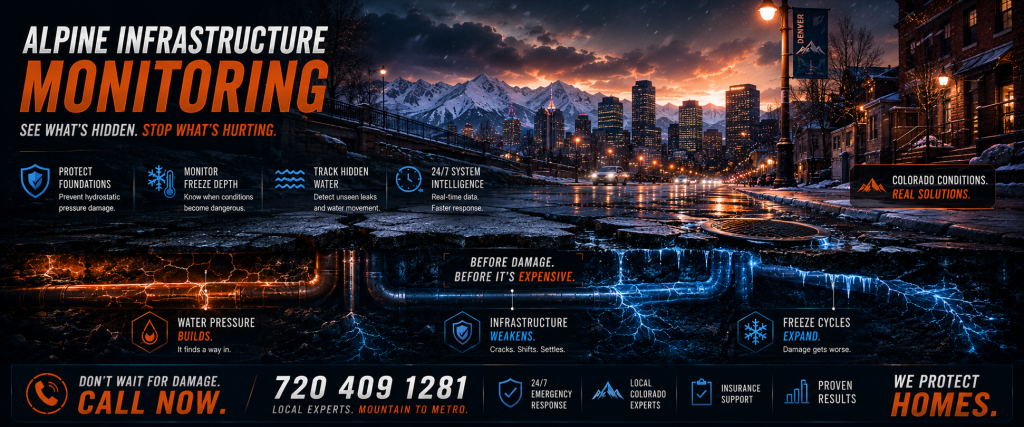
Denver vs America: Water Damage Intelligence
Water damage does not occur the same way in every city.
A burst pipe in Denver creates different challenges than a flood event in Houston. Basement moisture pressure in Minneapolis differs from slab movement in Phoenix. Mountain runoff exposure creates risks that coastal markets never experience.
Denver vs America Intelligence Series examines how geography, climate, infrastructure, and building design influence water damage risk across the country.
Featured comparisons include:
- Denver vs Minneapolis — Freeze-Thaw Stress vs Deep Freeze Exposure
- Denver vs Phoenix — Snowmelt Pressure vs Desert Expansion Cycles
- Denver vs Seattle — Mountain Runoff vs Coastal Saturation
- Denver vs Salt Lake City — Snowpack Risk vs Basin Conditions
- Denver vs Chicago — Freeze-Thaw Infrastructure Comparison
- Denver vs Boston — Winter Water Damage Analysis
These studies help property owners, investors, facility managers, and restoration professionals understand how environmental conditions shape building performance and water damage exposure.
Explore the Denver Water Damage Intelligence Library →
Rocky Mountain Water Damage Intelligence
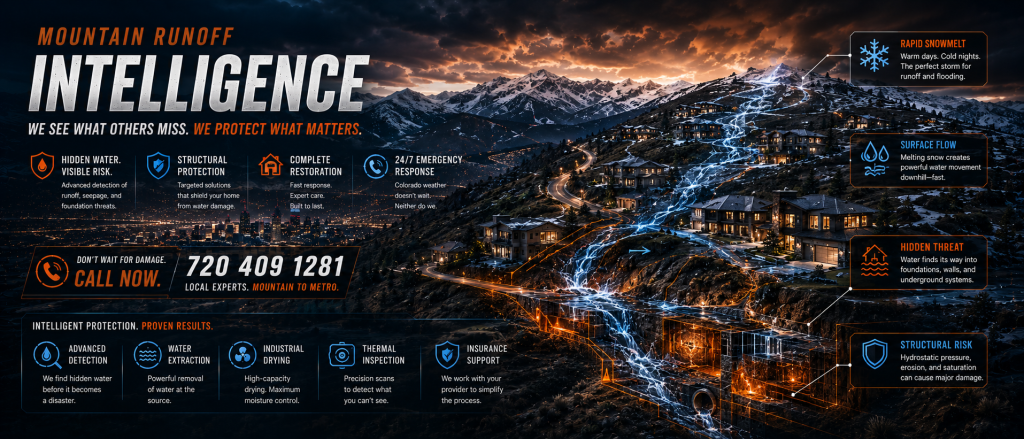
The Rocky Mountain region creates water damage conditions that differ significantly from most areas of the United States.
Higher elevations, rapid weather changes, heavy snowpack, spring runoff, freeze-thaw cycles, and steep drainage patterns create unique challenges for both residential and commercial properties.
Our Rocky Mountain Intelligence Center studies:
- Snowpack Accumulation
- Spring Runoff Pressure
- Ice Dam Formation
- Elevation-Driven Weather Events
- Foundation Moisture Exposure
- Hillside Drainage Performance
- Freeze-Thaw Structural Movement
- Mountain Property Water Risks
From Denver and Colorado Springs to Fort Collins, Boulder, Summit County, Vail, Aspen, Breckenridge, and mountain communities throughout the region, we examine how environmental conditions affect building performance and water damage risk.
Explore Rocky Mountain Intelligence →
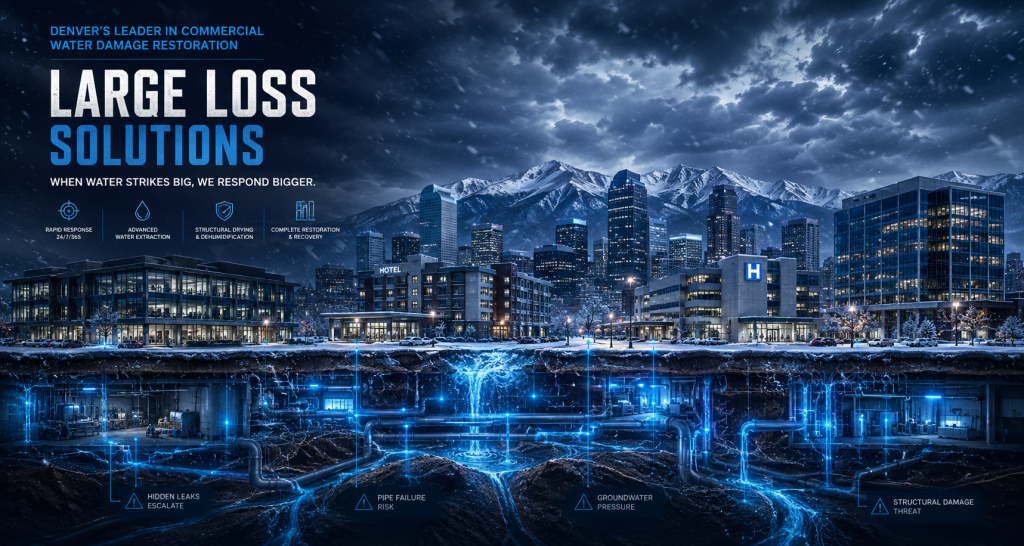
Freeze-Thaw Intelligence Center
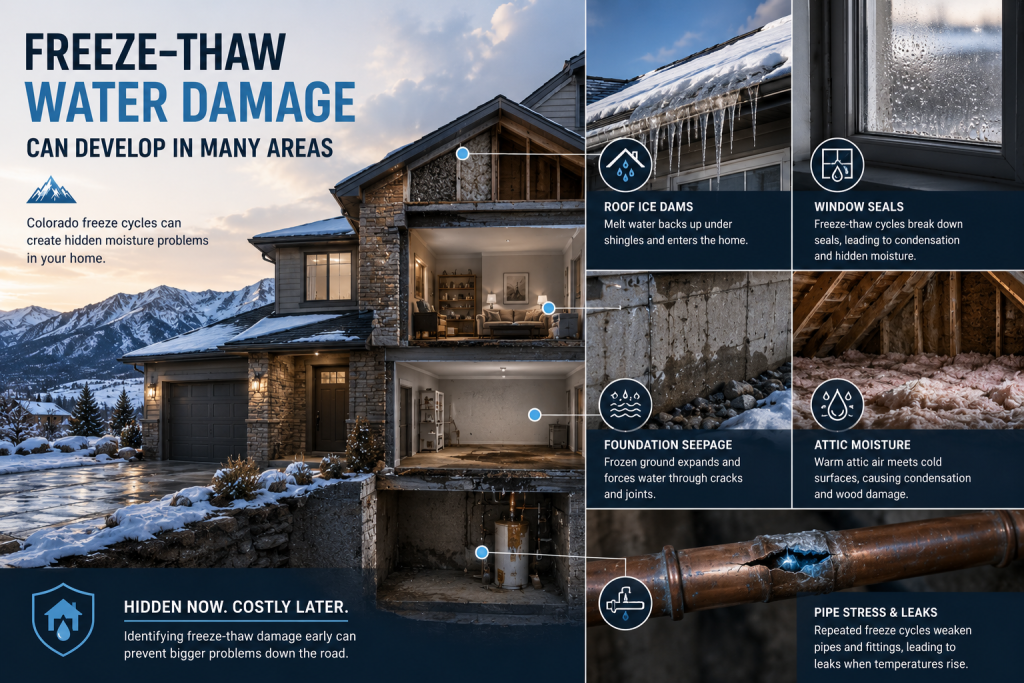
Freeze-thaw cycles are among the most misunderstood causes of water damage.
Water expands as it freezes. Pipes, roofing systems, foundations, drainage components, exterior materials, and building envelopes are constantly exposed to expansion and contraction pressure throughout the winter season.
These repeated cycles can contribute to:
- Burst Pipes
- Ice Dams
- Roof Leaks
- Foundation Cracking
- Moisture Intrusion
- Drainage Failures
- Building Envelope Deterioration
- Structural Water Damage
Our Freeze-Thaw Intelligence Center analyzes how temperature fluctuations affect homes, commercial buildings, multifamily properties, healthcare facilities, retail centers, and industrial assets.
By understanding the science behind freeze-thaw stress, property owners can better identify vulnerabilities before major water damage occurs.
Explore Freeze-Thaw Intelligence →
