Centennial Property Managers: How to Prevent Multi-Unit Frozen Pipe Issues
Overnight freeze events across Centennial can turn a single plumbing failure into a building-wide water emergency within hours. Inside apartment communities, condo buildings, and townhome developments, interconnected pipe systems allow flooding to travel through shared wall cavities, ceiling plenums, utility chases, and lower-level units long before tenants fully realize what is happening.
Properties throughout the South Metro corridor regularly deal with rapid temperature swings, exposed garage plumbing, breezeway pipe runs, and exterior-facing wall systems vulnerable to Front Range freeze pressure.
Once saturation reaches structural assemblies, recovery complexity increases fast.
Ceiling cavities absorb moisture. Subfloors retain hidden water. Insulation traps humidity deep inside shared framing systems while secondary damage continues spreading between occupied units.
Preventative planning and structural moisture awareness become critical long before severe winter weather arrives.
Why Multi-Unit Buildings Face Higher Freeze Risks
Large residential complexes contain extensive plumbing infrastructure spread across multiple temperature environments within the same structure.
Cold exposure frequently develops inside:
- Parking garage ceilings
- Exterior wall cavities
- Attic plumbing corridors
- Stairwell chases
- Vacant units
- Mechanical rooms
- Breezeways
- Utility closets
Vacancy turnover periods create especially dangerous conditions when interior temperatures fluctuate during overnight freezes.
Older Centennial apartment properties may also contain aging copper lines weakened by years of expansion and contraction stress tied to repeated freeze-thaw cycling.
Hidden Water Migration After Pipe Failures
Most multi-unit flood events extend far beyond the original rupture point.
Water commonly tracks through:
- Shared framing systems
- Ceiling assemblies
- Fireblock penetrations
- Hallway wall cavities
- Elevator corridors
- Lower-level units
- Electrical pathways
- Insulation systems
Finished lower levels and ground-floor units often experience concealed saturation beneath flooring systems after water migrates downward through structural openings.
Thermal imaging and moisture mapping help identify hidden migration patterns before deterioration expands deeper into the property.
Winter Prevention Strategies for Centennial Property Managers
Reducing freeze exposure starts with identifying vulnerable infrastructure before severe weather arrives.
Preventative planning may include:
- Insulating exposed plumbing lines
- Stabilizing vacant unit temperatures
- Monitoring mechanical spaces
- Sealing exterior penetrations
- Inspecting garage ceiling plumbing
- Protecting attic pipe runs
- Winterizing irrigation systems
- Installing leak detection systems
- Scheduling seasonal plumbing inspections
- Maintaining emergency shutoff access
Large communities with phased construction or older infrastructure require especially careful freeze preparation during prolonged cold periods.
Emergency Shutoff Coordination Matters
Minutes matter once a frozen pipe ruptures inside a shared residential structure.
Confusion surrounding shutoff locations often allows water to continue flooding occupied units long after the initial break occurs.
Property managers should maintain:
- Clearly labeled shutoff valves
- Building plumbing maps
- After-hours response procedures
- Emergency vendor coordination
- Tenant communication systems
- Mechanical room access plans
Rapid isolation helps reduce structural exposure throughout surrounding apartments and common areas.
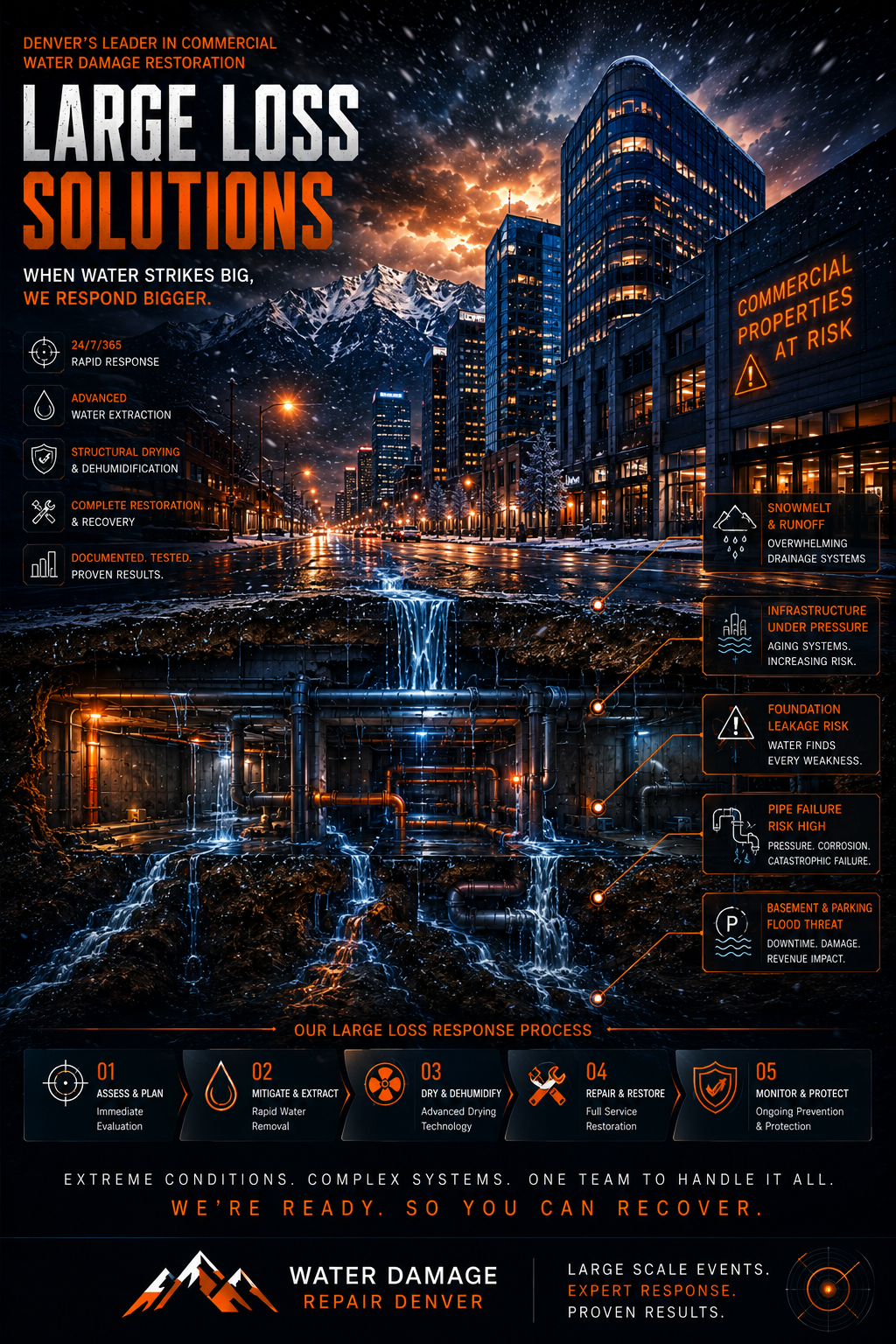
Structural Drying After Multi-Unit Flooding
Water trapped inside apartment buildings behaves differently than single-family residential flooding.
Shared assemblies retain moisture inside:
- Ceiling plenums
- Double-wall systems
- Subfloor cavities
- Corridor framing
- Acoustic insulation
- Utility penetrations
Structural stabilization often requires:
- Emergency extraction
- Commercial dehumidification
- Moisture mapping
- Thermal imaging inspections
- Ceiling cavity drying
- Wall cavity drying
- Subfloor drying
- Negative air containment
- Continuous moisture monitoring
Controlled drying helps limit long-term deterioration while reducing disruption for occupied tenants whenever possible.
Mold Prevention in Occupied Apartment Communities
Extended saturation within multi-unit structures increases the risk of microbial growth due to limited airflow and interconnected building cavities.
Hidden moisture may eventually lead to:
- Odor complaints
- Ceiling staining
- Drywall instability
- Flooring deterioration
- Indoor air concerns
- Tenant displacement
- Expanded remediation costs
Early containment and aggressive dehumidification help stabilize affected units before contamination spreads through shared assemblies.
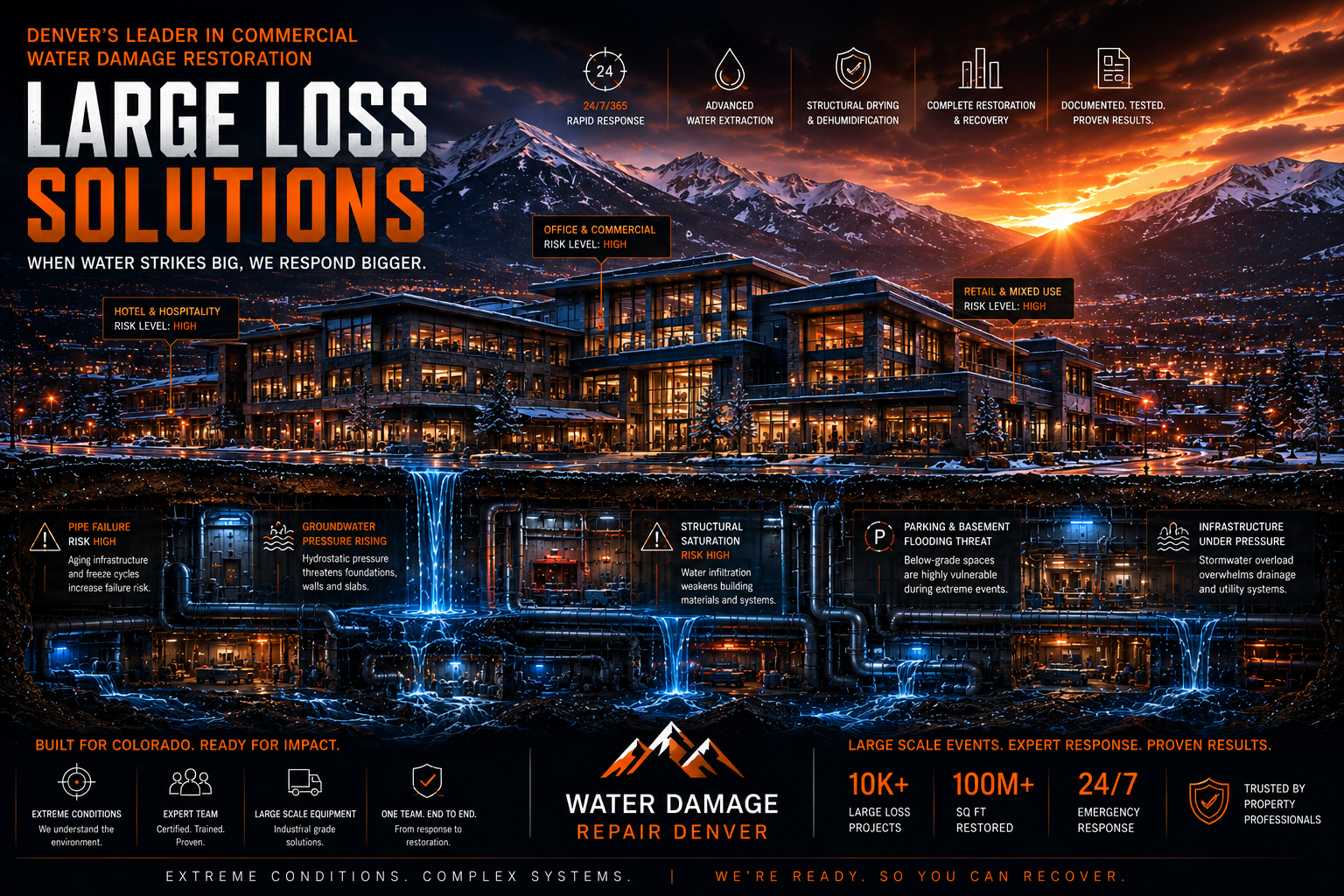
Frozen Pipe Restoration for Centennial Multi-Unit Properties
Apartment complexes, condo communities, and mixed-use developments throughout Centennial face constant pressure from freeze-thaw expansion, hidden plumbing exposure, and overnight temperature drops.
Mitigation and restoration services include:
- Emergency extraction
- Burst pipe cleanup
- Thermal imaging inspections
- Moisture mapping
- Structural drying
- Dehumidification
- Ceiling cavity drying
- Subfloor drying
- Containment systems
- Moisture monitoring
- Multi-unit stabilization
- Hidden moisture detection
Advanced drying systems and detailed structural moisture control help Centennial property managers reduce damage severity after major frozen pipe events.