Centennial Water Damage Cleanup: Comprehensive Service from Flood to Finish
A major water loss inside a Centennial home rarely ends after the standing water disappears. Structural saturation continues to spread beneath flooring systems, behind drywall, within insulation cavities, and through ceiling assemblies long after the original flood source is contained.
Front Range snowmelt, freeze-thaw cycling, slab movement, and hidden plumbing failures regularly create layered moisture conditions throughout Centennial neighborhoods. Finished basements across the South Metro area often trap water beneath subfloors and inside framing systems where deterioration develops quietly beneath finished living spaces.
Recovery becomes much more complex once hidden structural moisture takes hold.
Drying the surface alone does not stabilize the property.
Comprehensive water damage cleanup focuses on controlling environmental conditions, tracking concealed migration, and protecting structural materials from long-term deterioration throughout every phase of the recovery process.

Emergency Water Extraction Centennial
Standing water immediately begins damaging flooring systems, drywall, cabinetry, insulation, and framing assemblies.
Saturation spreads especially fast through:
- Hardwood flooring
- Finished basement carpeting
- Ceiling cavities
- Bathroom wall systems
- Kitchen subfloors
- Utility room framing
- Insulation layers
- Baseboard transitions
Emergency extraction removes large volumes of water before secondary absorption expands deeper into structural materials.
Containment systems help isolate affected areas while reducing the migration of humidity into surrounding areas of the home.
Hidden Moisture After Flooding
Visible water rarely reflects the full extent of structural exposure.
Concealed saturation frequently develops:
- Beneath flooring systems
- Inside insulation cavities
- Along framing assemblies
- Behind cabinetry
- Through ceiling joists
- Around plumbing penetrations
- Under tile installations
- Inside basement wall systems
Older Centennial homes with remodeled lower levels often have layered structural conditions in which moisture remains trapped long after surfaces appear dry.
Thermal imaging and moisture mapping help identify hidden migration patterns before deterioration worsens inside concealed building assemblies.
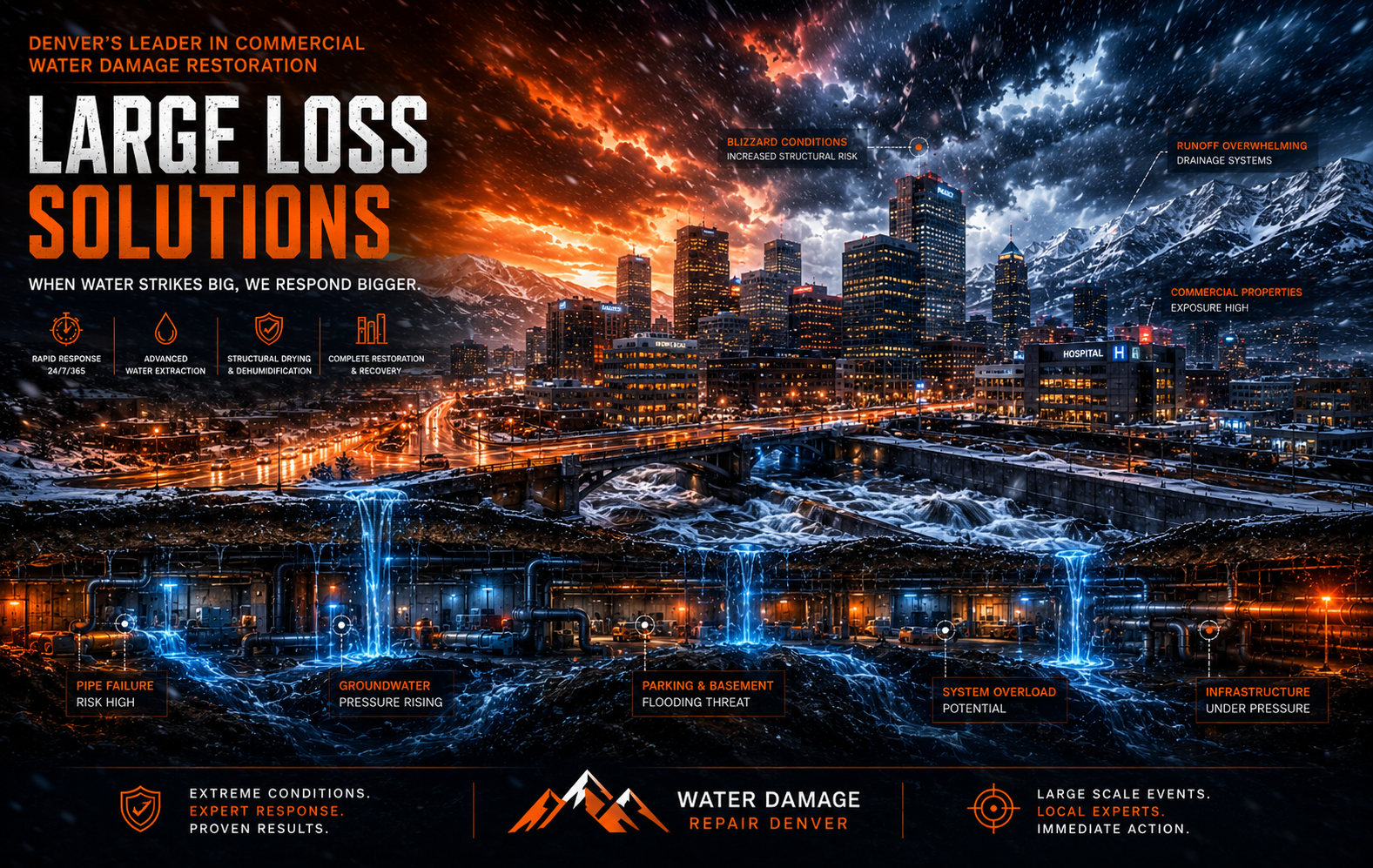
Structural Drying and Dehumidification
Colorado elevation changes and low ambient humidity shifts create uneven evaporation patterns after interior flooding events.
Materials may appear dry on the surface while hidden moisture remains trapped within framing systems and subfloors beneath finished surfaces.
Structural drying strategies commonly involve:
- Commercial dehumidification
- Air movement systems
- Thermal imaging inspections
- Moisture mapping
- Wall cavity drying
- Ceiling cavity drying
- Subfloor drying
- Hardwood floor drying
- Containment barriers
- Moisture monitoring
Controlled stabilization helps reduce secondary damage while protecting salvageable materials whenever possible.
Basement Water Damage Cleanup Centennial
Finished basements throughout Centennial face elevated moisture risks after plumbing failures, snowmelt runoff, and foundation pressure events.
Hydrostatic pressure and seasonal slab movement frequently contribute to hidden lower-level saturation inside:
- Media rooms
- Guest bedrooms
- Storage spaces
- Home gyms
- Utility corridors
- Basement framing systems
- Insulated wall cavities
- Flooring underlayment
Moisture monitoring becomes especially important beneath finished basement flooring, where trapped moisture may continue to spread without visible warning signs.
Subfloor drying helps stabilize concealed structural layers before long-term deterioration develops.
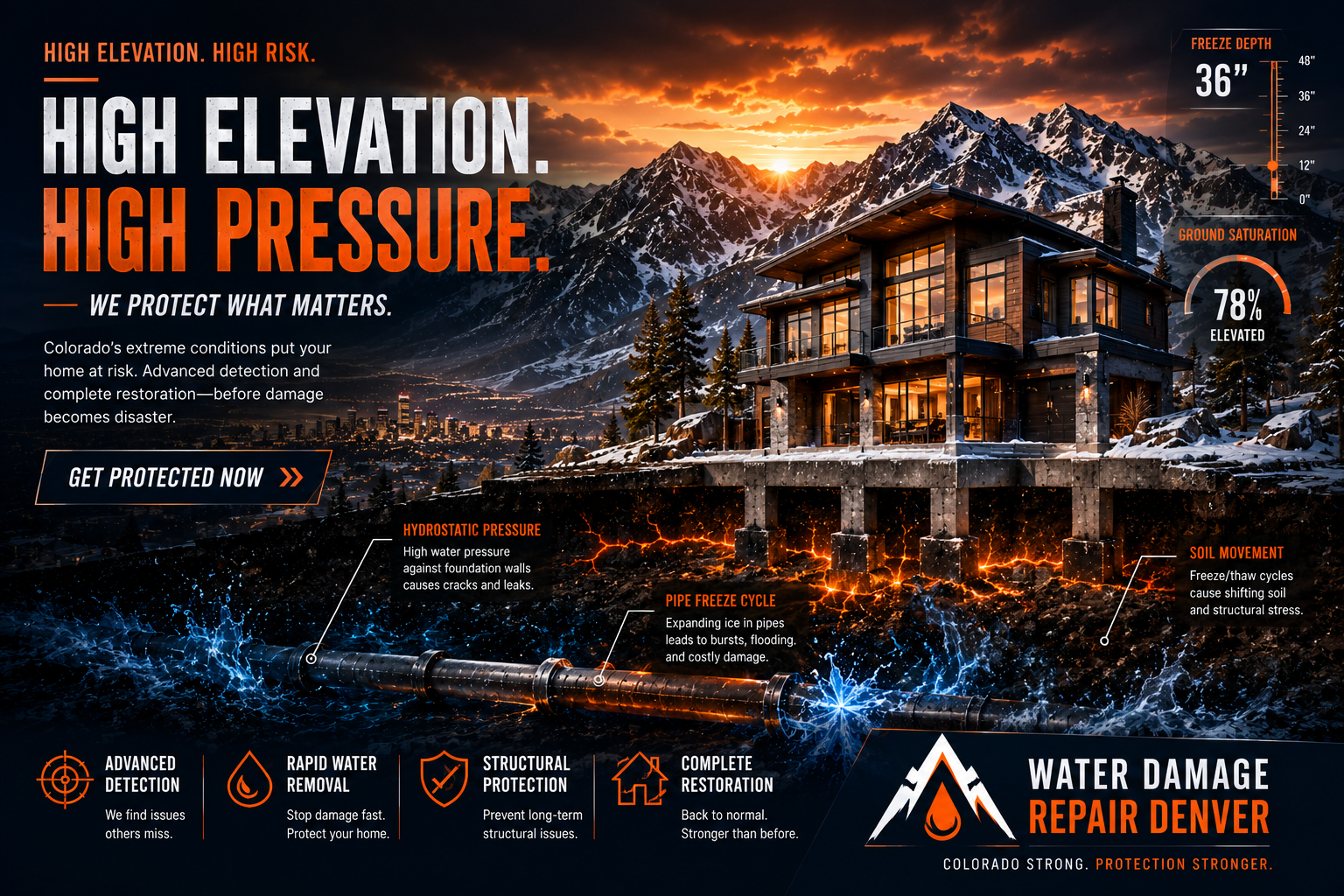
Burst Pipe and Freeze Damage Recovery
Rapid overnight temperature swings across Centennial Place continuously put pressure on plumbing systems hidden inside garages, crawlspaces, attics, and exterior-facing walls.
Frozen pipes rupture and flood commonly:
- Ceiling assemblies
- Hardwood flooring
- Laundry rooms
- Finished lower levels
- Kitchen plumbing walls
- Utility spaces
- Bathroom framing systems
Water migration often continues behind structural materials after active plumbing leaks are repaired.
Ceiling cavity drying and structural moisture monitoring help identify concealed saturation before additional reconstruction becomes necessary.
Repairing Walls, Floors, and Structural Materials
Flood recovery involves far more than removing visible damage.
Moisture exposure frequently weakens:
- Drywall systems
- Baseboards
- Flooring assemblies
- Subfloors
- Insulation materials
- Ceiling framing
- Cabinet systems
- Structural supports
Targeted drying strategies help stabilize affected materials before repair and reconstruction planning begins.
Protecting structural integrity early often reduces the overall scope of restoration later.
Mold Prevention During Water Damage Cleanup
Extended moisture exposure creates ideal conditions for microbial growth inside enclosed structural environments.
Hidden saturation may eventually contribute to:
- Odor conditions
- Ceiling deterioration
- Flooring instability
- Drywall breakdown
- Indoor air concerns
- Expanded remediation costs
Continuous dehumidification and controlled moisture stabilization help reduce long-term contamination risks throughout the drying process.
Water Damage Cleanup Centennial
Centennial homes face constant structural exposure from freeze-thaw expansion, Front Range runoff, hidden plumbing failures, slab movement, and basement saturation.
Comprehensive restoration services include:
- Emergency extraction
- Flood cleanup
- Moisture mapping
- Thermal imaging inspections
- Structural drying
- Dehumidification
- Ceiling cavity drying
- Subfloor drying
- Hardwood floor drying
- Containment systems
- Moisture monitoring
- Hidden moisture detection
Advanced drying systems and detailed structural stabilization help Centennial homeowners recover faster from severe flooding and water damage.

