Cold Snap Crisis: What Temperature Puts Centennial Pipes at Risk?
A sudden Colorado cold snap can place Centennial plumbing systems under dangerous pressure in just a few hours. Once temperatures drop low enough, water in vulnerable pipes begins to freeze silently behind walls, above ceilings, in crawlspaces, and beneath finished lower levels long before homeowners notice visible signs of trouble.
Many frozen pipe emergencies throughout Centennial develop overnight after rapid Front Range temperature drops combine with wind exposure and poorly insulated plumbing runs.
The actual danger point is not always tied to one exact temperature.
Pipe vulnerability depends on:
- Wind chill exposure
- Pipe location
- Insulation quality
- Exterior wall construction
- Garage temperatures
- Crawlspace airflow
- Vacancy conditions
- Length of the freeze event
Some homes experience frozen pipes at 32 degrees. Others remain stable well below zero.
Environmental exposure determines the real risk.
When Pipes Become Vulnerable in Centennial
Most residential plumbing systems begin to experience higher freeze risk once outdoor temperatures fall below 20°F for extended periods.
Serious danger increases rapidly when temperatures reach:
- 15°F and below overnight
- Single-digit cold snaps
- Subzero wind chill events
- Multi-day freeze periods
Exterior-facing plumbing walls throughout Centennial neighborhoods often experience freezing conditions on the interior before indoor temperatures noticeably change in the home.
Detached garages, attic plumbing runs, and basement ceiling pipes remain especially vulnerable to prolonged cold exposure in the South Metro.
Why Freeze-Thaw Cycling Creates So Much Damage
Colorado plumbing systems rarely experience one consistent freeze period.
Instead, Centennial homes often undergo repeated freeze-thaw cycles, in which pipes partially freeze overnight and thaw during daytime warming.
That expansion-and-release pattern creates ongoing stress inside:
- Copper plumbing lines
- Pipe fittings
- Shutoff valves
- Mechanical joints
- Water supply connections
- Exterior hose bibs
Older homes near central Centennial frequently contain aging copper systems that have been weakened by years of winter expansion pressure.
Many pipe ruptures actually occur during thawing — not during the freeze itself.
Once pressure is released, water immediately begins migrating into structural assemblies.
The Most Vulnerable Areas Inside Centennial Homes
Certain plumbing locations fail far more often during winter cold snaps.
High-risk freeze zones commonly include:
- Garage walls
- Crawlspaces
- Basement ceilings
- Exterior-facing bathrooms
- Attic plumbing corridors
- Under-sink cabinet walls
- Vacant rooms
- Detached structures
Finished basements become especially vulnerable once hidden pipe leaks begin saturating insulation systems and subfloors beneath finished living spaces.
Thermal imaging inspections help identify colder structural zones before freezing conditions lead to burst-pipe flooding.
Warning Signs a Pipe Is Freezing
Frozen plumbing systems usually show subtle pressure changes before full rupture occurs.
Common warning signs include:
- Reduced water flow
- Frost on exposed pipes
- Banging pipe noises
- Cold wall sections
- Pressure fluctuations
- Unusual odors near drains
- Water discoloration
- Slow faucet output
Small freeze blockages may continue expanding for hours before structural flooding begins.
Immediate stabilization becomes critical once plumbing pressure starts changing unexpectedly during severe cold weather.
What Happens After a Pipe Bursts
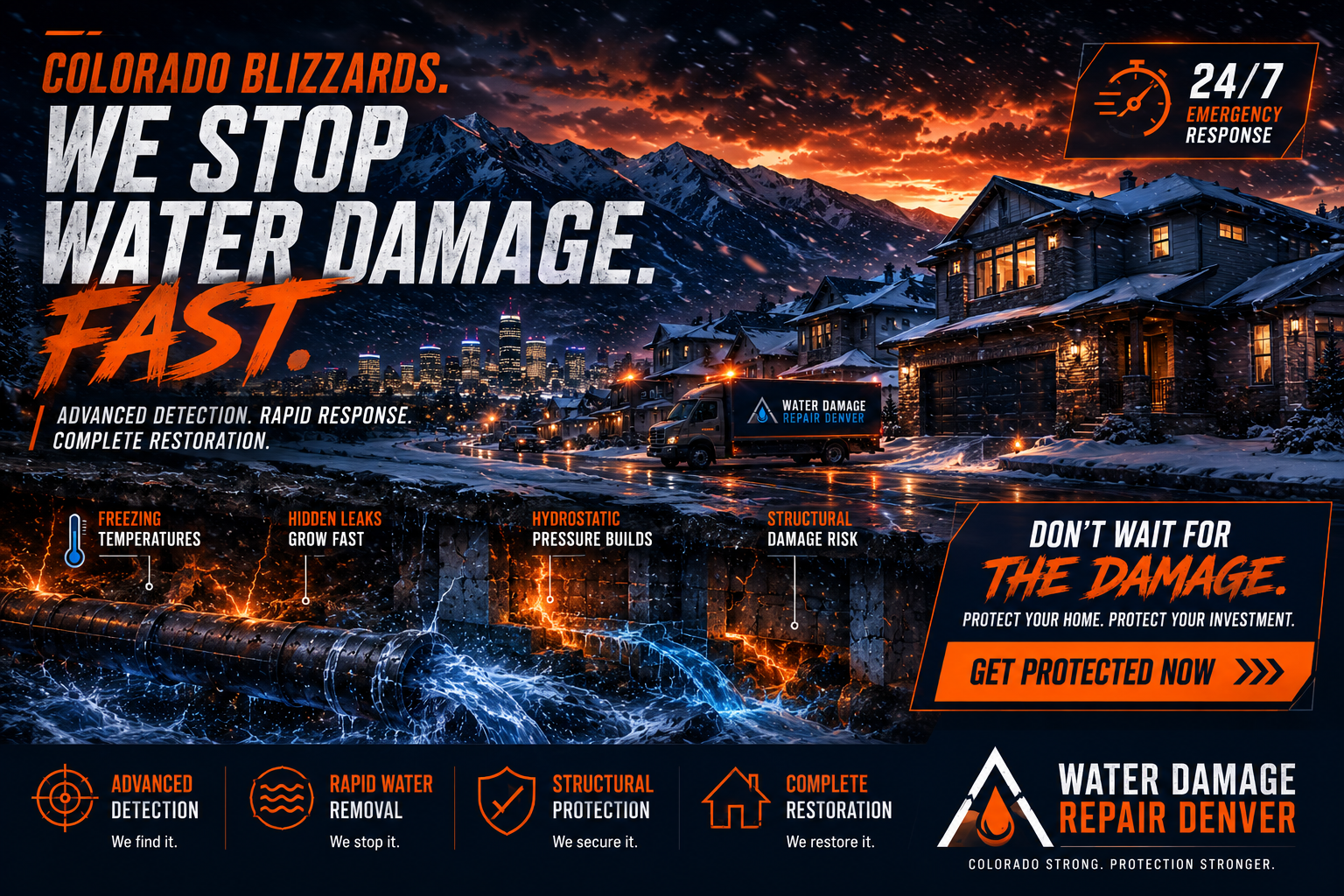
A cracked pipe inside a Centennial home can release water into structural assemblies long before visible damage reaches finished surfaces.
Hidden saturation frequently spreads through:
- Wall cavities
- Ceiling systems
- Hardwood flooring
- Insulation layers
- Basement framing
- Cabinet systems
- Subfloor assemblies
- Utility corridors
By the time ceiling stains or warped flooring appear, moisture may already be affecting multiple structural layers beneath the surface.
Subfloor drying and cavity drying become essential once water reaches concealed building assemblies.
Emergency Structural Drying After Freeze Damage
Stopping active flooding represents only the beginning of the recovery process.
Structural stabilization often requires:
- Emergency extraction
- Moisture mapping
- Thermal imaging inspections
- Commercial dehumidification
- Ceiling cavity drying
- Wall cavity drying
- Subfloor drying
- Hardwood floor drying
- Containment systems
- Moisture monitoring
Controlled drying helps reduce long-term deterioration while protecting salvageable materials whenever possible.
How to Reduce Frozen Pipe Risk During Cold Snaps
Winter preparation becomes increasingly important during extended freezes in Colorado.
Preventative strategies may include:
- Insulating exposed pipes
- Opening cabinet doors
- Maintaining indoor heat
- Sealing crawlspace drafts
- Disconnecting exterior hoses
- Monitoring vacant properties
- Stabilizing garage temperatures
- Installing leak detection systems
Homes with older plumbing infrastructure and finished lower levels often require additional freeze protection planning before severe weather arrives.
Frozen Pipe Restoration Centennial
Centennial homes face constant winter plumbing pressure from freeze-thaw cycling, rapid overnight temperature swings, exposure of hidden pipes, and Front Range cold weather events.
Restoration and mitigation services include:
- Frozen pipe repair
- Emergency extraction
- Moisture mapping
- Thermal imaging inspections
- Structural drying
- Dehumidification
- Ceiling cavity drying
- Subfloor drying
- Leak stabilization
- Containment systems
- Moisture monitoring
- Hidden moisture detection
Advanced drying systems and detailed structural stabilization help Centennial homeowners recover faster from frozen-pipe and winter-flooding emergencies.