Insurance Shortcuts & Structural Recovery
Water damage recovery is often far more complex than simply removing visible water and replacing damaged materials. In high-end homes, mountain properties, freeze-climate environments, and structurally complex buildings, long-term recovery frequently depends on how thoroughly hidden moisture, environmental stress, and structural drying are addressed during the earliest stages of mitigation.
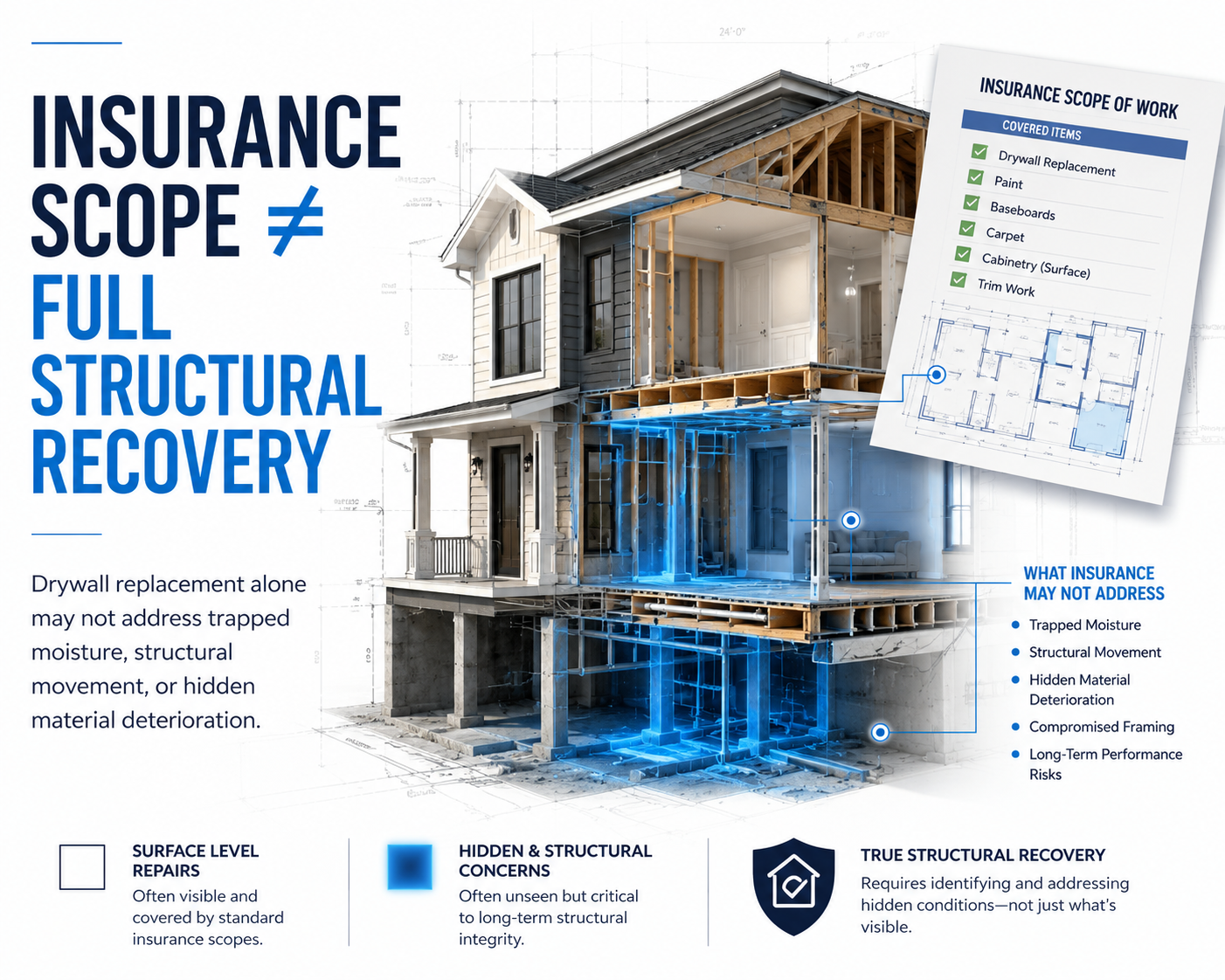
Many homeowners assume all recovery systems follow the same standards. In reality, recovery approaches can vary significantly depending on:
- drying timelines
- moisture verification standards
- reconstruction sequencing
- material approvals
- structural complexity
- preservation priorities
- vendor workflows
- environmental conditions
In freeze-climate and mountain environments, hidden moisture often behaves differently due to:
- snowmelt saturation
- freeze-thaw movement
- delayed evaporation
- insulation retention
- structural contraction and expansion
- hillside runoff pressure
- cold-weather drying limitations
This section explores how structural recovery, preservation-focused drying, hidden moisture progression, and insurance-driven workflow shortcuts can affect long-term property conditions across mountain and freeze-climate regions throughout Colorado.
Why High-End Homes Require Different Recovery Strategies
Luxury homes, mountain properties, and architecturally complex structures often contain materials and assemblies that respond differently to water intrusion than standard residential construction.
Custom cabinetry, radiant heat systems, imported flooring, oversized glazing systems, hidden structural cavities, and specialty finishes frequently require more detailed drying and reconstruction strategies.
This section explores:
- preservation-focused drying
- specialty material vulnerability
- custom finish exposure
- hidden structural complexity
- radiant heating systems
- oversized window systems
- structural cavity moisture
- high-end reconstruction sequencing
Featured topics include:
- Why Luxury Homes Recover Differently After Water Damage
- Hidden Moisture Behind High-End Finishes
- Structural Drying Challenges in Custom Homes
- Why Complex Materials Extend Recovery Timelines
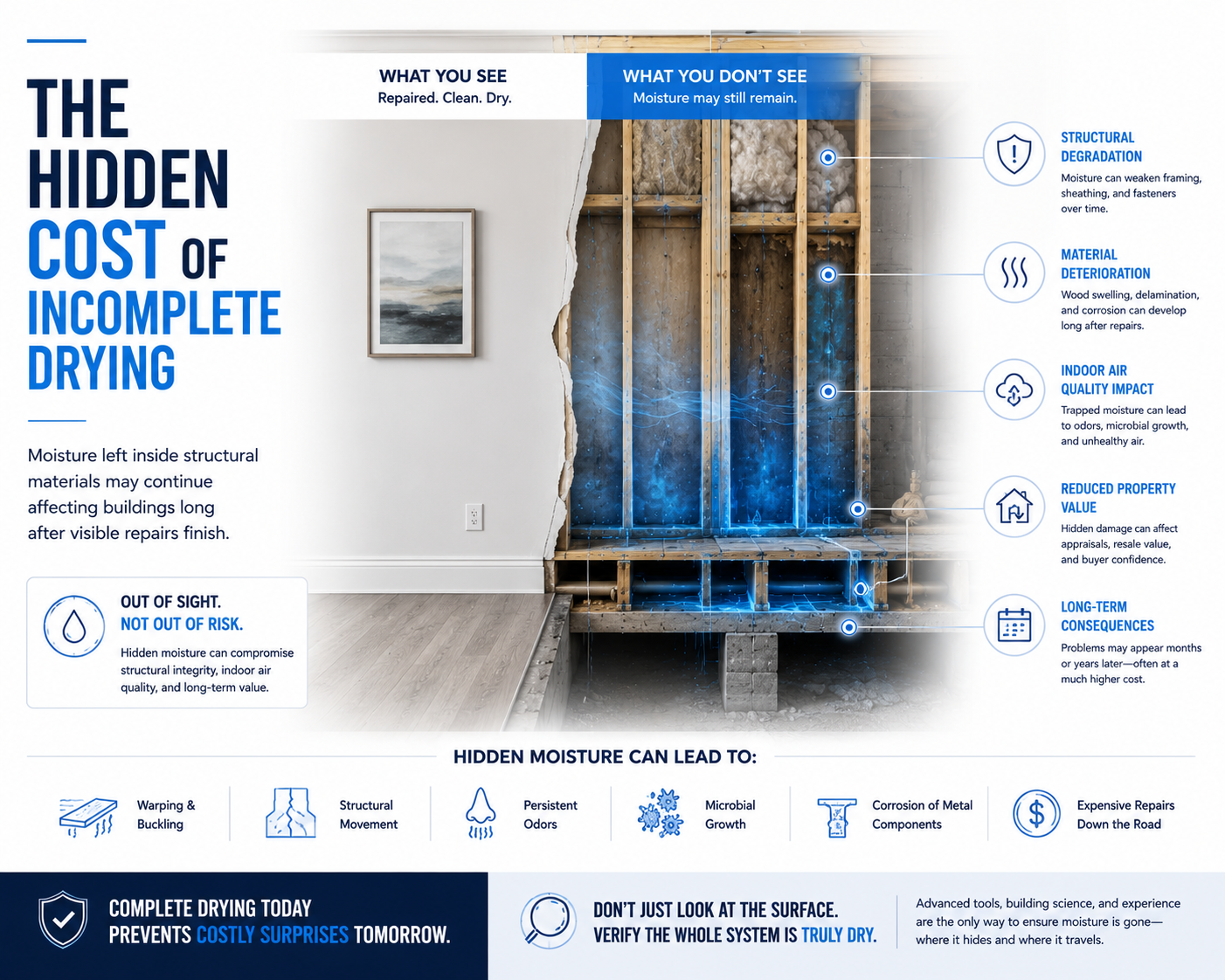
Surface Restoration vs Structural Recovery
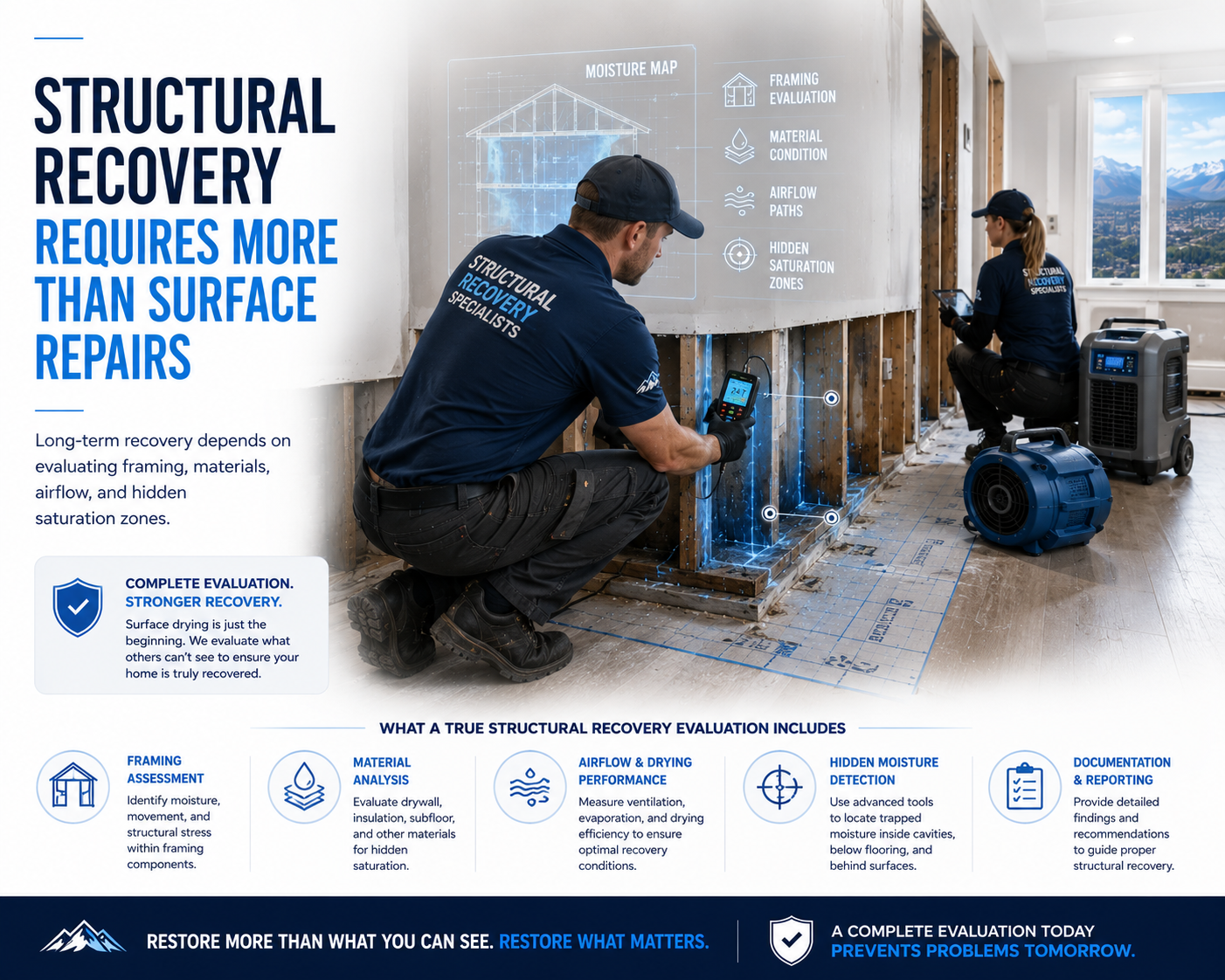
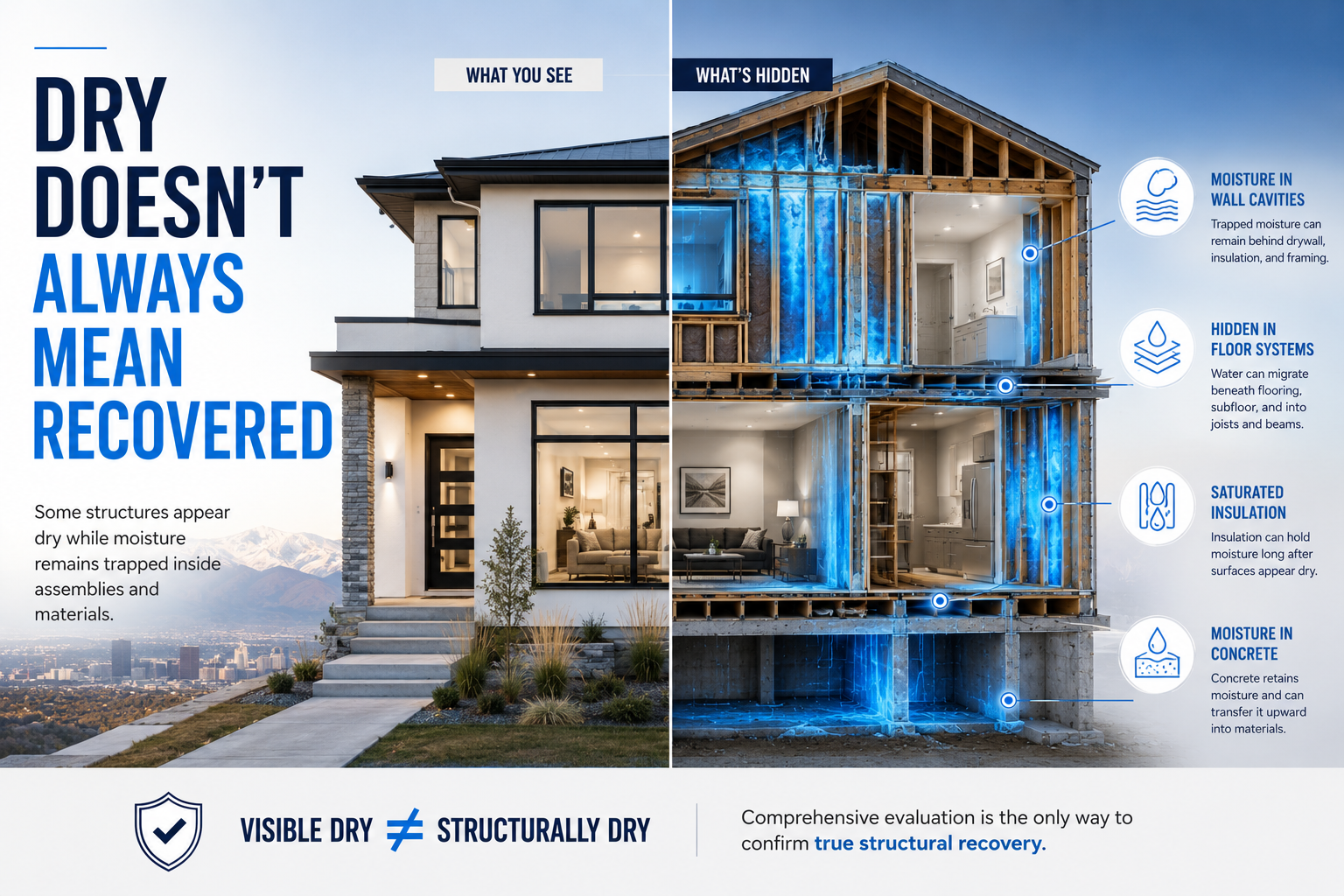
Visible repairs do not always reflect the true internal condition of a structure. Walls, flooring systems, insulation cavities, framing assemblies, and subfloors may continue retaining hidden moisture long after surfaces appear restored.
This section focuses on:
- cosmetic restoration vs structural drying
- hidden cavity moisture
- trapped insulation saturation
- concealed subfloor moisture
- delayed deterioration
- hidden structural fatigue
- recurring odor progression
- internal moisture verification
Featured topics include:
- Why Structural Recovery Goes Beyond Surface Repairs
- Hidden Moisture After Cosmetic Restoration
- Surface Dryness vs Internal Structural Saturation
- Why Water Damage Returns After “Completed” Repairs
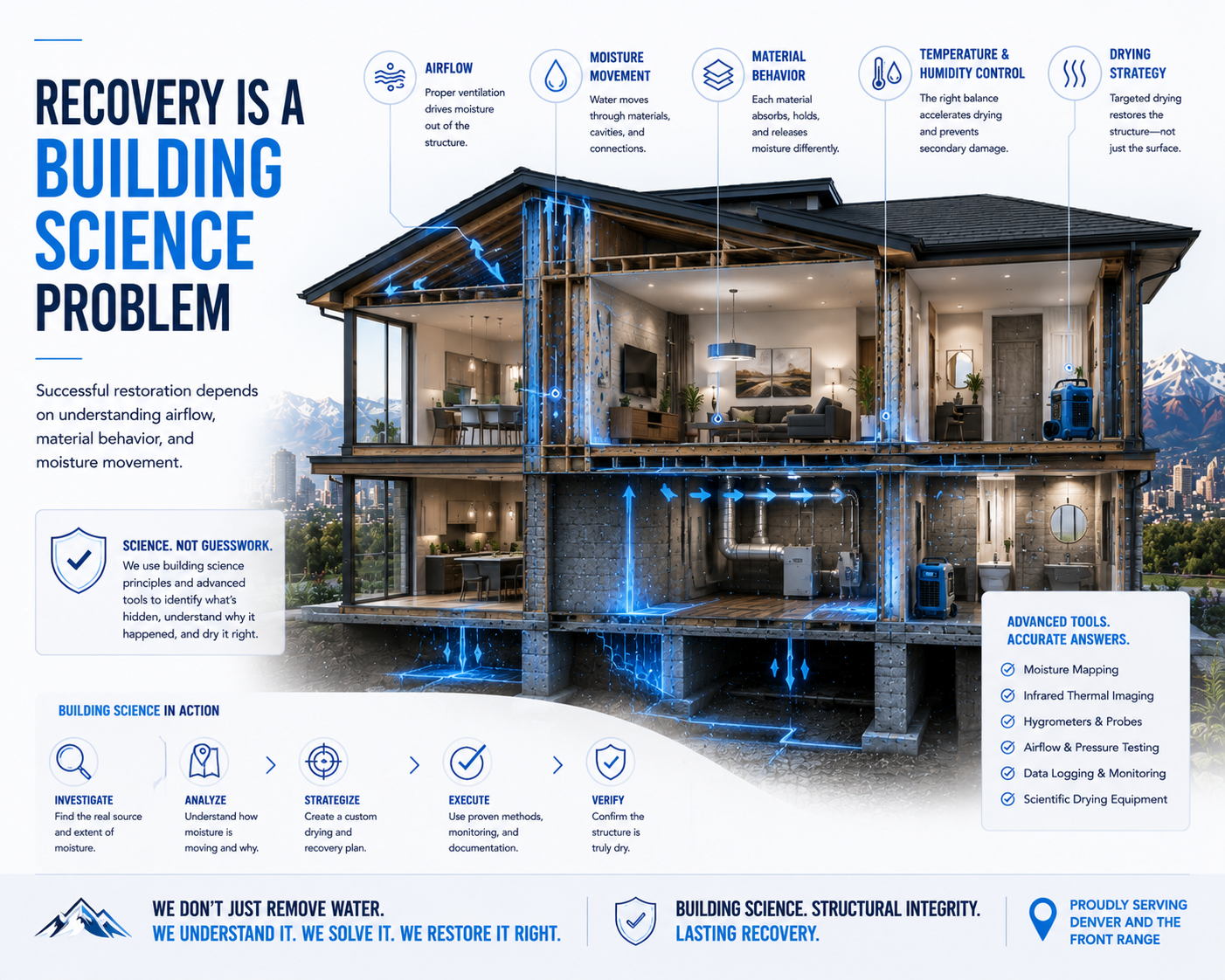
Why Structural Drying Standards Matter
Structural drying is one of the most important factors affecting long-term recovery after water damage. In freeze-climate environments, drying conditions become even more complicated due to cold-weather evaporation limits, snowmelt humidity, and recurring environmental moisture pressure.
This section examines:
- hidden structural saturation
- cavity drying
- moisture verification
- insulation retention
- subfloor drying complexity
- freeze-climate drying limitations
- environmental humidity
- delayed moisture stabilization
Featured topics include:
- Why Structural Drying Is More Complex in Freeze Climates
- Hidden Moisture Inside Walls & Flooring Systems
- Why Moisture Verification Matters
- Freeze-Thaw Drying Challenges in Mountain Homes
Why Water Damage Recovery Gets Delayed in Complex Homes
High-end and mountain properties often experience longer recovery timelines due to reconstruction complexity, specialty material sourcing, environmental conditions, and preservation-focused drying requirements.
This section explores:
- specialty material approvals
- reconstruction sequencing
- imported flooring delays
- cabinetry replacement complexity
- engineering evaluations
- structural moisture verification
- environmental drying limitations
- hidden cavity reconstruction
Featured topics include:
- Why Large Water Damage Losses Take Longer to Recover
- Material Delays in Luxury Home Restoration
- Reconstruction Complexity in Mountain Homes
- Why Hidden Moisture Extends Recovery Timelines

Why “Approved Vendor” Doesn’t Always Mean Preservation-Focused
Many recovery systems are designed around workflow efficiency, standardized timelines, and high claim volume processing. Complex homes and mountain properties may require different levels of structural evaluation, moisture verification, and preservation-focused drying than standardized workflows typically prioritize.
This section examines:
- workflow standardization
- drying timeline pressure
- structural preservation priorities
- hidden moisture verification
- reconstruction sequencing
- complex material coordination
- environmental recovery limitations
- freeze-climate drying complications
Featured topics include:
- Why Complex Homes Require Different Recovery Attention
- Preservation-Focused Drying vs Standardized Recovery
- Hidden Moisture Risks in High-Volume Workflows
- Why Structural Complexity Changes Recovery Strategy

Insurance Shortcut Reality
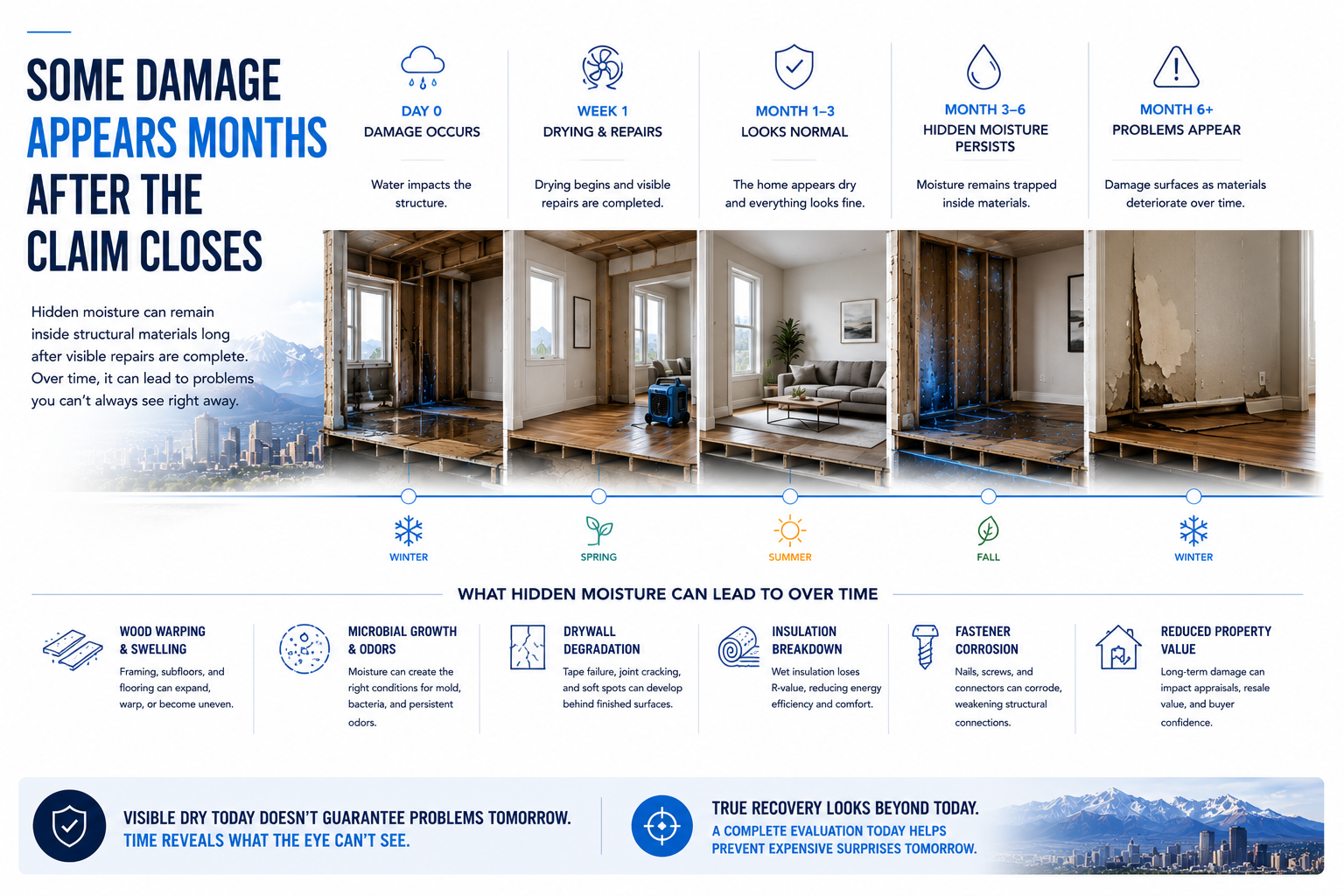
Many water damage shortcuts are not immediately visible during the earliest stages of cleanup. Hidden moisture, trapped saturation, incomplete drying, and cosmetic-focused repairs may continue affecting structures long after visible work appears finished.
This section focuses on:
- hidden moisture shortcuts
- cosmetic-only restoration
- incomplete cavity drying
- delayed deterioration
- concealed saturation
- rushed drying timelines
- recurring moisture progression
- hidden structural fatigue
Featured topics include:
- Hidden Water Damage After “Finished” Cleanup
- Why Moisture Problems Return Later
- Structural Drying vs Cosmetic Drying
- Long-Term Risks of Incomplete Recovery
Hidden Moisture After “Completed” Drying
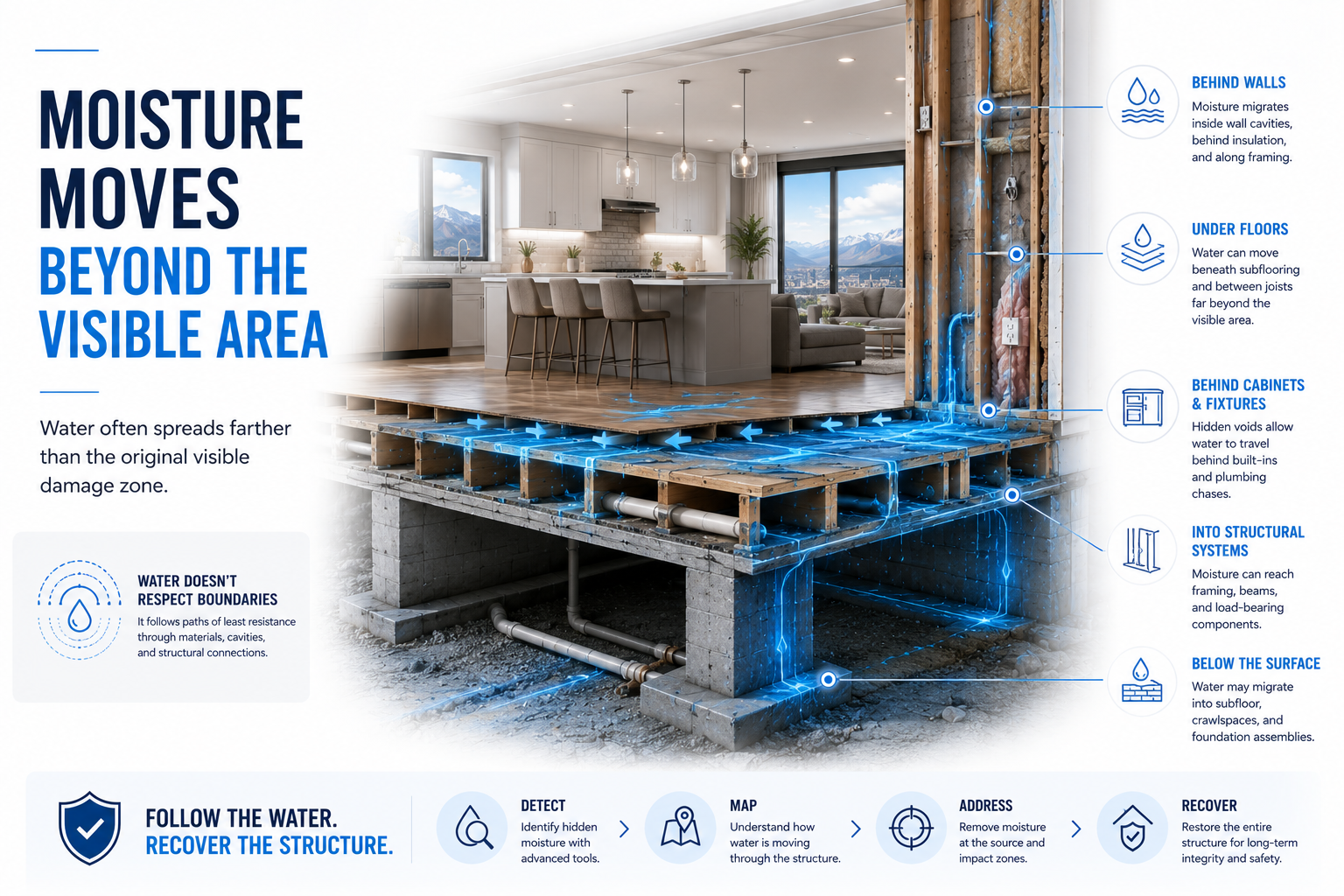
Many structures continue retaining hidden moisture after visible drying equipment is removed. Subfloors, framing systems, insulation cavities, and wall assemblies may continue releasing moisture internally for weeks or months after surface conditions appear stable.
This section examines:
- hidden structural saturation
- insulation moisture retention
- cavity humidity
- delayed evaporation
- trapped subfloor moisture
- hidden microbial progression
- recurring odor development
- concealed structural deterioration
Featured topics include:
- Why Hidden Moisture Continues After Drying
- Structural Moisture Beneath Finished Surfaces
- Delayed Moisture Release in Freeze Climates
- Why Water Damage Reappears Months Later
Why Temporary Relocation Becomes Complicated
Large water losses in freeze-climate and mountain environments often involve longer structural drying timelines, environmental access limitations, reconstruction sequencing delays, and hidden moisture stabilization periods.
This section explores:
- prolonged drying timelines
- winter displacement
- environmental recovery delays
- multi-floor saturation
- reconstruction access limitations
- indoor air quality concerns
- freeze-climate drying complexity
- hidden structural stabilization
Featured topics include:
- Why Freeze-Climate Recoveries Take Longer
- Structural Drying Timelines in Large Losses
- Winter Relocation Challenges After Water Damage
- Environmental Delays in Mountain Recovery Projects
Why High-End Materials Slow Recovery Timelines
Luxury flooring systems, specialty cabinetry, stone assemblies, radiant heat systems, and imported materials often require more detailed drying, preservation, and reconstruction coordination than standard residential materials.
This section focuses on:
- specialty flooring systems
- radiant heat assemblies
- imported material delays
- custom cabinetry
- hidden moisture beneath finishes
- preservation-focused reconstruction
- structural stabilization
- environmental drying limitations
Featured topics include:
- Why Specialty Materials Require Different Recovery Planning
- Hidden Moisture Beneath Luxury Flooring
- Structural Recovery Around Radiant Heat Systems
- Reconstruction Complexity in High-End Homes
Preservation-Focused Structural Recovery
True structural recovery focuses on stabilization, moisture verification, hidden cavity drying, environmental pressure management, and long-term preservation — not simply restoring visual appearance.
This section examines:
- preservation-focused drying
- hidden moisture stabilization
- structural integrity
- environmental stress management
- cavity drying systems
- subfloor verification
- freeze-thaw reconstruction
- long-term structural preservation
Featured topics include:
- Preservation-Focused Water Damage Recovery
- Structural Drying & Long-Term Moisture Stability
- Hidden Moisture in Freeze-Thaw Environments
- Why Structural Preservation Matters in Mountain Homes
Why Complex Homes Recover Differently
Architecturally complex homes respond differently to water damage due to hidden cavities, layered assemblies, elevation exposure, drainage complexity, specialty materials, and structural movement.
This section explores:
- hidden moisture migration
- layered wall systems
- environmental expansion pressure
- roofline complexity
- hillside drainage
- structural movement
- cavity drying challenges
- long-term stabilization requirements
Featured topics include:
- Why Complex Structures Retain Moisture Longer
- Water Damage Recovery in Multi-Level Homes
- Freeze-Thaw Recovery Challenges in Luxury Construction
- Hidden Structural Moisture in Large Homes
Structural Recovery vs Standardized Workflow Recovery
Not all recovery systems prioritize the same long-term outcomes. Freeze-climate environments, mountain structures, and luxury properties often require more detailed environmental evaluation, structural drying verification, and preservation-focused planning than standardized workflow models typically provide.
This section focuses on:
- environmental recovery complexity
- preservation-focused sequencing
- hidden moisture evaluation
- structural stabilization
- freeze-thaw drying pressure
- specialty reconstruction
- long-term material protection
- moisture verification systems
Featured topics include:
- Structural Recovery vs Cosmetic Restoration
- Why Freeze-Climate Homes Require Different Drying Strategies
- Hidden Moisture Risks in Standardized Recovery Systems
- Preservation-Focused Recovery for Complex Structures
Freeze-Climate Structural Recovery Regions
The structural recovery and hidden moisture conditions discussed throughout this section are commonly found throughout Colorado, Utah, Wyoming, Montana, Idaho, Nevada mountain regions, California mountain regions, Oregon, Washington, Minnesota, Wisconsin, Illinois, Michigan, Ohio, Pennsylvania, New York, Vermont, New Hampshire, Maine, West Virginia, North Carolina mountain regions, Tennessee mountain regions, and other cold-climate states exposed to freeze-thaw cycling, snowmelt saturation, structural movement, and recurring environmental moisture pressure.
These environmental conditions frequently affect:
- luxury mountain homes
- vacation properties
- hillside structures
- high-elevation communities
- basement foundations
- freeze-climate suburban developments
- architecturally complex homes
- aging cold-weather infrastructure
Long-term structural recovery complexity is especially common in regions exposed to:
- prolonged snowpack accumulation
- freeze-thaw expansion
- hidden cavity saturation
- environmental humidity shifts
- delayed evaporation
- hydrostatic pressure
- recurring winter moisture cycles
- structural contraction and expansion
Many of the hidden moisture, reconstruction sequencing, drying complexity, and preservation-focused recovery conditions discussed throughout this section develop gradually across freeze-climate regions where structures absorb repeated environmental stress year after year through snowmelt saturation, winter exposure, drainage pressure, and recurring seasonal movement.
