
Freeze-Thaw Water Damage
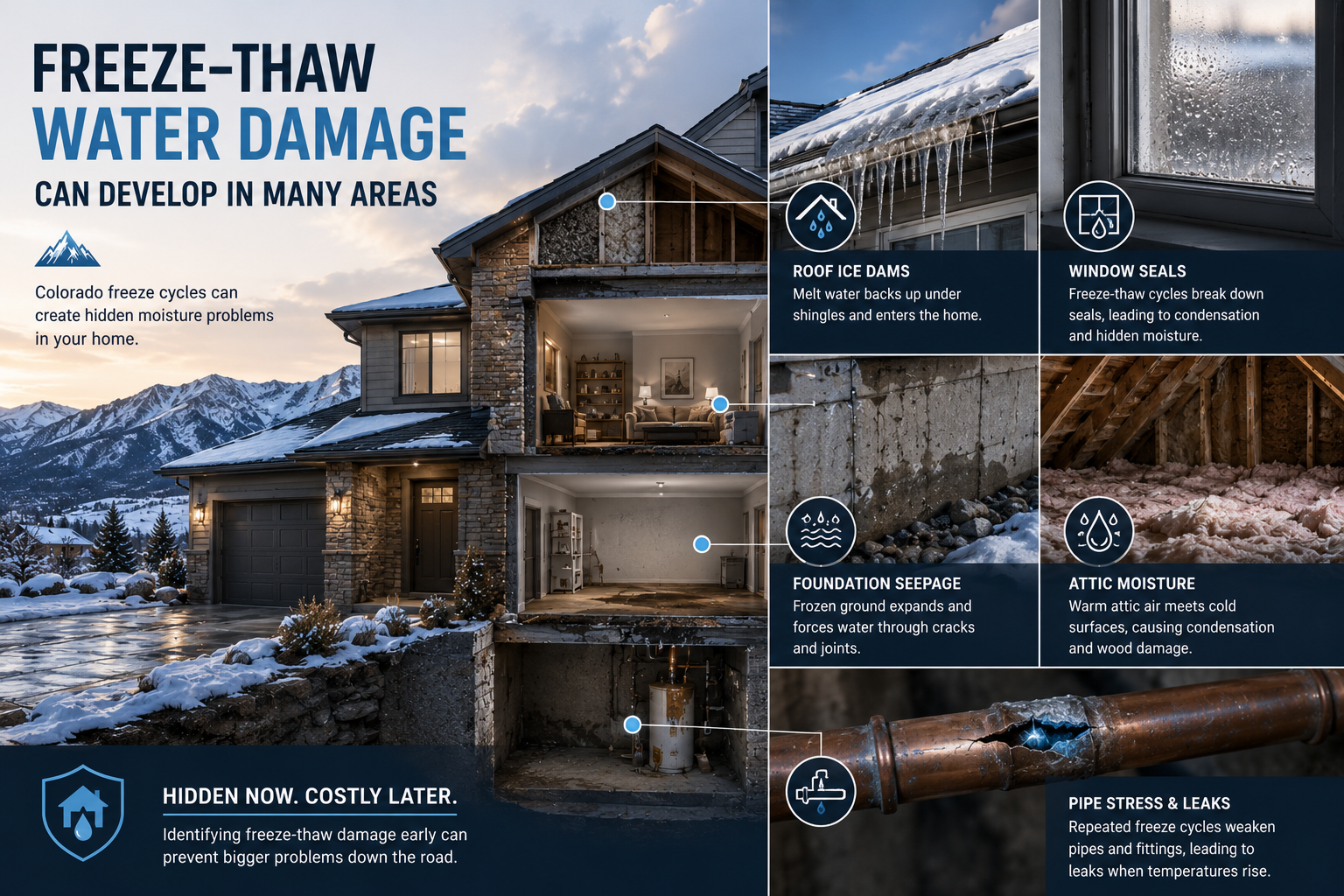
Freeze-thaw cycles place repeated environmental stress on structures year after year. As temperatures rise and fall, building materials constantly expand, contract, absorb moisture, release moisture, and shift under pressure. Over time, this movement gradually affects foundations, slabs, drainage systems, retaining walls, plumbing infrastructure, crawlspaces, basements, and structural assemblies.
Unlike sudden flood events, freeze-thaw water damage often develops slowly through repeated seasonal stress accumulation.
Across Colorado and other freeze-climate regions, water damage is frequently connected to:
- snowpack runoff
- hydrostatic pressure
- freeze expansion
- thaw saturation
- structural movement
- hidden moisture migration
- recurring basement seepage
- drainage fatigue
- seasonal material stress
This section explores how freeze-thaw environments create long-term structural moisture behavior across mountain regions, freeze-belt cities, hillside properties, and cold-weather infrastructure systems throughout Colorado.
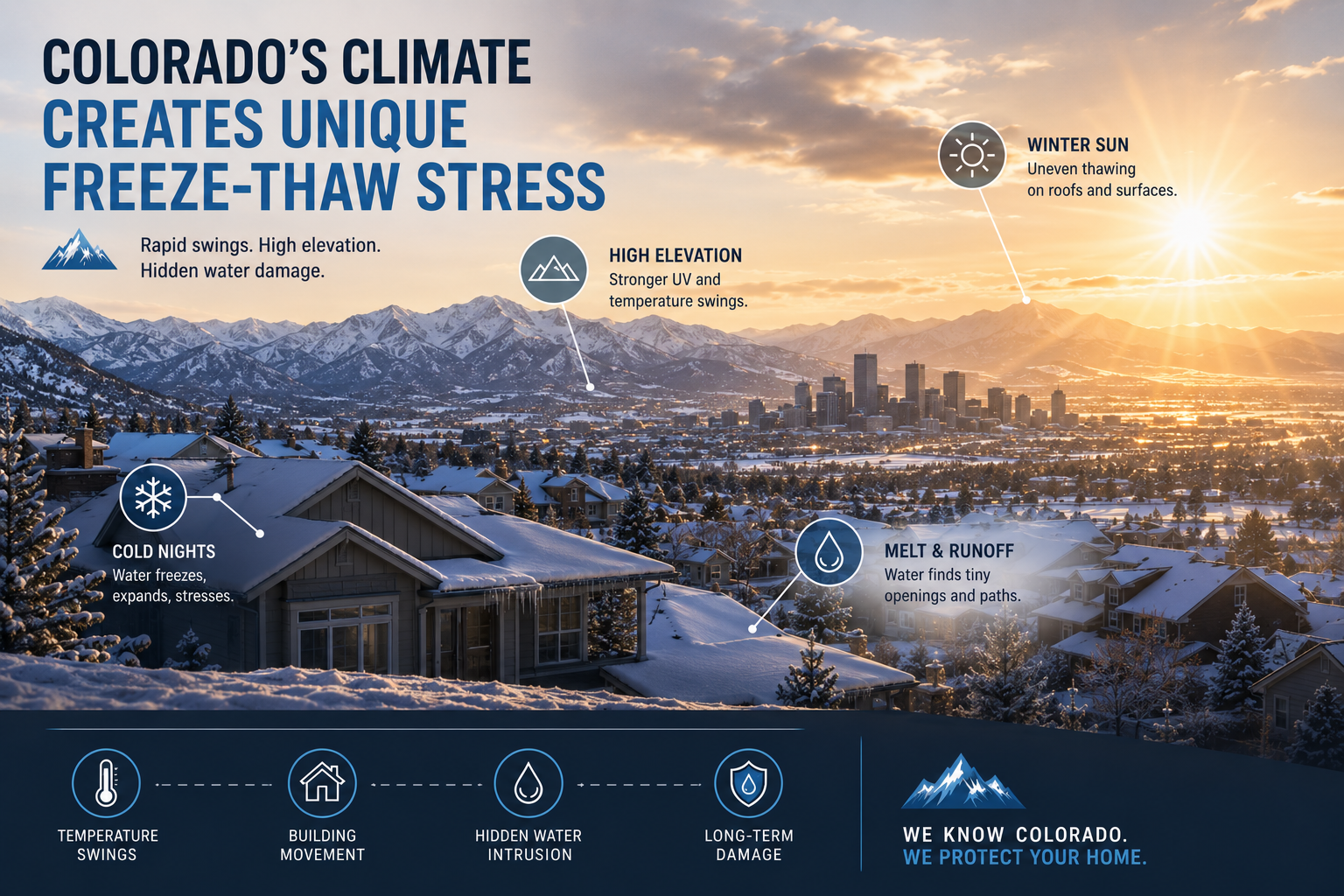
What Freeze-Thaw Cycles Do to Structures
Structures in freeze-climate regions experience repeated pressure as moisture freezes, expands, thaws, and redistributes through building materials and surrounding soil systems.
Over time, these cycles can contribute to:
- foundation movement
- slab stress
- retaining wall pressure
- drainage instability
- crack propagation
- pipe flexing
- concrete fatigue
- recurring structural moisture
This section explores:
- expansion and contraction behavior
- environmental pressure accumulation
- freeze movement beneath foundations
- repeated seasonal stress
- hidden structural fatigue
Featured topics include:
- How Freeze-Thaw Cycles Gradually Stress Structures
- Why Seasonal Expansion & Contraction Creates Long-Term Damage
- Freeze-Thaw Pressure Beneath Slabs & Foundations
- Hidden Structural Fatigue in Cold Climate Homes
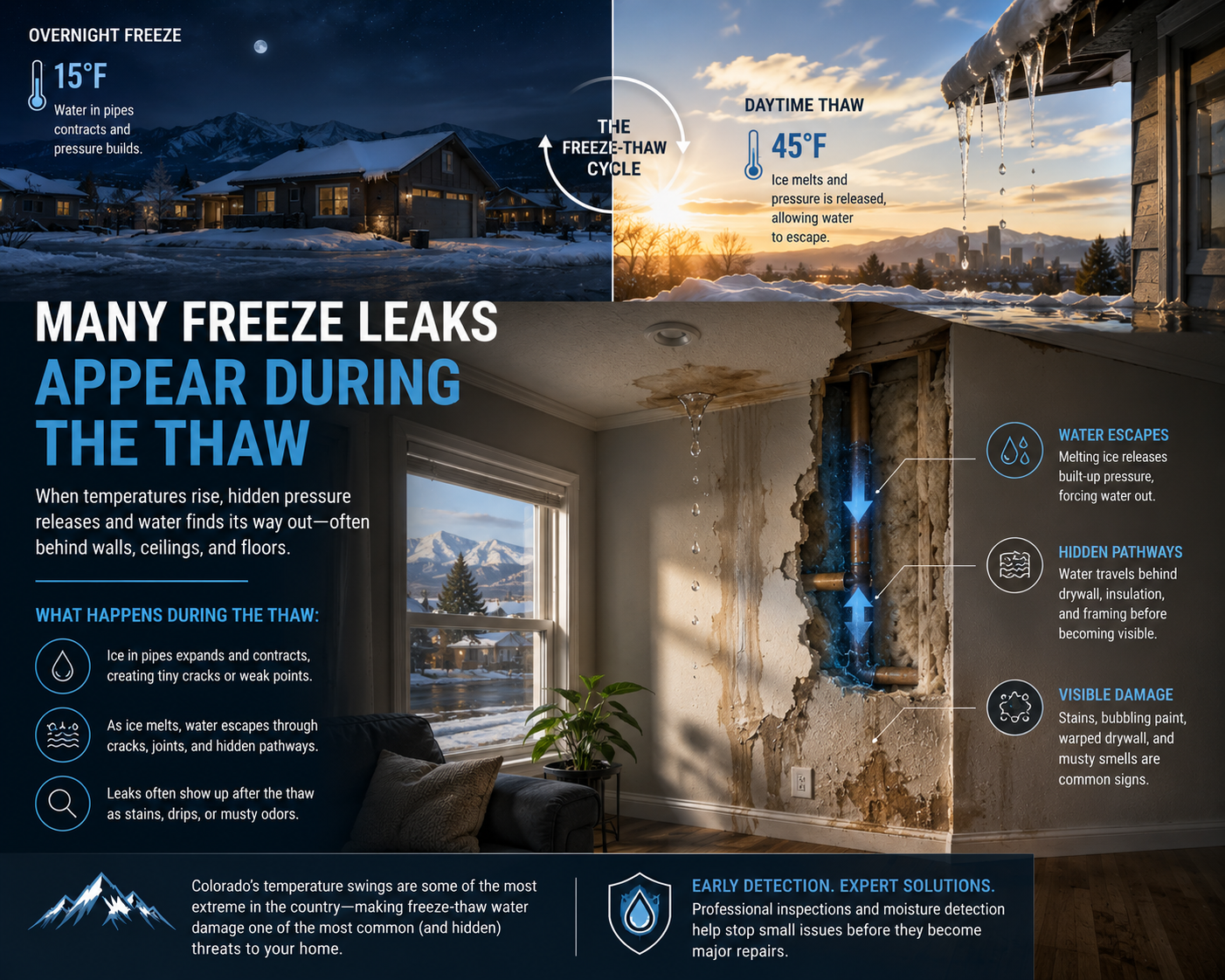
Why Snowmelt Creates Hidden Water Damage
Snowmelt is one of the most underestimated forms of water intrusion in mountain and freeze-climate environments. As snowpack slowly melts, moisture saturates soil systems, drainage pathways, retaining walls, crawlspaces, and foundation perimeters over extended periods of time.
Unlike sudden flooding, snowmelt saturation often develops quietly and repeatedly every spring.
This section examines:
- hydrostatic pressure
- snowpack runoff concentration
- hidden seepage
- delayed saturation
- hillside runoff behavior
- foundation perimeter moisture
- recurring seasonal infiltration
- hidden crawlspace saturation
Featured topics include:
- Why Snowmelt Damage Often Goes Unnoticed
- Hidden Moisture Beneath Foundations After Winter
- How Snowpack Runoff Saturates Structures
- Why Spring Thaw Creates Recurring Water Damage
Why Basement Moisture Returns Every Spring
Basement seepage and recurring lower-level moisture often follow predictable environmental patterns connected to snowmelt, drainage overload, freeze-thaw movement, and hydrostatic pressure buildup around structures.
Many homeowners mistakenly assume recurring moisture is a one-time issue when the surrounding environmental pressure continues returning season after season.
This section explores:
- hydrostatic pressure systems
- recurring seepage
- foundation crack movement
- freeze-thaw expansion
- drainage fatigue
- sump system overload
- subfloor moisture
- hidden basement saturation
Featured topics include:
- Why Basements Stay Wet After Winter
- Freeze-Thaw Basement Pressure Systems
- Why Basement Water Damage Returns Every Spring
- The Hidden Structural Stress Behind Recurring Seepage
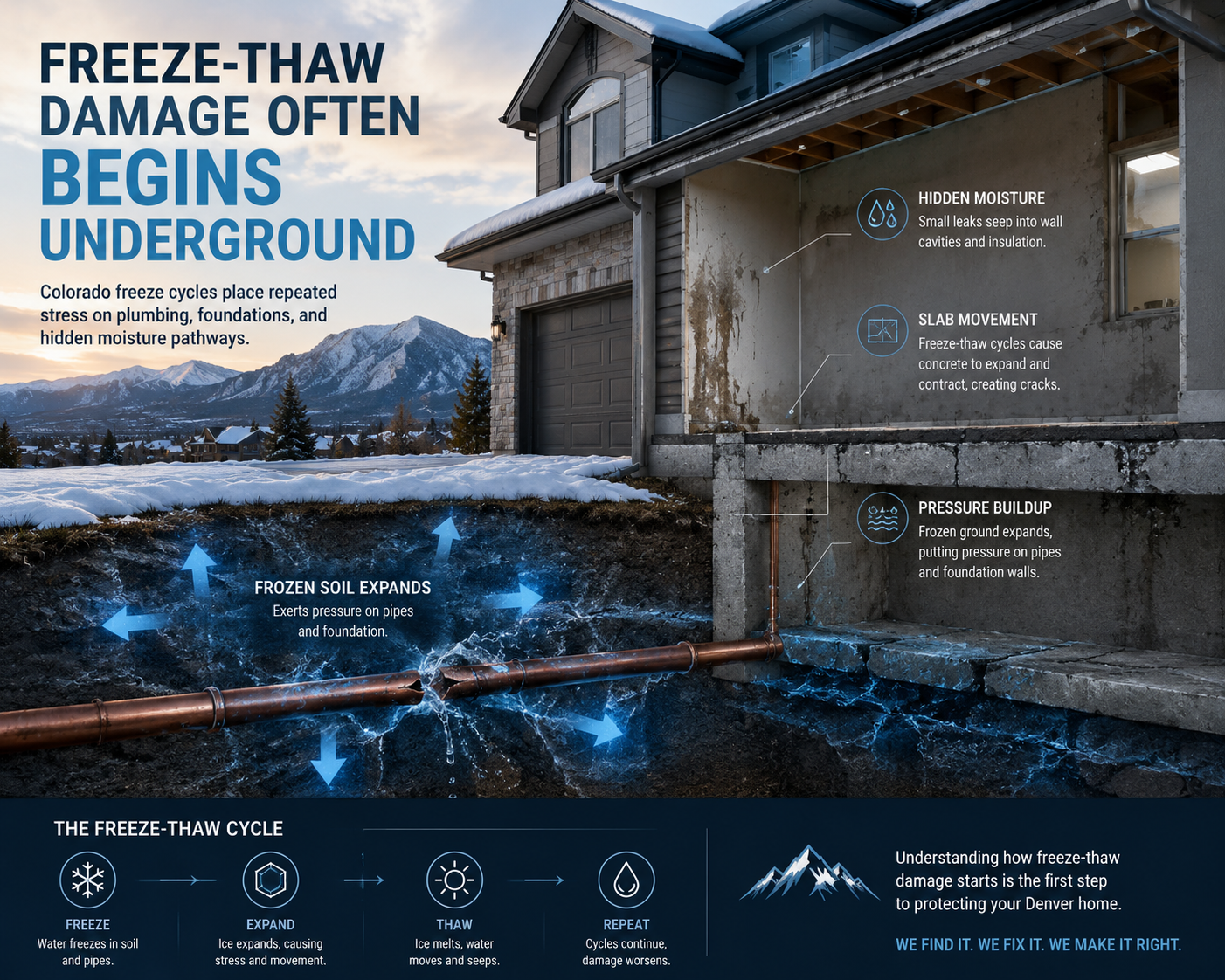
Structural Movement & Pipe Stress
As soil expands and contracts during seasonal freeze-thaw cycles, plumbing systems, slabs, foundations, and underground infrastructure gradually absorb pressure over time.
This movement often contributes to:
- pipe stress redistribution
- recurring plumbing leaks
- slab movement
- underground flexing
- shifting pressure zones
- recurring structural strain
- drainage redirection
- hidden moisture migration
This section focuses on:
- environmental movement systems
- slab pressure redistribution
- underground stress patterns
- pipe flexing behavior
- freeze-related structural movement
- recurring infrastructure fatigue
Featured topics include:
- How Freeze-Thaw Movement Stresses Plumbing Systems
- Why Structural Movement Creates Hidden Water Damage
- Pipe Flexing & Seasonal Expansion Pressure
- Freeze-Thaw Stress Beneath Slabs & Foundations
Hidden Moisture After Winter
Many structures continue retaining hidden moisture long after visible snow and ice disappear. Moisture trapped inside insulation, wall cavities, subfloors, attics, crawlspaces, and framing systems may continue migrating internally for weeks or months after winter ends.
This section explores:
- trapped insulation moisture
- thermal bridging
- attic condensation
- hidden cavity saturation
- delayed evaporation
- subfloor retention
- hidden mold progression
- freeze-related moisture migration
Featured topics include:
- Why Structures Stay Wet After Winter
- Hidden Moisture Inside Walls & Insulation
- Freeze-Climate Condensation & Structural Saturation
- Why “Dry” Structures Still Retain Moisture
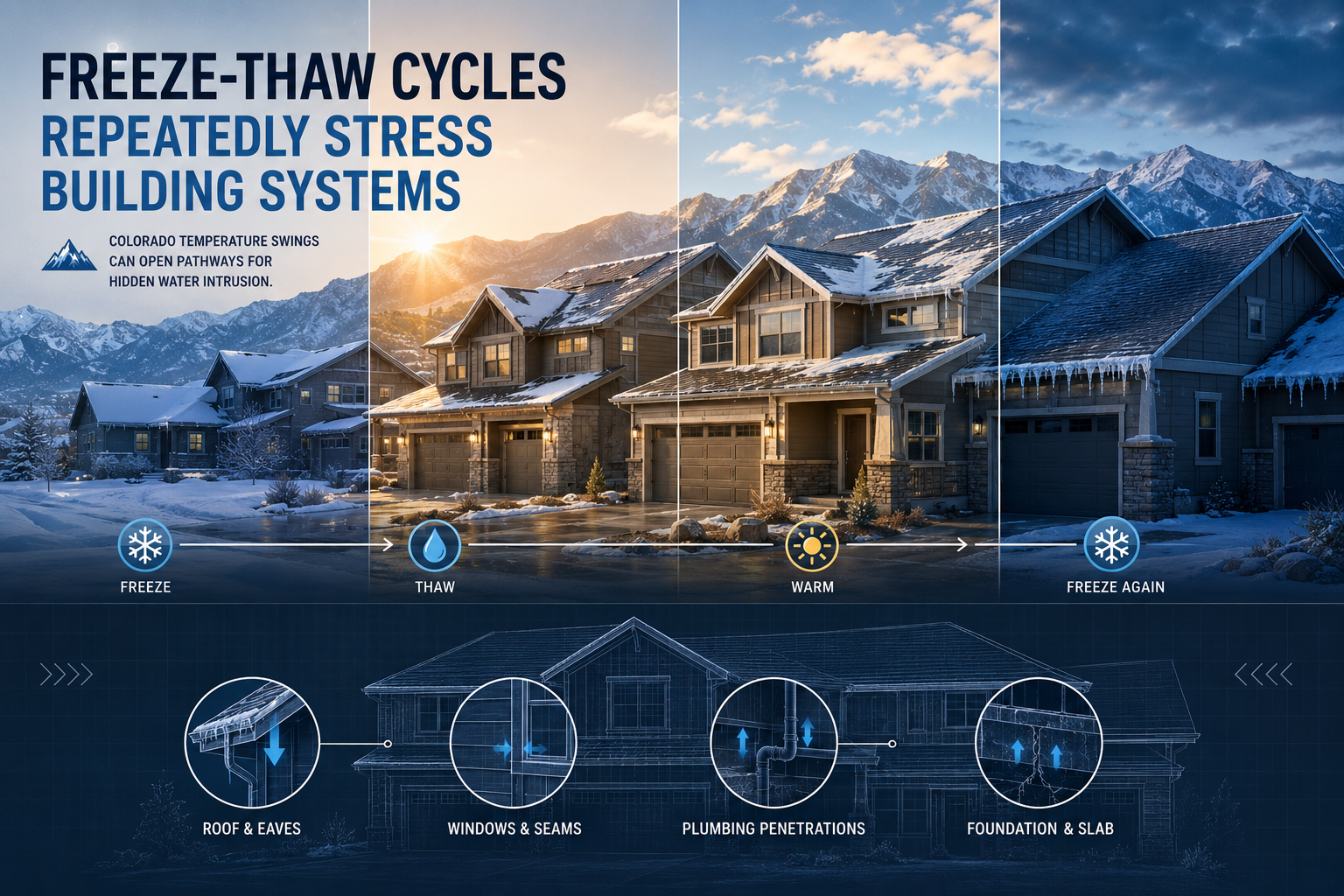
Freeze-Thaw Damage by Region
Different freeze-climate regions create completely different forms of environmental stress. Elevation, snowpack, humidity, drainage systems, freeze duration, soil behavior, and construction styles all influence how structures absorb moisture and pressure over time.
This section compares:
- Rockies freeze-thaw systems
- Sierra snowpack behavior
- Midwest deep-freeze pressure
- Northeast freeze fatigue
- Appalachian moisture retention
- Great Plains freeze exposure
- urban freeze systems vs mountain systems
Featured comparisons include:
- Denver vs Minneapolis Freeze Stress
- Boulder vs Salt Lake City Structural Pressure
- Mountain Snowmelt vs Midwest Freeze Saturation
Freeze-Thaw Structural Fatigue
Structures rarely fail from a single environmental event. More often, years of repeated seasonal movement gradually weaken materials, joints, drainage systems, and moisture barriers over time.
This section examines:
- cumulative environmental fatigue
- repeated freeze expansion
- recurring saturation cycles
- drainage wear
- slab pressure accumulation
- structural stress memory
- seasonal material fatigue
- long-term infrastructure deterioration
Featured topics include:
- The Long-Term Structural Cost of Freeze-Thaw Cycling
- How Repeated Winter Stress Weakens Structures
- Why Older Homes Respond Differently to Freeze-Thaw Pressure
- Environmental Fatigue & Hidden Moisture Progression
Mountain Snowmelt Saturation Systems
Mountain regions experience unique runoff and saturation behavior caused by elevation shifts, snowpack layering, slope drainage, and concentrated thaw cycles.
This section focuses on:
- mountain runoff concentration
- retaining wall saturation
- hillside drainage behavior
- slope instability
- snowpack accumulation
- freeze-thaw hillside pressure
- high-elevation moisture migration
- delayed thaw saturation
Featured topics include:
- How Snowpack Saturates Mountain Structures
- Hillside Runoff & Structural Moisture Pressure
- Mountain Drainage Systems & Freeze-Thaw Water Damage
- Why High Elevation Properties Experience Different Moisture Behavior
Freeze-Thaw & Snowmelt Pressure Regions
Freeze-thaw water damage is most common throughout Colorado, Utah, Wyoming, Montana, Idaho, Nevada mountain regions, California mountain regions, Oregon, Washington, Minnesota, Wisconsin, Illinois, Michigan, Ohio, Pennsylvania, New York, Vermont, New Hampshire, Maine, West Virginia, North Carolina mountain regions, and other cold-climate states exposed to recurring seasonal expansion, snowmelt saturation, hydrostatic pressure, and structural movement.
These environmental systems frequently affect:
- mountain communities
- hillside properties
- basement foundations
- retaining wall systems
- high-elevation neighborhoods
- aging freeze-climate infrastructure
- snowpack runoff corridors
- rapidly expanding suburban developments in cold-weather regions
Long-term freeze-thaw structural stress is especially common in regions exposed to:
- repeated seasonal contraction and expansion
- prolonged snowpack accumulation
- spring thaw saturation
- hydrostatic basement pressure
- drainage overload
- slope runoff concentration
- freeze-related foundation movement
- recurring winter moisture cycles
Many of the hidden moisture, structural fatigue, drainage pressure, and recurring seepage conditions discussed throughout this section develop gradually across freeze-climate regions where structures absorb environmental stress year after year through snowmelt saturation, freeze expansion, runoff concentration, and repeated seasonal movement.
