PEX vs. Copper: Which Plumbing Handles a Centennial Winter Better?
Centennial winters place enormous stress on residential plumbing systems. Rapid overnight freezes, Front Range wind exposure, garage temperature swings, and repeated freeze-thaw cycling create expansion pressure inside pipes hidden behind walls, above ceilings, and beneath finished lower levels throughout the South Metro area.
Many homeowners never think about their plumbing material until a pipe freezes and floods part of the home.
By then, structural moisture may already be spreading beneath hardwood flooring, inside insulation cavities, and through basement ceiling assemblies.
Pipe material matters more in Colorado than many property owners realize.
PEX and copper behave very differently once temperatures drop below freezing.
Why Centennial Homes Experience Frozen Pipe Damage
Temperature fluctuations across Centennial regularly create uneven freeze exposure throughout residential structures.
Higher-risk plumbing locations often include:
- Exterior-facing walls
- Garage ceilings
- Crawlspaces
- Attic plumbing runs
- Basement utility rooms
- Detached garages
- Under-sink cabinet walls
- Vacant guest spaces
Finished basements become especially vulnerable once hidden leaks begin spreading through ceiling cavities and subfloor systems.
Front Range freeze-thaw cycles repeatedly expand and contract plumbing materials during winter, gradually increasing long-term failure risks.
How Copper Pipes Behave During Freezing Temperatures
Copper plumbing remains common throughout older Centennial homes and many remodeled residential properties.
Strong durability and long-term reliability make copper attractive under normal operating conditions. Cold-weather expansion pressure, however, creates a major vulnerability once water freezes inside the pipe.
Copper pipes are rigid.
Ice expansion inside the line often causes:
- Split pipe seams
- Pinhole fractures
- Joint failures
- Sudden wall ruptures
- Hidden ceiling leaks
- Basement flooding
Older copper systems throughout Centennial may already contain years of stress from repeated freeze-thaw expansion cycles and mineral buildup common across the Denver metro area.
Once ruptures develop, water frequently migrates through:
- Wall cavities
- Ceiling assemblies
- Hardwood flooring
- Insulation systems
- Finished basement framing
Thermal imaging and moisture mapping become critical after hidden copper line failures.
How PEX Plumbing Handles Freeze Expansion
PEX plumbing behaves differently because the material has greater flexibility during freezing conditions.
Instead of splitting immediately under expansion pressure, PEX tubing can often stretch temporarily as ice forms inside the line.
That flexibility helps reduce:
- Sudden ruptures
- Split seams
- Pressure fractures
- Large structural floods
Modern Centennial homes and newer Highlands Ranch-area developments increasingly use PEX systems because of their freeze resistance and installation flexibility.
Flexibility does not make PEX freeze-proof though.
Extreme pressure or repeated freezing may still cause:
- Fitting failures
- Connector leaks
- Cracked manifolds
- Expansion joint damage
- Mechanical room flooding
Improper installation inside poorly insulated wall systems can still lead to major winter water damage events.
Which Plumbing Material Performs Better in Colorado Winters?
For freeze resistance alone, PEX generally handles Centennial winter conditions more effectively than copper.
Flexible expansion characteristics help reduce catastrophic ruptures during overnight cold snaps and rapid temperature swings.
Copper still offers advantages in certain environments including:
- Long-term durability
- UV resistance
- Heat tolerance
- Rigid structural support
Many luxury homes throughout Centennial and Cherry Creek continue to use copper in portions of their plumbing systems due to architectural preferences and high-temperature applications.
Performance ultimately depends on:
- Pipe location
- Insulation quality
- Installation methods
- Exposure conditions
- Temperature control
- Maintenance history
Even high-end plumbing systems remain vulnerable when pipes sit inside poorly protected freeze zones.
Hidden Water Damage After Pipe Freezes
Small plumbing fractures often remain unnoticed until moisture spreads into finished structural areas.
Concealed saturation frequently develops beneath:
- Hardwood flooring
- Basement ceilings
- Tile assemblies
- Wall insulation
- Cabinet systems
- Subfloor layers
- Utility corridors
Visible staining may appear hours — or days — after the original freeze event.
Structural drying and moisture stabilization become increasingly important once water intrusion reaches concealed building assemblies.
Preventing Frozen Pipe Problems in Centennial
Winter plumbing protection starts before severe cold weather arrives.
Preventative strategies may include:
- Pipe insulation upgrades
- Garage temperature stabilization
- Leak detection systems
- Crawlspace sealing
- Exterior wall insulation improvements
- Plumbing rerouting
- Attic freeze protection
- Winter plumbing inspections
Older split-level homes and properties with finished lower levels often require additional freeze-protection planning due to the exposure of hidden pipes within layered structural systems.
Structural Drying After Frozen Pipe Leaks
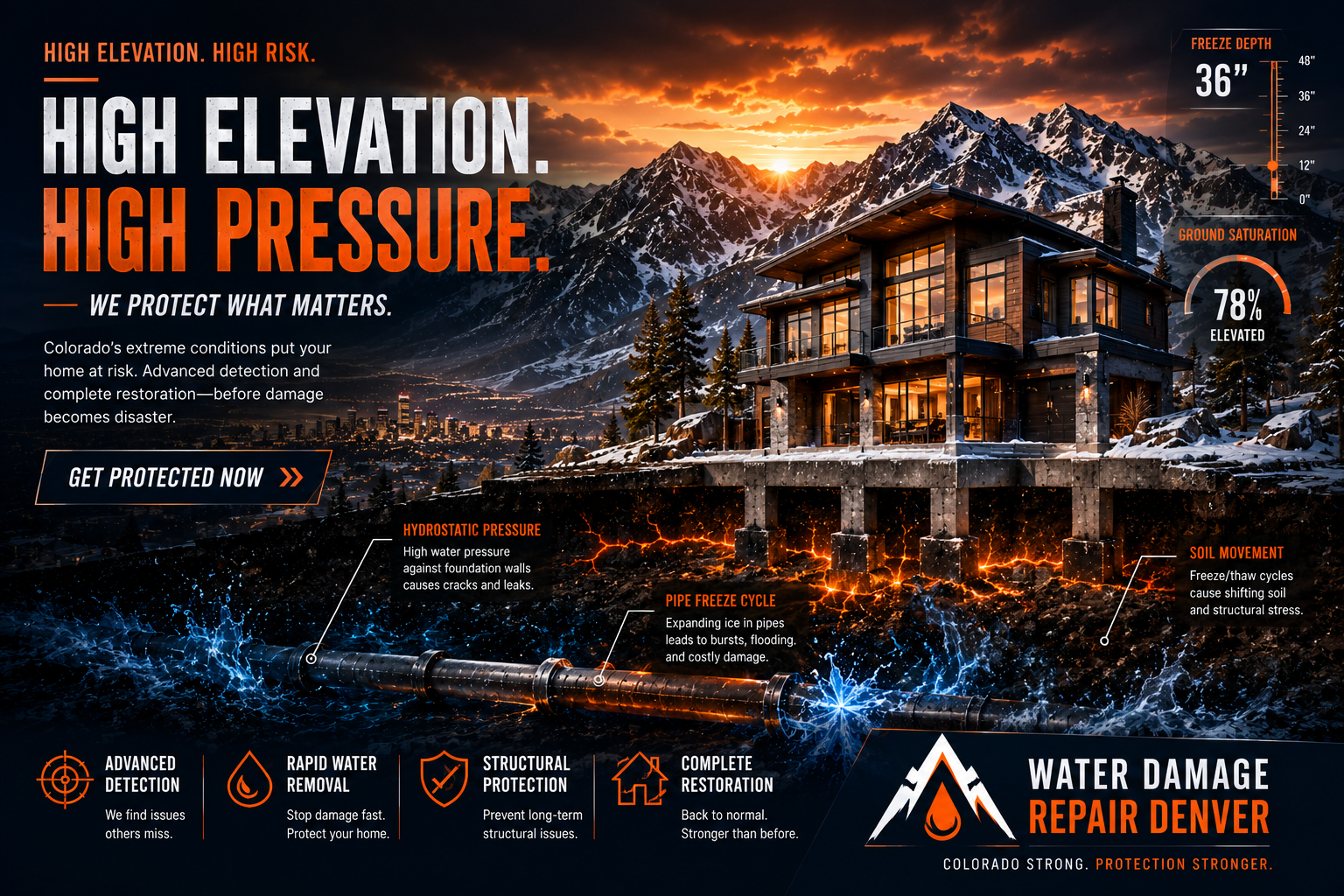
Pipe failures frequently create hidden saturation throughout surrounding building materials even after active leaks stop.
Structural stabilization may involve:
- Emergency extraction
- Thermal imaging inspections
- Moisture mapping
- Commercial dehumidification
- Ceiling cavity drying
- Wall cavity drying
- Subfloor drying
- Hardwood floor drying
- Containment systems
- Moisture monitoring
Controlled drying helps reduce long-term deterioration while protecting salvageable materials whenever possible.
Frozen Pipe Restoration Centennial
Centennial homes face constant plumbing pressure from freeze-thaw expansion, snowmelt humidity, hidden pipe exposure, and rapid Colorado temperature swings.
Restoration and mitigation services include:
- Frozen pipe repair
- Burst pipe cleanup
- Moisture mapping
- Thermal imaging inspections
- Structural drying
- Dehumidification
- Ceiling cavity drying
- Subfloor drying
- Leak detection
- Containment systems
- Moisture monitoring
- Hidden moisture detection
Advanced drying systems and detailed structural stabilization help Centennial homeowners recover more quickly after winter plumbing emergencies and frozen-pipe incidents.