Burst Pipe Catastrophe? Emergency Water Damage Repair in Denver
When a Burst Pipe Turns Your Home Into a Disaster Zone
A burst pipe is not just a plumbing failure.
In Denver, it is a full-scale property emergency.
Within minutes, pressurized water can:
- Flood multiple rooms
- Soak drywall and insulation
- Compromise ceilings and floors
- Spread behind walls
- Trigger electrical hazards
- Create conditions for mold growth
Most homeowners underestimate how fast destruction happens after a pipe bursts.
By the time the water is visible, the damage has already gone far beyond the surface.
Emergency water damage repair is not optional.
It is the difference between containment and catastrophe.
Why Burst Pipes Are So Common in Denver Homes
Denver’s climate creates a perfect storm for pipe failures.
Unique Denver Risk Factors
- Rapid freeze–thaw cycles
- Sudden temperature drops at night
- Extended cold snaps followed by fast warming
- High elevation pressure fluctuations
- Older plumbing infrastructure in many neighborhoods
Pipes don’t burst because of cold alone.
They burst because frozen water expands, building pressure inside the pipe until the weakest point fails.
And that failure rarely happens where you can see it.
What Actually Happens When a Pipe Bursts
The Hidden Mechanics of a Burst Pipe
Contrary to popular belief:
- Pipes usually burst after thawing, not during freezing
- Cracks form while frozen
- Flooding begins when water pressure returns
This means many homeowners:
- Go to sleep with frozen pipes
- Wake up to active flooding
- Discover damage hours too late
Once water is flowing freely, damage escalates exponentially.
The First 10 Minutes After a Pipe Bursts
Why Immediate Action Matters
In the first 10 minutes:
- Water penetrates drywall
- Flooring begins absorbing moisture
- Insulation becomes saturated
- Electrical risks increase
Every minute without action increases:
- Restoration cost
- Structural damage
- Mold risk
- Insurance complexity
This is why emergency water damage repair services exist.
Why DIY Cleanup Is Not Enough After a Burst Pipe
Many homeowners try to:
- Mop visible water
- Use household fans
- Run dehumidifiers
- Dry surfaces manually
This does not stop hidden damage.
What DIY Cleanup Misses
- Water behind walls
- Moisture under flooring
- Saturated insulation
- Trapped humidity in structural cavities
Water left behind becomes mold food within 24–48 hours.
Emergency Water Damage Repair: What It Really Involves
True emergency water damage repair is not just drying carpets.
It is a multi-stage mitigation and restoration process designed to:
- Stop water intrusion
- Remove standing water
- Dry all affected materials
- Prevent secondary damage
- Restore structural integrity
Anything less is incomplete.
Step 1: Emergency Water Shutoff and Safety Control
Controlling the Source Comes First
Before any drying begins:
- The water source must be stopped
- Electrical hazards must be assessed
- Structural safety must be verified
Professionals identify:
- Multiple leak points
- Secondary pipe failures
- Hidden line cracks
Stopping the obvious leak is often not enough.
Step 2: Rapid Water Extraction
Why Speed Changes the Outcome
High-powered extraction equipment removes:
- Standing water
- Saturated carpet
- Pooled water in subfloors
- Trapped water in low points
The faster extraction happens:
- The less demolition is required
- The lower the mold risk
- The faster recovery begins
Delay turns salvageable materials into debris.
Step 3: Moisture Mapping and Damage Assessment
The Damage You Can’t See Is the Most Dangerous
Professional teams use:
- Thermal imaging
- Moisture meters
- Hygrometers
- Infrared scanning
This reveals:
- Wet wall cavities
- Ceiling saturation
- Insulation damage
- Structural moisture migration
Without moisture mapping, restoration is guesswork.
Step 4: Controlled Structural Drying
Drying a Home Is a Science, Not a Guess
Structural drying involves:
- Air movers placed strategically
- Commercial-grade dehumidifiers
- Pressure balancing
- Humidity control
Improper drying causes:
- Warped wood
- Cracked drywall
- Lingering odors
- Mold colonies
Emergency drying must be controlled, measured, and monitored.
Step 5: Mold Prevention and Air Quality Control
Mold Is the Silent Aftershock
After a burst pipe:
- Mold spores activate quickly
- Damp organic materials feed growth
- Airborne contamination spreads
Preventative measures include:
- Antimicrobial treatments
- HEPA air filtration
- Containment barriers
- Continuous humidity monitoring
Waiting for mold to appear is already too late.
Why Burst Pipe Damage Is Worse Than Other Water Losses
Not all water damage is equal.
Burst pipes deliver:
- High pressure
- Continuous flow
- Wide-area saturation
Unlike appliance leaks or roof drips:
- Burst pipes flood aggressively
- Damage spreads vertically and horizontally
- Multiple building systems are affected
This is why emergency response matters more here than almost any other scenario.
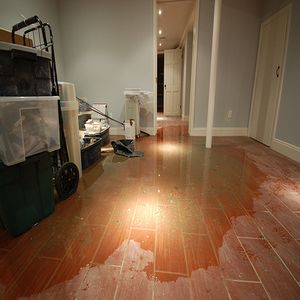
Ceiling Collapse Risk After a Burst Pipe
Why Ceilings Are Especially Vulnerable
Water trapped above ceilings:
- Adds significant weight
- Weakens drywall fasteners
- Saturates insulation
Sagging ceilings are a collapse warning sign.
Ignoring this risk can result in:
- Sudden structural failure
- Injury
- Extensive secondary damage
Emergency assessment prevents collapse disasters.
Flooring Damage After a Burst Pipe
Different Floors, Different Failures
- Hardwood warps and cups
- Laminate swells and separates
- Tile traps moisture beneath
- Carpet holds water deep in padding
Professional drying determines:
- What can be saved
- What must be removed
- How to prevent subfloor damage
Wall and Insulation Damage
Why Wet Walls Are a Mold Magnet
Drywall absorbs water like a sponge. Insulation holds moisture silently.
If not removed or dried correctly:
- Mold forms inside walls
- Odors persist
- Structural materials decay
Emergency water damage repair prevents long-term contamination.
Electrical Hazards After a Burst Pipe
Water and electricity do not mix.
Risks include:
- Short circuits
- Fire hazards
- Shock risks
- Hidden corrosion
Professional teams coordinate with electricians when needed to ensure safety.
Insurance Implications of Burst Pipe Damage
Why Documentation Is Critical
Insurance claims depend on:
- Cause of loss
- Scope of damage
- Timeliness of response
- Proper mitigation
Emergency water damage repair teams document:
- Moisture readings
- Affected materials
- Drying progress
- Loss conditions
This protects homeowners from claim denials.
Why Delayed Response Leads to Claim Problems
Insurance companies may deny claims if:
- Mitigation was delayed
- Damage worsened due to inaction
- Mold developed from neglect
Emergency response shows good faith effort to minimize loss.
Denver-Specific Challenges in Burst Pipe Restoration
High Altitude Drying Considerations
Denver’s elevation affects:
- Evaporation rates
- Dehumidifier performance
- Drying timelines
Local expertise matters.
Winter Conditions Complicate Recovery
- Frozen ground
- Limited ventilation
- Ongoing freeze risks
- Re-freezing threats
Denver restorations require climate-aware strategies.
Residential vs. Commercial Burst Pipe Emergencies
Homes vs. Businesses
Commercial properties face:
- Larger water volumes
- Critical downtime
- Inventory loss
- Compliance issues
Emergency response plans differ significantly between residential and commercial spaces.
What Happens If You Wait Too Long
Delaying emergency water damage repair leads to:
- Mold remediation costs
- Structural replacement
- Extended displacement
- Higher insurance scrutiny
- Permanent property devaluation
Waiting never saves money.
Why “Just a Small Leak” Is Rarely Small
Many burst pipe incidents start as:
- Hairline cracks
- Partial freezes
- Minor pressure changes
By the time water is visible, damage is widespread.
Early emergency intervention limits escalation.
The Emotional Impact of Burst Pipe Disasters
Beyond physical damage:
- Stress skyrockets
- Sleep is disrupted
- Families are displaced
- Daily life halts
Professional emergency response restores not just property, but peace of mind.
Choosing the Right Emergency Water Damage Repair Team in Denver
Not all companies are equal.
Look for:
- 24/7 availability
- Rapid response times
- Certified technicians
- Advanced drying equipment
- Clear communication
- Insurance coordination experience
Emergency work demands expertise, not shortcuts.
Why Local Denver Response Matters
Local teams understand:
- Denver weather patterns
- Common plumbing layouts
- Regional building codes
- Seasonal risks
Faster arrival means less damage.
Preventing Secondary Damage After the Emergency
Emergency response doesn’t end with drying.
Follow-up includes:
- Structural repairs
- Material replacement
- Final moisture verification
- Preventative recommendations
Restoration without prevention invites repeat disasters.
Preparing for the Next Cold Snap
After a burst pipe:
- Pipes should be inspected
- Insulation upgraded
- Vulnerabilities corrected
Emergency repair should lead to long-term protection.
Final Thoughts: A Burst Pipe Is a Race Against Time
When a pipe bursts in Denver:
- The clock starts immediately
- Damage accelerates rapidly
- Every decision matters
Emergency water damage repair is not about appearance.
It is about saving what can be saved before it’s gone.
Fast action reduces loss.
Professional response prevents disasters from becoming permanent damage.
