Commercial Restoration
Commercial water damage behaves differently than residential water damage.
The environmental pressure affecting a warehouse, medical building, hotel, office complex, retail center, school, or industrial facility is often tied to:
- roof drainage load
- freeze-thaw cycling
- infrastructure fatigue
- snowpack runoff
- thermal expansion
- hidden saturation systems
- stormwater accumulation
- aging commercial plumbing systems
- prolonged environmental exposure
Large structures absorb environmental stress differently over time.
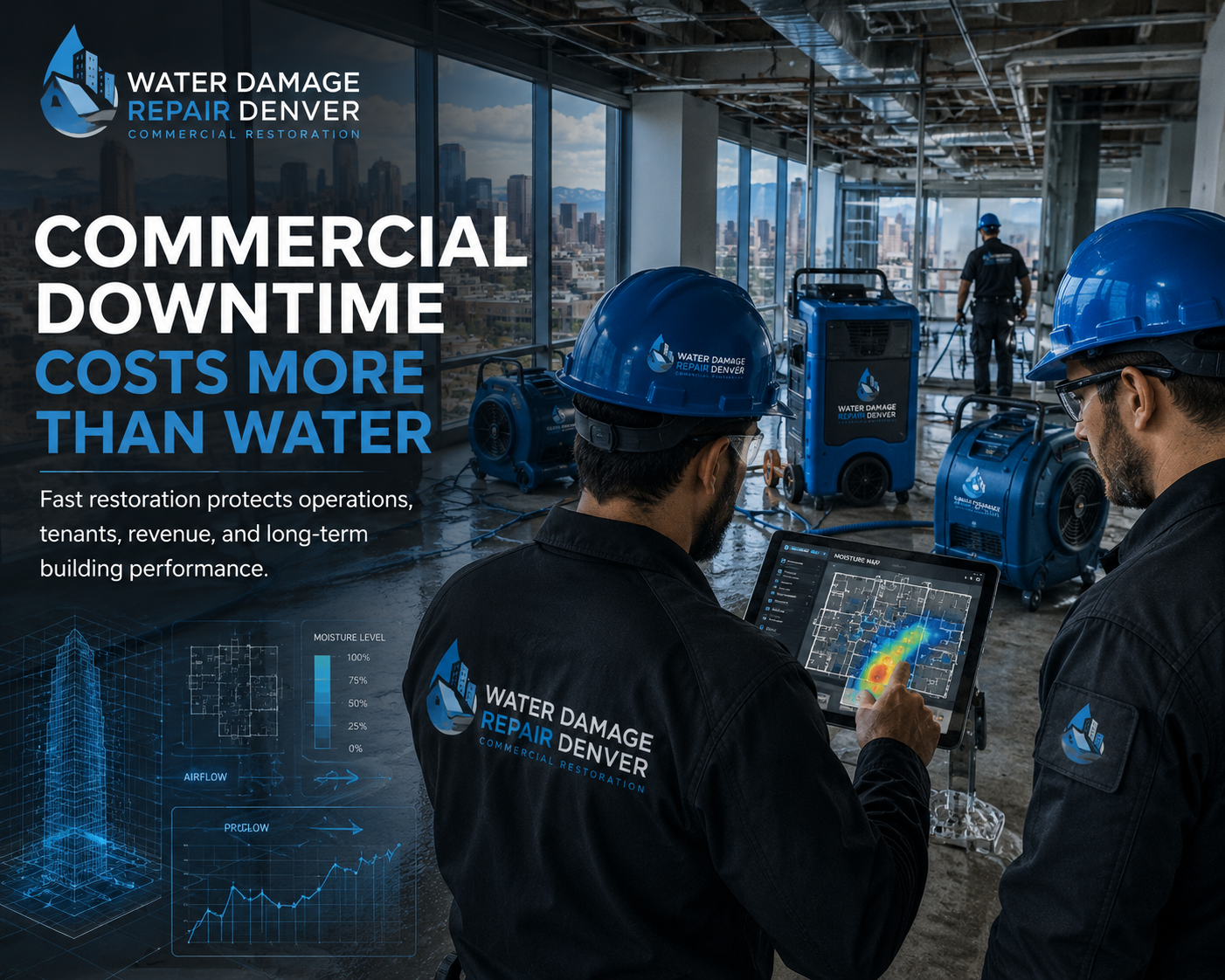
Small moisture failures inside commercial environments can quietly evolve into:
- structural saturation
- insulation breakdown
- drainage overload
- concealed mold conditions
- roofing system deterioration
- subfloor instability
- recurring tenant disruption
- long-term infrastructure fatigue
Commercial Restoration examines how environmental pressure systems affect commercial structures across Colorado and other cold-climate regions exposed to recurring freeze-thaw movement, snowpack accumulation, runoff migration, and long-duration winter stress.
Commercial properties rarely fail all at once.
Pressure accumulates gradually beneath the surface.
Commercial Structures Behave Differently
Large commercial environments absorb moisture differently than residential structures due to:
- building scale
- roof span size
- drainage complexity
- flat roofing systems
- HVAC integration
- occupancy load
- structural expansion zones
- infrastructure age
Commercial buildings often contain:
- hidden interstitial spaces
- long plumbing corridors
- large roof drainage systems
- expansive insulation cavities
- below-grade utility systems
- complex environmental control systems
Once moisture enters the structure, environmental pressure can spread quietly across multiple systems simultaneously.
This section explores:
- commercial moisture migration
- structural saturation systems
- freeze-thaw fatigue across commercial infrastructure
- large-scale environmental pressure behavior
Featured topics include:
- Commercial Freeze-Thaw Exposure
- Roof Drainage Saturation Systems
- Hidden Commercial Moisture Migration
- Long-Term Infrastructure Fatigue
Flat Roof Saturation & Drainage Pressure
Commercial roof systems experience environmental stress differently than pitched residential structures.
Flat and low-slope roofing environments commonly experience:
- snowpack loading
- ponding water retention
- freeze-thaw membrane stress
- drainage blockage
- thermal expansion fatigue
- hidden insulation saturation
- recurring rooftop pressure accumulation
Winter pressure gradually builds through:
- repeated thaw-refreeze movement
- slow drainage release
- snowmelt pooling
- recurring moisture retention
- prolonged environmental loading
Structural stress often develops long before visible interior damage appears.
This section examines:
- commercial roof saturation systems
- snowpack pressure behavior
- drainage fatigue
- winter rooftop environmental stress
Featured topics include:
- Commercial Roof Saturation
- Freeze-Thaw Roofing Pressure
- Snowpack Load Systems
- Flat Roof Drainage Fatigue
Freeze-Thaw Stress Across Commercial Infrastructure
Commercial environments absorb recurring thermal movement across:
- roofing systems
- parking structures
- concrete slabs
- exterior façades
- drainage assemblies
- plumbing systems
- structural joints
- loading zones
Repeated expansion and contraction gradually increases:
- material fatigue
- hidden cracking
- moisture intrusion
- drainage instability
- structural movement
- infrastructure wear accumulation
Large buildings often experience environmental pressure unevenly across different structural zones.
This section explores:
- thermal expansion across commercial systems
- freeze-thaw infrastructure movement
- recurring environmental fatigue
- hidden structural stress accumulation
Featured topics include:
- Commercial Thermal Expansion
- Freeze-Cycle Infrastructure Stress
- Structural Movement Across Large Buildings
- Environmental Fatigue Systems
Hidden Moisture Inside Commercial Buildings
Commercial water damage often spreads invisibly through:
- wall cavities
- insulation systems
- ceiling assemblies
- subfloor environments
- utility corridors
- mechanical systems
- elevator shafts
- structural transitions
Environmental pressure commonly increases through:
- prolonged saturation
- concealed humidity retention
- recurring condensation
- drainage failures
- unnoticed seepage migration
Large commercial structures may continue operating while hidden moisture quietly expands behind the scenes.
This section examines:
- concealed commercial saturation
- hidden moisture migration
- infrastructure seepage systems
- long-duration structural exposure
Featured topics include:
- Hidden Commercial Moisture
- Structural Saturation Mapping
- Commercial Seepage Systems
- Long-Term Interior Moisture Retention
Snowpack & Commercial Roof Load Systems
Cold-climate commercial properties often absorb enormous environmental weight during winter cycles.
Heavy snow accumulation combined with:
- flat roofing systems
- poor drainage pacing
- thermal fluctuation
- freeze-thaw cycling
- runoff retention
can gradually increase structural stress across:
- roof membranes
- drainage pathways
- support systems
- insulation assemblies
- rooftop penetrations
Commercial roof systems behave differently depending on:
- elevation
- snowpack depth
- drainage design
- freeze duration
- environmental exposure pacing
This section explores:
- snowpack loading pressure
- rooftop runoff migration
- freeze-thaw roofing fatigue
- commercial winter structural exposure
Featured topics include:
- Commercial Snowpack Pressure
- Winter Roof Saturation
- Runoff Accumulation Systems
- Structural Roof Load Analysis
Commercial Basement & Underground Pressure
Many commercial structures contain hidden below-grade systems exposed to:
- hydrostatic pressure
- runoff accumulation
- drainage overload
- recurring seepage
- long-duration saturation
- frozen soil retention
Environmental pressure commonly develops around:
- underground parking structures
- mechanical rooms
- elevator pits
- storage environments
- utility corridors
- foundation systems
Structural fatigue often compounds gradually beneath the visible building envelope.
This section examines:
- commercial hydrostatic pressure
- below-grade seepage systems
- underground saturation environments
- long-term structural moisture accumulation
Featured topics include:
- Commercial Basement Saturation
- Hydrostatic Infrastructure Pressure
- Underground Moisture Systems
- Freeze-Belt Seepage Exposure
Commercial Recovery & Structural Stabilization
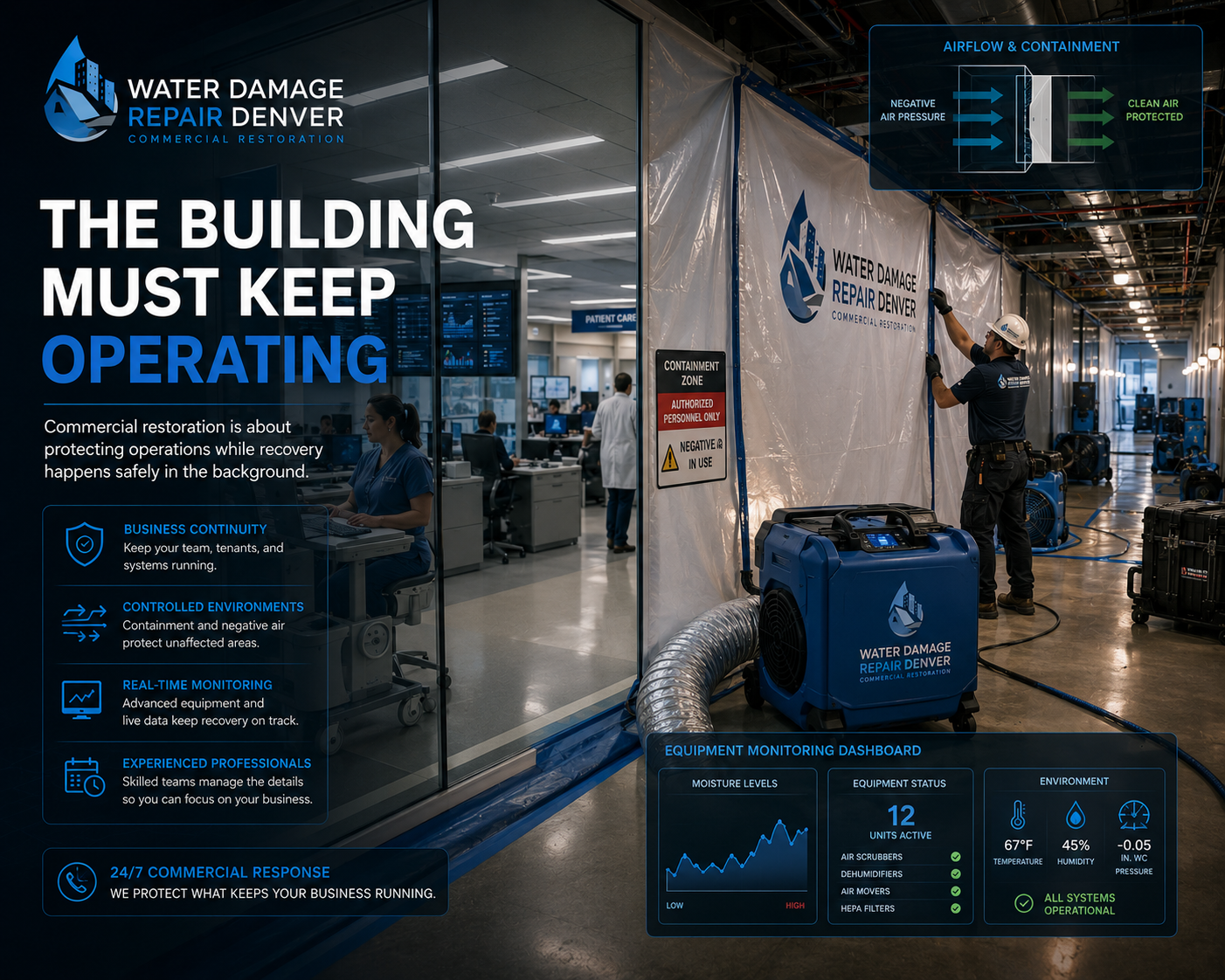
Commercial restoration involves more than drying visible damage.
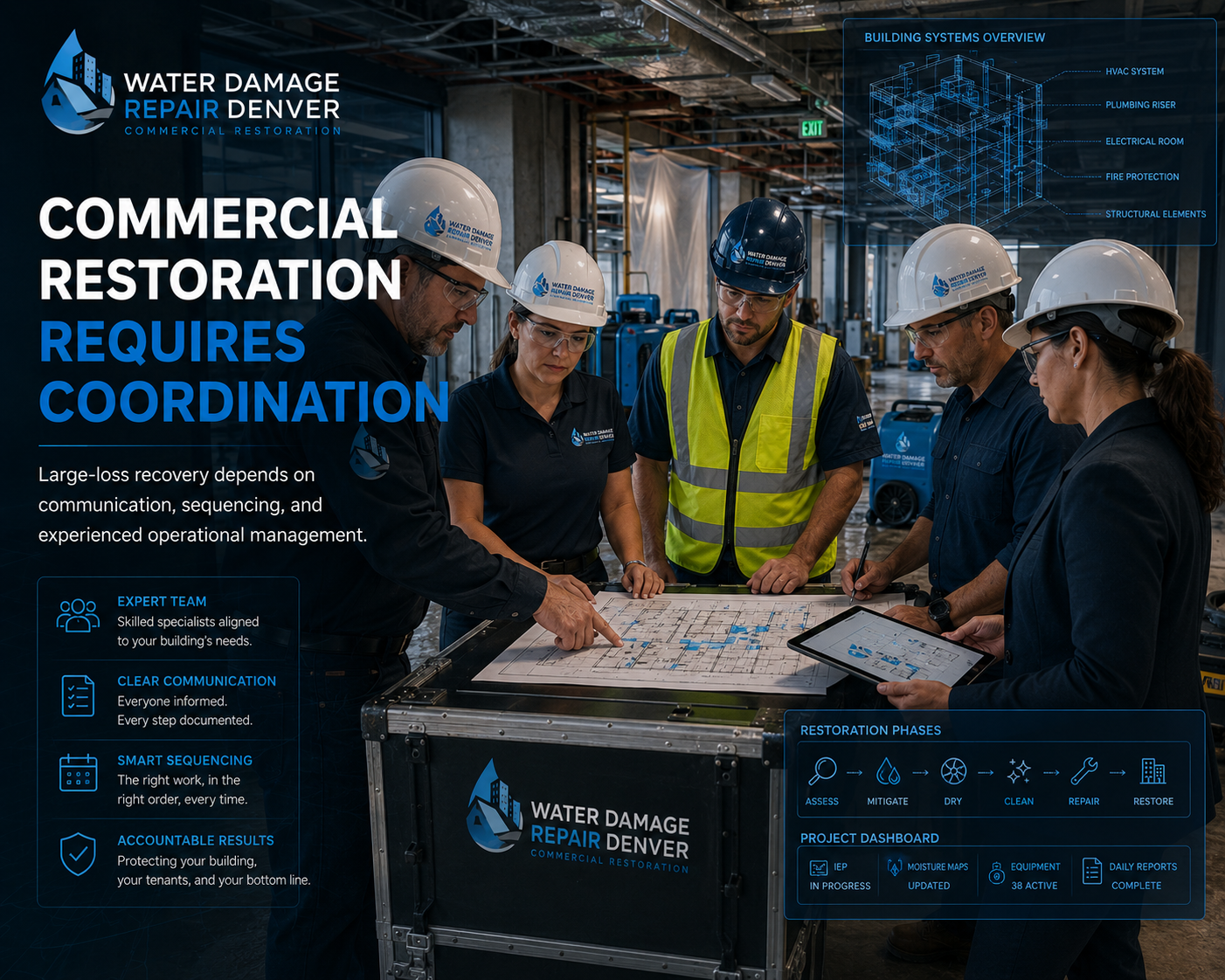
Environmental stabilization often requires:
- moisture mapping
- structural drying
- containment systems
- airflow management
- thermal monitoring
- saturation analysis
- drainage evaluation
- infrastructure stabilization
Large commercial environments require coordinated recovery planning across:
- tenants
- operations
- structural systems
- environmental controls
- long-term moisture management
This section explores:
- commercial structural recovery
- environmental stabilization systems
- large-scale drying strategies
- infrastructure preservation
Featured topics include:
- Commercial Structural Drying
- Large-Building Moisture Recovery
- Infrastructure Stabilization Systems
- Environmental Recovery Planning
Insurance Shortcuts Inside Commercial Recovery
Commercial property owners often assume large insurance-driven recovery systems automatically prioritize long-term structural protection.
That assumption deserves closer inspection.
Commercial claims commonly involve:
- delayed approvals
- phased drying limitations
- partial demolition strategies
- temporary stabilization shortcuts
- minimal containment approaches
- pressure to reduce drying scope
- disputes surrounding hidden moisture exposure
- recurring delays tied to tenant operations
Large structures create larger financial pressure systems during recovery.
Speed and cost control do not always align with long-term environmental stabilization.
This section examines:
- commercial insurance recovery pressure
- structural stabilization shortcuts
- hidden saturation disputes
- environmental drying limitations
- long-term infrastructure risk
Featured topics include:
- Commercial Recovery Shortcuts
- Hidden Moisture Disputes
- Structural Stabilization Pressure
- Insurance-Driven Drying Limitations
Environmental Pressure Across Commercial Regions
Commercial structural stress changes dramatically depending on:
- climate
- elevation
- snowfall
- freeze duration
- drainage systems
- infrastructure age
- runoff pacing
- environmental fluctuation
Mountain runoff regions create different commercial pressure systems than freeze-belt saturation environments.
Environmental identity changes how commercial buildings age over time.
This section compares:
- Front Range commercial runoff systems
- freeze-belt commercial saturation
- mountain snowpack exposure
- thermal fluctuation across large structures
- cold-climate infrastructure fatigue
Featured topics include:
- Commercial Structural Matchups
- Mountain vs Freeze-Belt Infrastructure
- Runoff vs Saturation Systems
- Environmental Pressure Across Commercial Buildings
Commercial Freeze-Thaw & Mountain Infrastructure Regions
The environmental systems discussed throughout Commercial Restoration commonly affect Colorado, Utah, Wyoming, Montana, Idaho, Nevada mountain regions, California mountain regions, Oregon, Washington, Minnesota, Wisconsin, Illinois, Michigan, Ohio, Pennsylvania, New York, Vermont, New Hampshire, Maine, West Virginia, North Carolina mountain regions, Tennessee mountain regions, and other cold-climate states exposed to freeze-thaw cycling, snowpack accumulation, runoff concentration, hydrostatic basement pressure, and recurring winter environmental stress.
These environmental systems frequently affect:
- office buildings
- hotels
- retail centers
- warehouses
- medical facilities
- schools
- industrial properties
- mixed-use developments
- mountain commercial corridors
- freeze-climate infrastructure systems
Many commercial structural movement patterns, runoff behaviors, saturation systems, roofing pressure conditions, and hidden winter moisture environments evolve gradually over decades as buildings absorb repeated environmental pressure through snowmelt migration, freeze exposure, hydrostatic buildup, runoff concentration, thermal cycling, and recurring seasonal movement
