
Environmental Personalities
No two winter environments apply structural pressure the same way.
Some regions attack structures through rapid freeze-thaw movement and aggressive runoff migration. Others slowly wear buildings down through prolonged saturation, hydrostatic pressure, snowpack retention, or long-duration cold exposure that quietly compounds over decades.
Environmental Personalities explores how different cold-climate regions develop their own structural identity based on:
- elevation
- snowfall behavior
- runoff pacing
- freeze duration
- drainage movement
- hydrostatic pressure
- thermal fluctuation
- long-term environmental fatigue
Built around mountain runoff systems and freeze-belt infrastructure environments, this section examines how recurring winter exposure shapes structural behavior across cold-climate regions throughout the United States.
Every environment develops its own rhythm.
Structural pressure follows that rhythm.
The Elevation Pressure System
Mountain runoff environments create structural stress through movement, fluctuation, and recurring thermal instability.
High-elevation regions commonly experience:
- rapid freeze-thaw cycling
- aggressive snowmelt migration
- thermal expansion swings
- hillside drainage pressure
- recurring runoff acceleration
- dynamic environmental fluctuation
Structural systems in these environments rarely remain stable for long.
Pressure constantly shifts:
- downhill
- beneath slabs
- around foundations
- through drainage corridors
- across retaining systems
This environmental personality commonly affects:
- Denver
- Boulder
- Colorado Springs
- Aspen
- Vail
- Park City
- Jackson
Featured topics include:
- Front Range Freeze Cycling
- Elevation Runoff Pressure
- Mountain Drainage Movement
- Thermal Expansion Fatigue
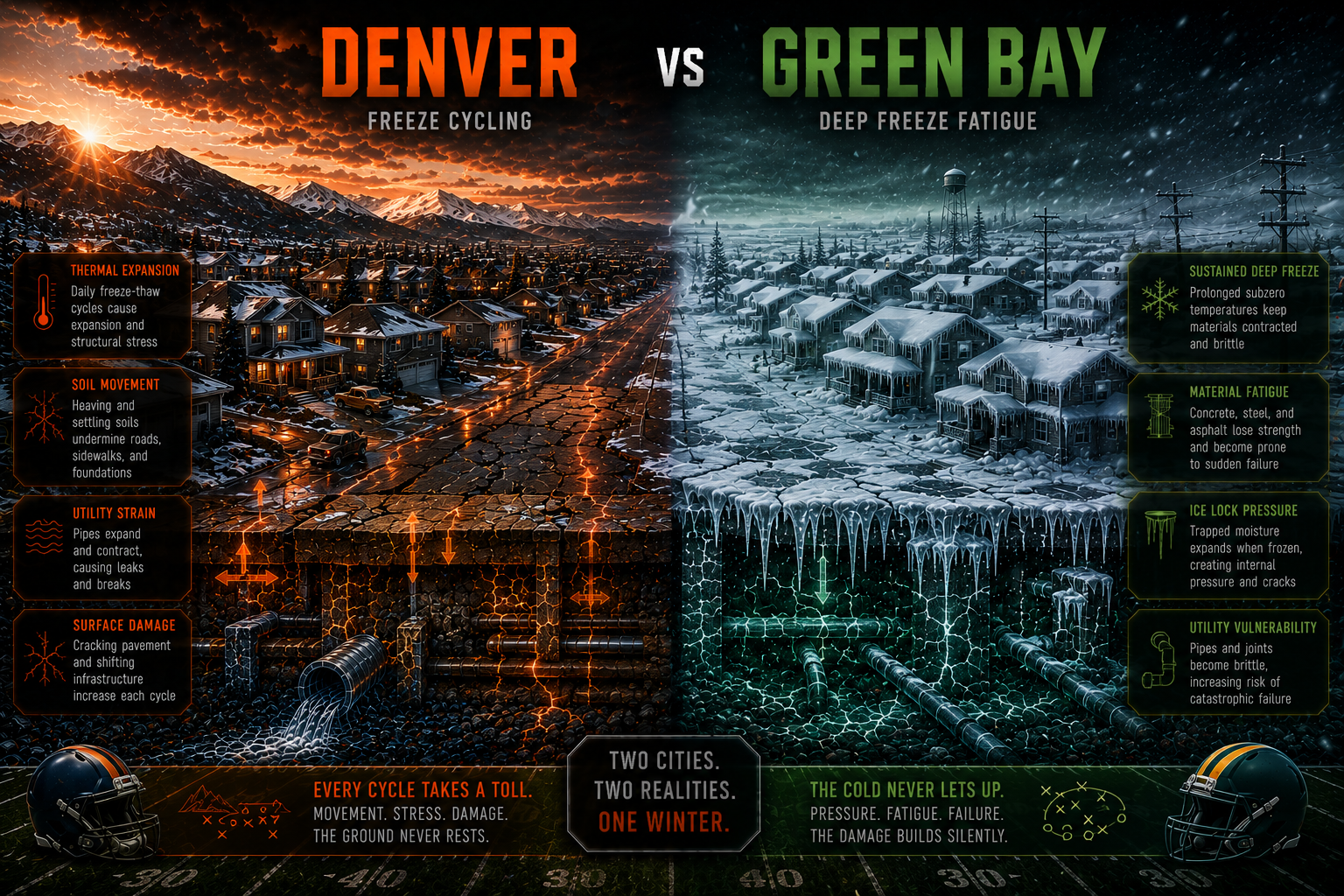
The Freeze-Belt Saturation System
Deep-freeze environments apply pressure through persistence rather than movement.
Long-duration winter exposure gradually increases:
- hydrostatic pressure
- basement saturation
- structural contraction
- hidden seepage retention
- environmental fatigue surrounding aging infrastructure
Freeze-belt systems commonly experience:
- prolonged cold retention
- slower evaporation
- recurring basement seepage
- persistent snow loading
- extended winter saturation
Environmental stress builds slowly.
But continuously.
This environmental personality commonly affects:
- Buffalo
- Chicago
- Minneapolis
- Green Bay
- Cleveland
- Detroit
- Pittsburgh
Featured topics include:
- Basement Hydrostatic Pressure
- Long-Duration Winter Saturation
- Aging Infrastructure Fatigue
- Freeze-Belt Structural Stress
The Snowpack Retention Environment
Some mountain systems absorb enormous moisture loads through prolonged snow accumulation cycles.
Heavy snowpack regions commonly experience:
- sustained environmental loading
- slower runoff release
- prolonged hillside saturation
- concentrated thaw pressure
- deep seasonal moisture retention
Structural stress develops through accumulation rather than rapid environmental movement.
Snowpack weight becomes part of the environmental identity itself.
This environmental personality commonly affects:
- Tahoe
- Sierra mountain regions
- Big Sky
- Jackson
- mountain resort corridors
- high-snowfall alpine regions
Featured topics include:
- Snowpack Saturation Pressure
- Long-Duration Moisture Loading
- Mountain Runoff Retention
- Seasonal Thaw Pressure Systems
The Thermal Expansion Corridor
Certain cold-climate environments generate pressure through aggressive temperature fluctuation and repeated expansion-contraction cycles.
Rapid thermal movement commonly affects:
- slab systems
- foundations
- drainage assemblies
- retaining structures
- roofing transitions
- exterior wall systems
Recurring thaw-refreeze movement gradually increases:
- material fatigue
- structural shifting
- hidden moisture migration
- drainage instability
- environmental stress accumulation
This environmental personality commonly affects:
- Denver
- Boulder
- Boise
- Salt Lake City
- Colorado mountain regions
- high-elevation freeze-thaw corridors
Featured topics include:
- Freeze-Thaw Expansion Pressure
- Thermal Cycling Fatigue
- Environmental Contraction Stress
- Structural Movement Across Elevation Regions
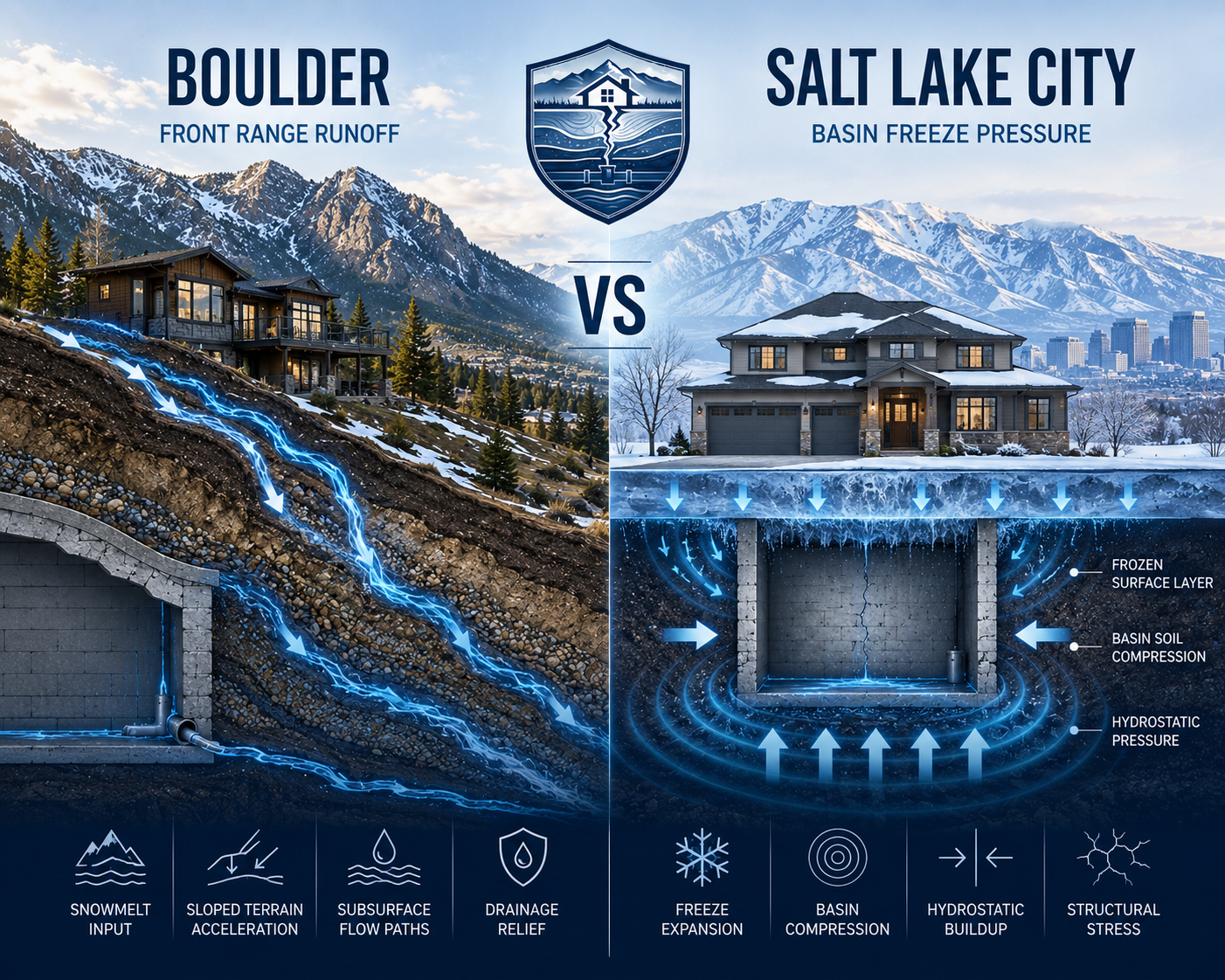
The Hydrostatic Pressure Corridor
Below-grade moisture pressure remains one of the most overlooked environmental personalities in freeze-climate infrastructure systems.
Hydrostatic environments commonly experience:
- recurring basement saturation
- hidden seepage pressure
- prolonged soil moisture retention
- structural contraction fatigue
- recurring environmental loading surrounding foundations
Frozen ground systems often slow moisture release while repeated winter saturation gradually increases:
- basement pressure
- foundation fatigue
- hidden deterioration
- below-grade moisture accumulation
This environmental personality commonly affects:
- Buffalo
- Chicago
- Cleveland
- Detroit
- Minneapolis
- older freeze-belt cities
- aging cold-weather suburbs
Featured topics include:
- Hydrostatic Basement Pressure
- Freeze-Belt Seepage Systems
- Long-Term Foundation Fatigue
- Below-Grade Moisture Retention
The Runoff Acceleration Environment
Certain regions create pressure through rapidly moving runoff systems tied to elevation, grading, snowmelt pacing, and aggressive seasonal transitions.
Runoff-driven environments commonly experience:
- dynamic drainage movement
- rapid snowmelt migration
- slope saturation
- recurring environmental redistribution
- fast-moving thermal shifts
Moisture rarely remains concentrated in one place for long.
Pressure keeps moving.
This environmental personality commonly affects:
- Front Range communities
- mountain foothill corridors
- hillside developments
- runoff-heavy elevation regions
- snowmelt-driven drainage systems
Featured topics include:
- Elevation Runoff Systems
- Hillside Saturation Pressure
- Dynamic Drainage Movement
- Mountain Moisture Redistribution
The Long-Duration Winter Environment
Some cold-climate systems create structural stress simply through environmental persistence.
Extended winter exposure gradually increases:
- thermal contraction
- hidden moisture retention
- infrastructure fatigue
- structural wear
- long-duration environmental loading
Pressure remains elevated for weeks or months at a time.
Recovery between winter systems slows significantly.
This environmental personality commonly affects:
- Upper Midwest freeze belts
- Great Lakes snow corridors
- northern cold-weather infrastructure regions
- long-duration freeze environments
Featured topics include:
- Deep Freeze Exposure
- Winter Retention Pressure
- Structural Fatigue Over Time
- Environmental Persistence Systems
Environmental Tempo & Structural Behavior
Environmental tempo changes how buildings absorb winter stress.
Fast-moving environments commonly create:
- recurring runoff redistribution
- aggressive freeze-thaw movement
- rapid thermal expansion
- constantly shifting moisture pathways
Slow-moving winter systems commonly create:
- prolonged saturation
- hydrostatic pressure buildup
- persistent snow loading
- long-duration environmental fatigue
Movement creates one type of structural personality.
Accumulation creates another.
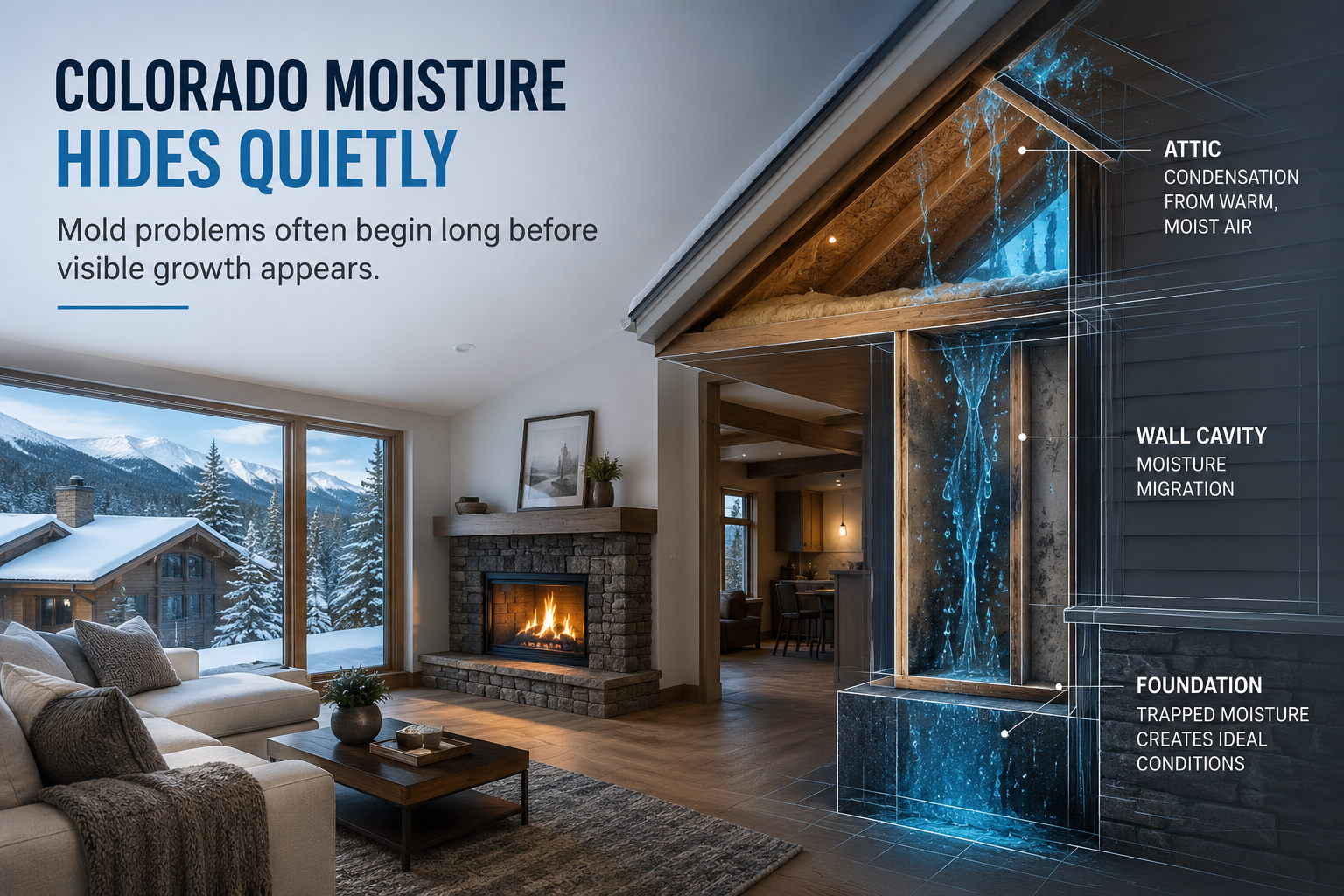
Regional Identity & Structural Stress
Environmental personalities shape:
- how homes age
- how foundations settle
- how moisture migrates
- how winter saturation develops
- how structural fatigue accumulates
- how drainage systems respond over time
Mountain runoff systems produce different long-term outcomes than freeze-belt saturation systems.
Snowpack retention behaves differently than thermal cycling corridors.
Environmental identity quietly shapes structural behavior across every cold-climate region.
Structural Personality Matchups
Different environmental personalities create different forms of pressure across:
- mountain communities
- freeze-belt cities
- snowpack regions
- hillside developments
- aging infrastructure systems
- high-elevation neighborhoods
This section compares:
- runoff vs saturation
- movement vs retention
- thermal fluctuation vs prolonged freeze exposure
- snowpack accumulation vs hydrostatic pressure
- dynamic drainage vs persistent seepage
Featured topics include:
- Front Range vs Freeze Belt
- Snowpack vs Hydrostatic Pressure
- Thermal Cycling vs Saturation Retention
- Mountain Runoff vs Basement Pressure
Mountain & Freeze-Thaw Personality Regions
The environmental systems discussed throughout Environmental Personalities commonly affect Colorado, Utah, Wyoming, Montana, Idaho, Nevada mountain regions, California mountain regions, Oregon, Washington, Minnesota, Wisconsin, Illinois, Michigan, Ohio, Pennsylvania, New York, Vermont, New Hampshire, Maine, West Virginia, North Carolina mountain regions, Tennessee mountain regions, and other cold-climate states exposed to freeze-thaw cycling, snowpack accumulation, hydrostatic basement pressure, runoff concentration, and recurring winter environmental stress.
These environmental systems frequently affect:
- mountain communities
- freeze-climate suburbs
- basement foundation regions
- hillside developments
- snowpack runoff corridors
- aging cold-weather infrastructure
- luxury mountain properties
- high-elevation neighborhoods
Many structural movement patterns, runoff behaviors, saturation systems, and hidden winter moisture conditions evolve gradually over decades as buildings absorb repeated environmental pressure through snowmelt migration, freeze exposure, hydrostatic buildup, runoff concentration, thermal cycling, and recurring seasonal movement.
