
Tahoe vs Colorado Rockies — Sierra Snowpack vs High-Elevation Freeze Cycling

Massive snowpack accumulation creates structural pressure differently in Sierra environments than it does across the high-elevation freeze-thaw systems of the Rocky Mountains.
Tahoe and Colorado mountain regions both experience severe winter exposure, deep snowfall, aggressive runoff movement, and recurring environmental stress. Beneath the surface, however, the way snowpack pressure develops across these environments behaves very differently over time.
Sierra systems surrounding Tahoe absorb enormous volumes of moisture during prolonged winter accumulation cycles. Heavy snowpack lingers deep into seasonal transitions while concentrated runoff slowly releases through mountain terrain, retaining systems, and drainage corridors.
Colorado Rockies environments experience a faster and more aggressive rhythm. Elevation swings, rapid freeze-thaw cycling, intense solar exposure, and shifting daytime temperatures repeatedly redirect runoff through structural systems across mountain communities.
Accumulation dominates one environment.
Thermal movement shapes the other.
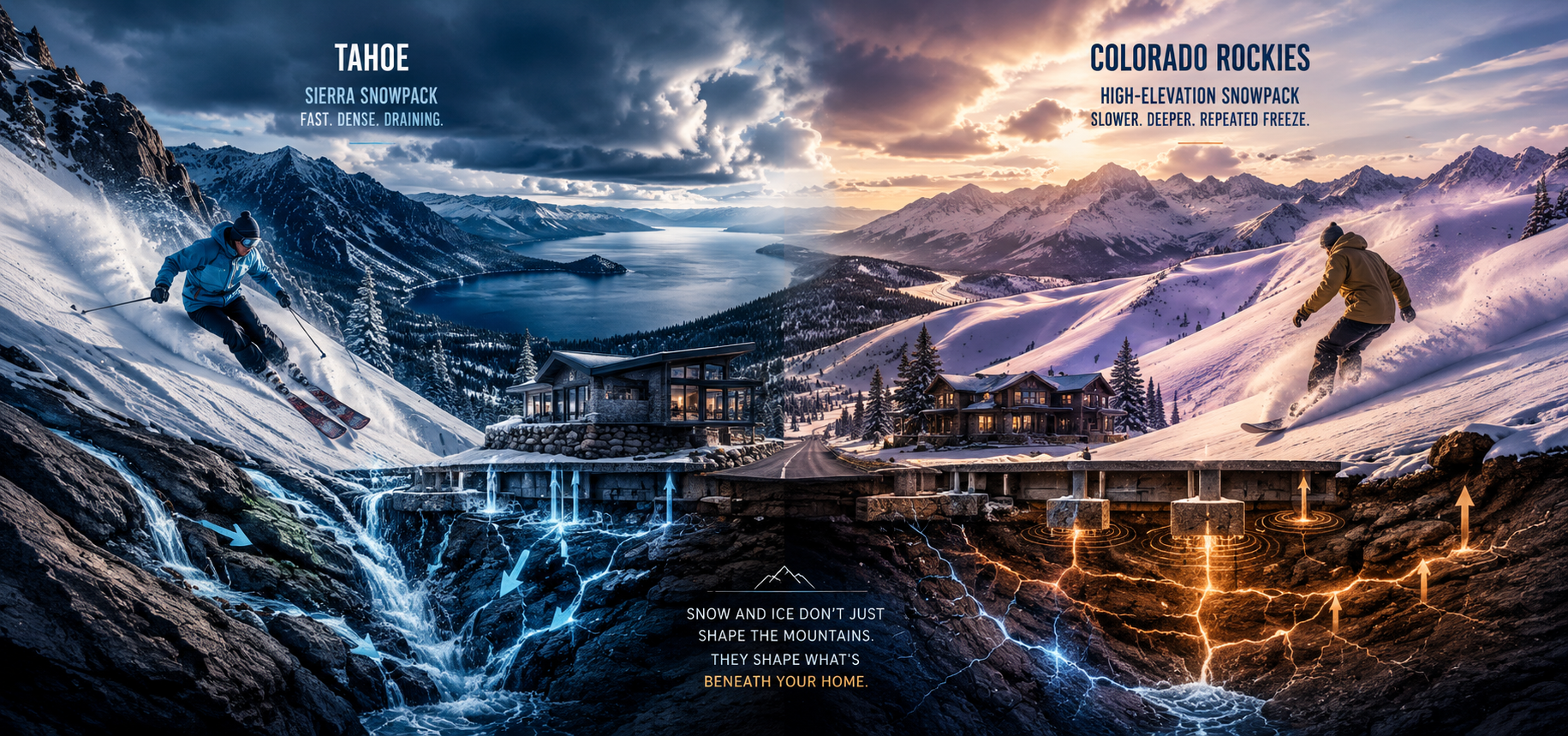
Structural Environment Breakdown
Sierra Snowpack Systems
Tahoe-area environments commonly experience:
- prolonged snowpack retention
- concentrated runoff saturation
- deep seasonal accumulation
- slower thaw progression
- extended moisture release cycles
- hillside drainage pressure
- persistent environmental saturation
- long-duration winter loading
Sierra winter systems build pressure through sheer moisture volume.
Snow layers accumulate for extended periods before gradual seasonal warming begins releasing runoff downhill through retaining systems, structural corridors, and mountain drainage pathways.
Repeated accumulation slowly increases stress across:
- foundations
- retaining walls
- drainage systems
- roof structures
- exterior assemblies
- hillside stabilization systems
- subgrade moisture zones
Environmental weight becomes one of the defining structural challenges throughout Sierra snowpack regions.
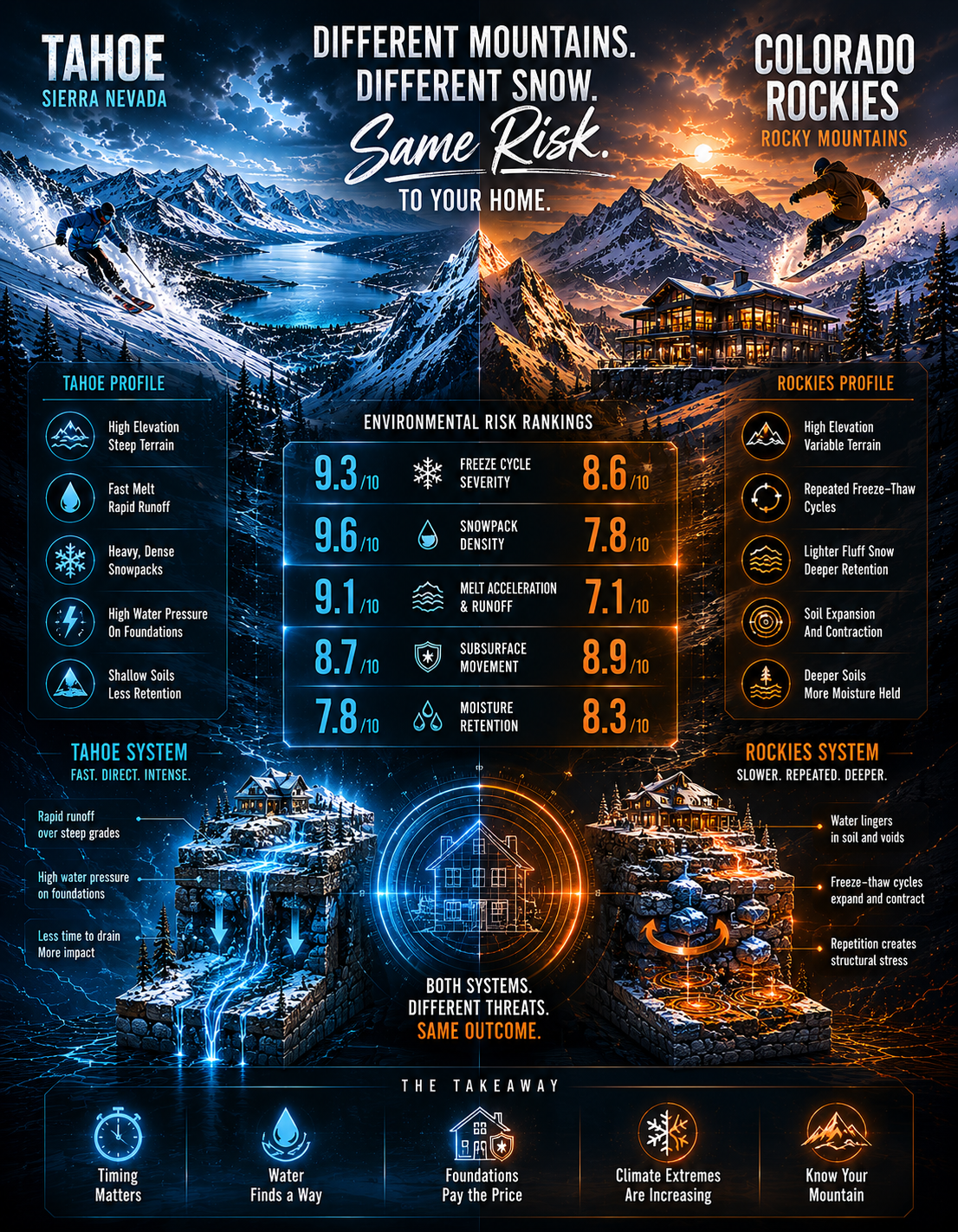
High-Elevation Freeze Cycling Systems
Colorado Rockies environments more commonly experience:
- aggressive freeze-thaw cycling
- rapid thermal fluctuation
- dynamic runoff migration
- intense daytime snowmelt
- overnight hard-freeze resets
- high-elevation drainage movement
- recurring slab expansion shifts
- rapidly changing environmental pressure
Rocky Mountain systems rarely remain stable for long.
Morning freeze conditions often transition into aggressive daytime thawing before nighttime temperatures rapidly refreeze runoff surrounding foundations, drainage systems, and structural transitions.
Repeated environmental fluctuation gradually increases:
- thermal expansion fatigue
- runoff pressure shifts
- structural contraction stress
- drainage instability
- slab movement
- freeze-related material fatigue
- hidden moisture migration
Movement becomes the dominant environmental force.
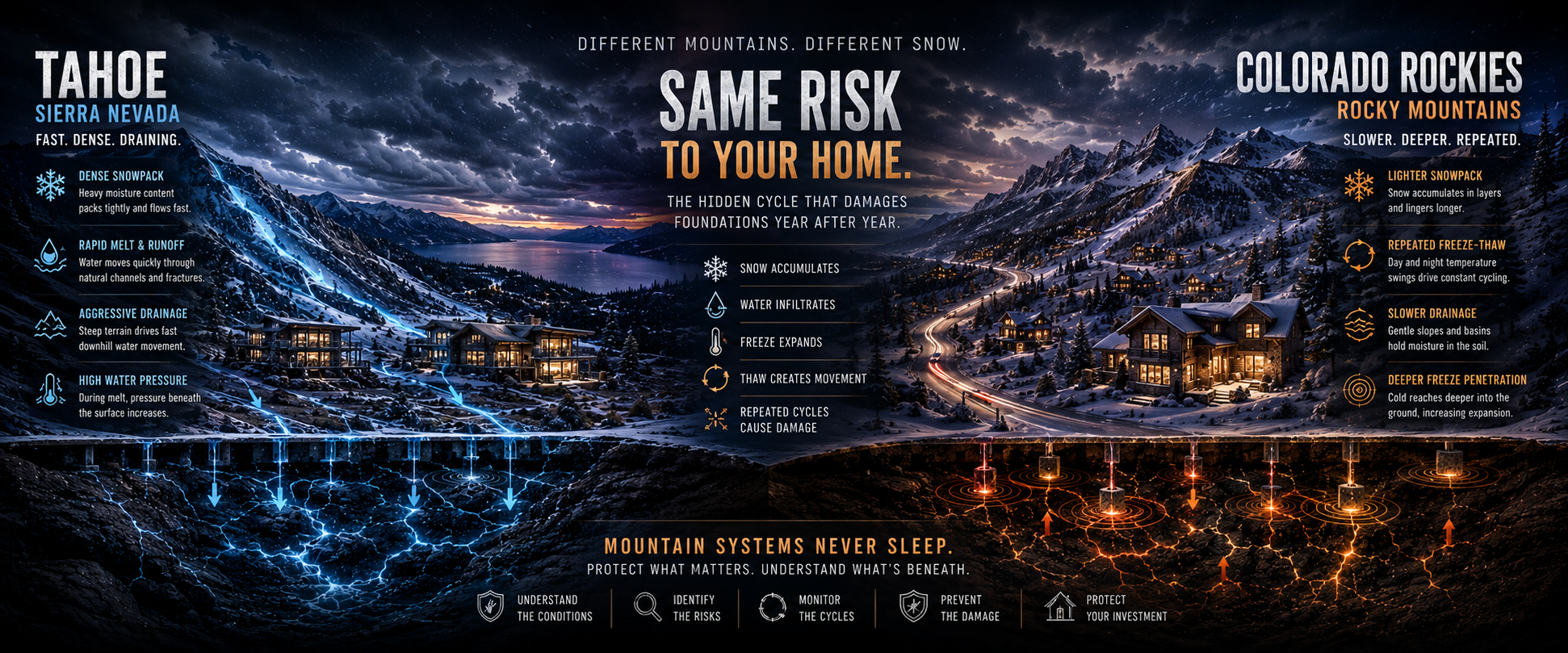
Accumulation vs Thermal Cycling
One of the largest differences between these environments comes from how winter moisture behaves once snowpack pressure begins building.
Sierra snowpack regions are shaped more heavily by:
- prolonged accumulation
- concentrated runoff release
- sustained moisture loading
- slower thaw cycles
- long-duration saturation pressure
Rocky Mountain systems are influenced more by:
- rapid freeze-thaw movement
- aggressive thermal fluctuation
- dynamic snowmelt migration
- elevation runoff acceleration
- recurring environmental redistribution
Tahoe environments absorb pressure gradually through snowpack retention.
Colorado mountain systems redistribute pressure repeatedly through thermal movement and runoff fluctuation.
Over decades, that difference quietly changes how structures age, settle, and retain hidden moisture.
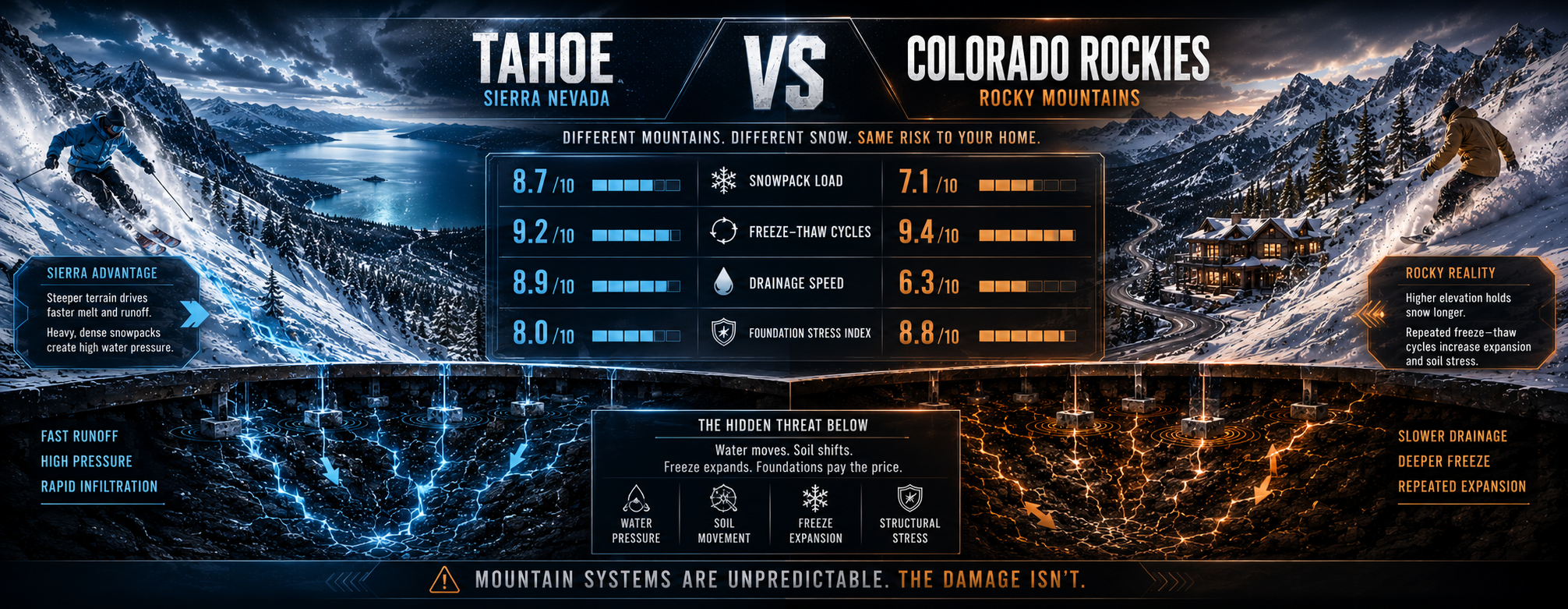
Structural Fatigue Across Mountain Systems
Most winter-related structural deterioration develops gradually through recurring environmental exposure rather than a single major storm event.
Repeated stress from:
- snowpack saturation
- freeze-thaw cycling
- runoff concentration
- thermal expansion
- drainage pressure
- environmental contraction
- recurring winter moisture migration
slowly increases hidden structural fatigue across both mountain environments.
Tahoe-area systems absorb more pressure tied to:
- prolonged moisture loading
- sustained snowpack accumulation
- concentrated runoff release
- extended winter saturation
Colorado Rockies systems absorb more pressure tied to:
- rapid thermal movement
- recurring freeze-thaw expansion
- aggressive runoff migration
- constantly shifting environmental conditions
Environmental tempo changes how structures experience winter stress.
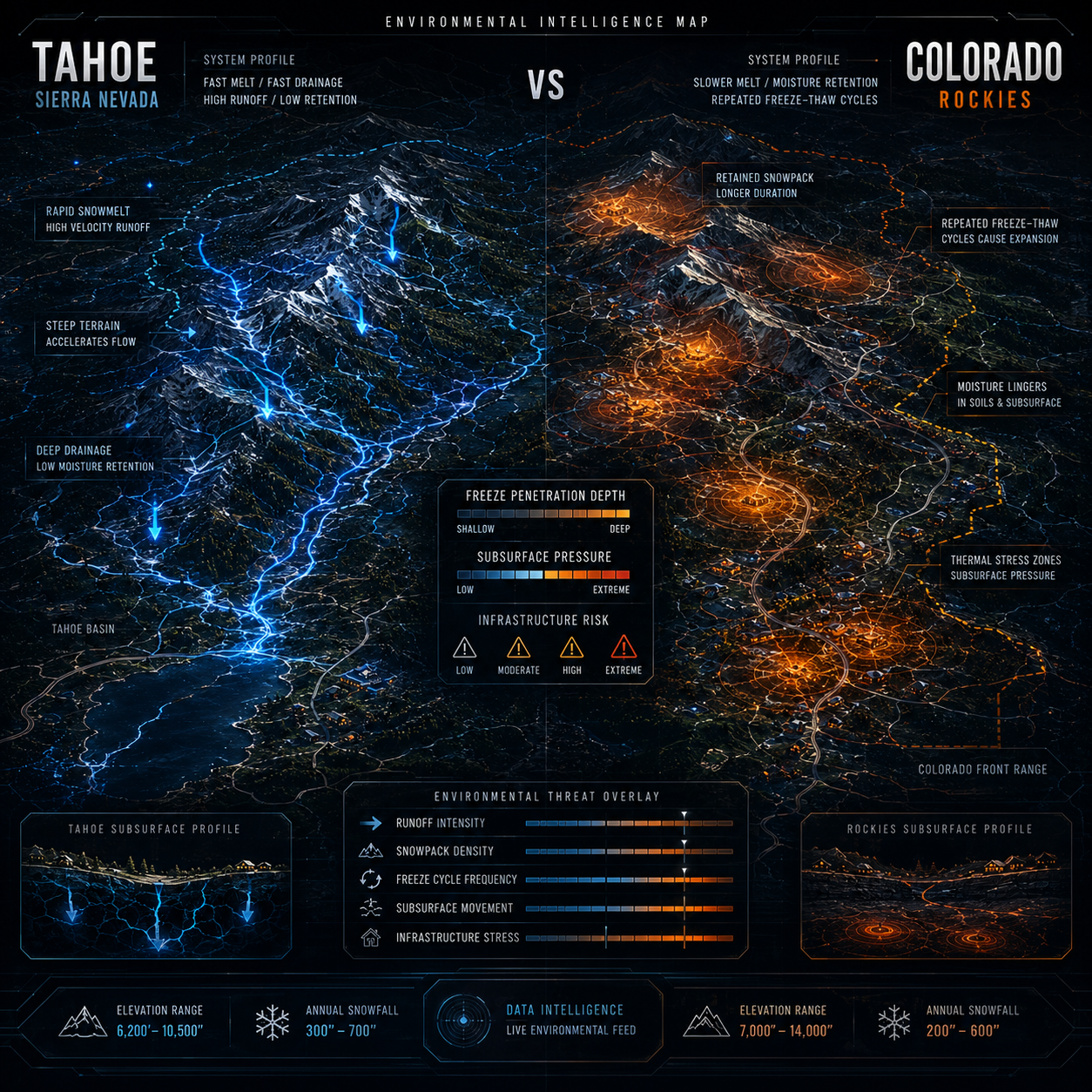
The Hidden Drainage Difference
Drainage behavior changes significantly between Sierra snowpack regions and Rocky Mountain freeze-cycling systems.
Tahoe-area environments often experience:
- slower runoff release
- prolonged hillside saturation
- extended snowpack pressure
- deeper seasonal moisture retention
- concentrated environmental loading during thaw cycles
Colorado Rockies environments typically experience:
- faster-moving runoff systems
- aggressive drainage fluctuation
- repeated thaw-refreeze transitions
- thermal movement tied to elevation swings
- rapidly changing structural moisture pathways
Long-duration snow retention shapes one environment.
Recurring thermal redistribution defines the other.
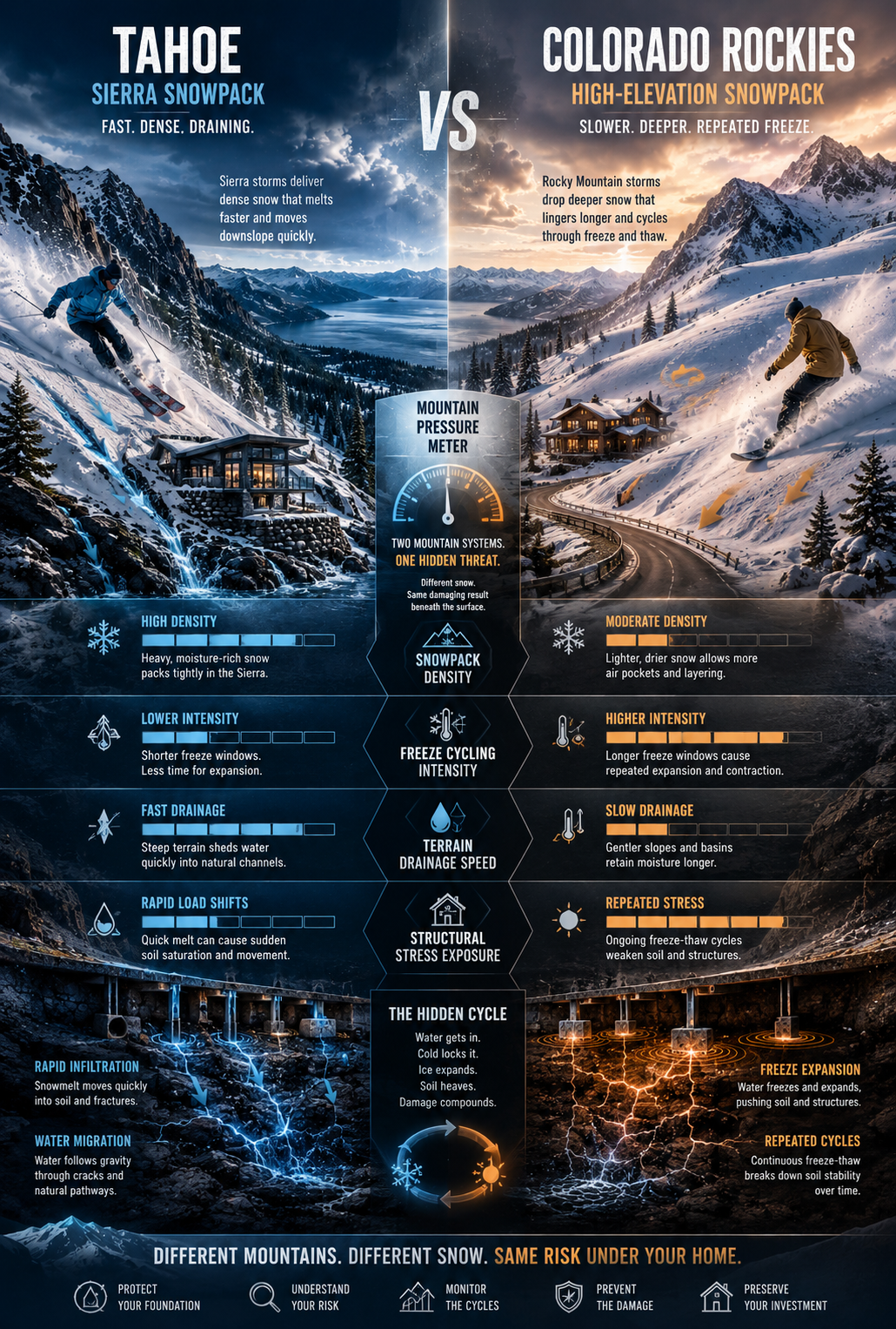
Winter Pressure Scoreboard
Tahoe Sierra Systems
- Prolonged snowpack accumulation
- Sustained moisture loading
- Concentrated runoff release
- Extended winter saturation
- Hillside drainage pressure
- Long-duration environmental retention
Colorado Rockies Systems
- Aggressive freeze-thaw cycling
- Rapid thermal fluctuation
- Dynamic runoff migration
- High-elevation drainage movement
- Recurring expansion-contraction stress
- Constant environmental redistribution
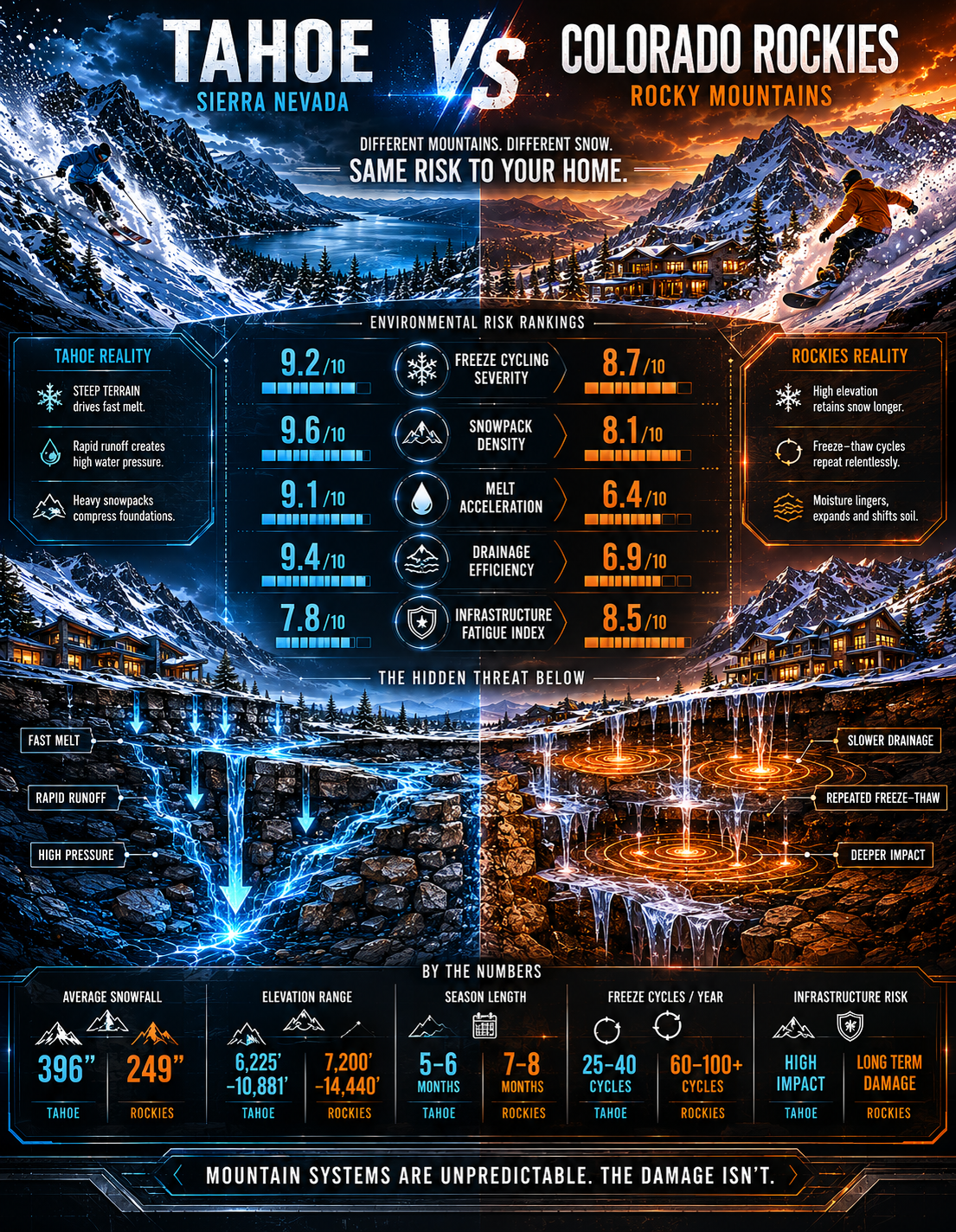
Structural Matchup Analysis
Heavy winter exposure affects both mountain regions intensely, yet the environmental mechanics behind that pressure remain fundamentally different.
Sierra systems create structural fatigue through prolonged accumulation, concentrated runoff release, sustained snowpack loading, and extended environmental saturation surrounding mountain structures. Rocky Mountain environments generate stress through rapid thermal movement, recurring freeze-thaw cycling, aggressive runoff migration, and constantly shifting environmental pressure systems.
Tahoe absorbs winter weight gradually.
Colorado redistributes winter pressure continuously.
Both create serious long-term structural stress across high-elevation homes and mountain infrastructure.

Environmental Tempo & Winter Pressure
Slow-moving snowpack systems create one form of environmental stress.
Rapid freeze-thaw fluctuation creates another.
Tahoe Sierra environments experience:
- prolonged accumulation cycles
- extended runoff release
- sustained moisture retention
- long-duration environmental loading
Colorado Rockies systems experience:
- recurring thaw-refreeze transitions
- aggressive thermal swings
- dynamic drainage movement
- rapidly shifting runoff pressure
Environmental accumulation defines one region.
Thermal cycling dominates the other.
Featured Structural Matchups
Related environmental comparisons include:
- Denver vs Minneapolis — Elevation Runoff vs Deep Freeze Cycles
- Denver vs Buffalo — Front Range Snowmelt vs Lake-Effect Saturation
- Denver vs Green Bay — Freeze Cycling vs Deep Freeze Infrastructure Fatigue
- Boulder vs Salt Lake City — Front Range Runoff vs Basin Freeze Pressure
- Denver vs Chicago — Mountain Drainage vs Freeze-Belt Basement Saturation
Mountain Snowpack & Freeze-Cycling Regions
The environmental systems discussed throughout this matchup commonly affect Colorado, California mountain regions, Utah, Wyoming, Montana, Idaho, Nevada mountain regions, Oregon, Washington, Vermont, New Hampshire, Maine, Minnesota, Wisconsin, Michigan, New York, and other cold-climate regions exposed to snowpack accumulation, freeze-thaw cycling, mountain runoff pressure, hillside drainage saturation, and recurring winter environmental stress.
These environmental systems frequently affect:
- mountain communities
- high-elevation neighborhoods
- hillside developments
- snowpack runoff corridors
- luxury mountain properties
- freeze-climate resort regions
- aging mountain infrastructure
- cold-weather drainage systems
Many structural movement patterns, runoff behaviors, snowpack saturation systems, and hidden winter moisture conditions evolve gradually over decades as buildings absorb repeated environmental pressure through freeze exposure, runoff migration, thermal fluctuation, snowpack accumulation, drainage concentration, and recurring seasonal movement.
